Get in touch with Dreamland Playground Company

Updated October 2026
A play cafe business plan balances family demand with an efficient layout, an appropriate menu and a monthly cash flow. Know your customer, decide capacity and determine demand. Adjust prices to reflect the market, and weigh the cost of equipment, play space and services before signing a lease.
An active play area doesn’t always mean a healthy business. During busy trade, a parent-friendly coffee shop needs a place to relax with a clear view of play, while simultaneous orders and membership visits put pressure on space without generating another admission sale. The business also needs a flexible plan for opening cash, revenue mix and supplier scope.
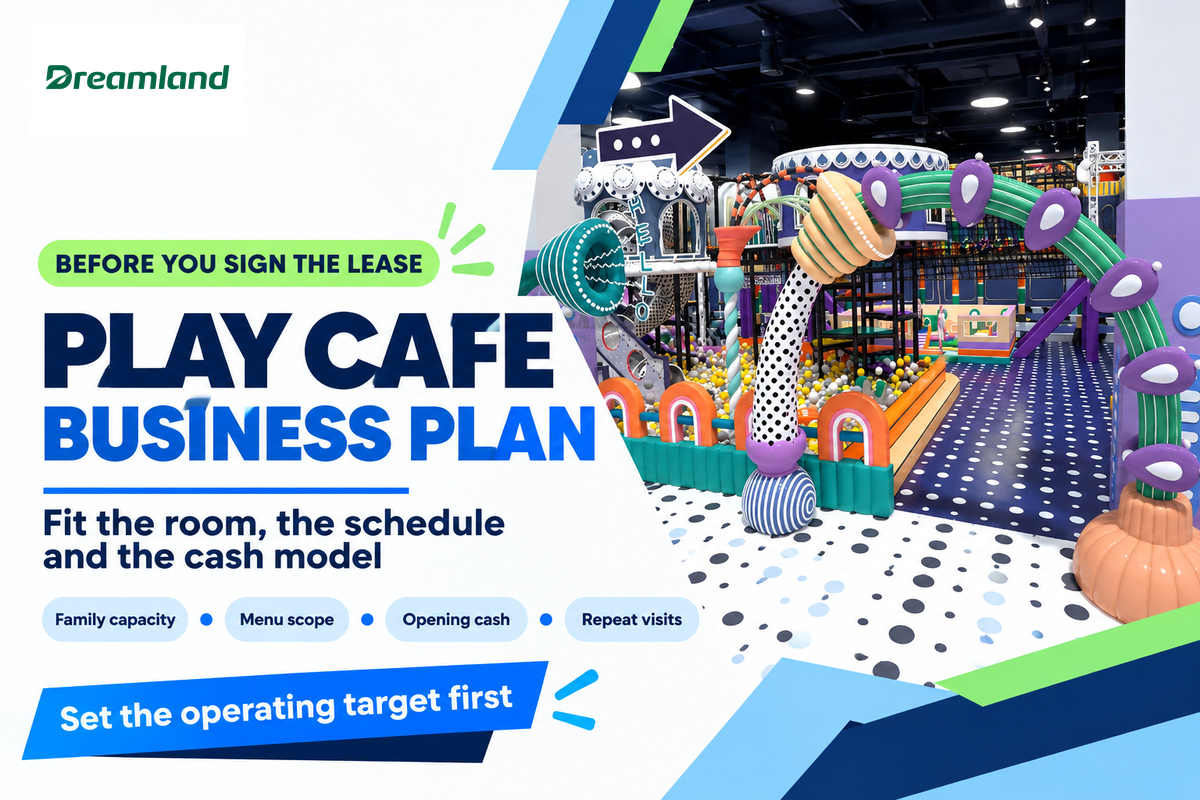
A play cafe business plan links family capacity, menu scope, opening cash and repeat visits. Count adults alongside children and separate included member visits from new ticket sales. Set the operating target before selecting equipment.
Key planning points
- Included member and party visits consume capacity without a second admission sale.
- Usable seating and arrival service can limit admissions before the play equipment is full.
- Startup cash includes premises work and operating shortfalls as well as equipment.
- Operating break-even and recovery of the initial investment are separate calculations.
| Decision | Useful output |
|---|---|
| Concept and audience | Age range, supervision model and admission unit |
| Demand | Local paid-visit test and repeat-visit evidence |
| Capacity | Family, seat and service limits on one layout |
| Menu | Food preparation scope and task coverage |
| Opening cash | Quote packages, payment dates and cash runway |
| Revenue mix | Sales, included visits and direct costs reconciled |
| Supplier scope | Equipment brief with premises interfaces assigned |
What is a play cafe business model?
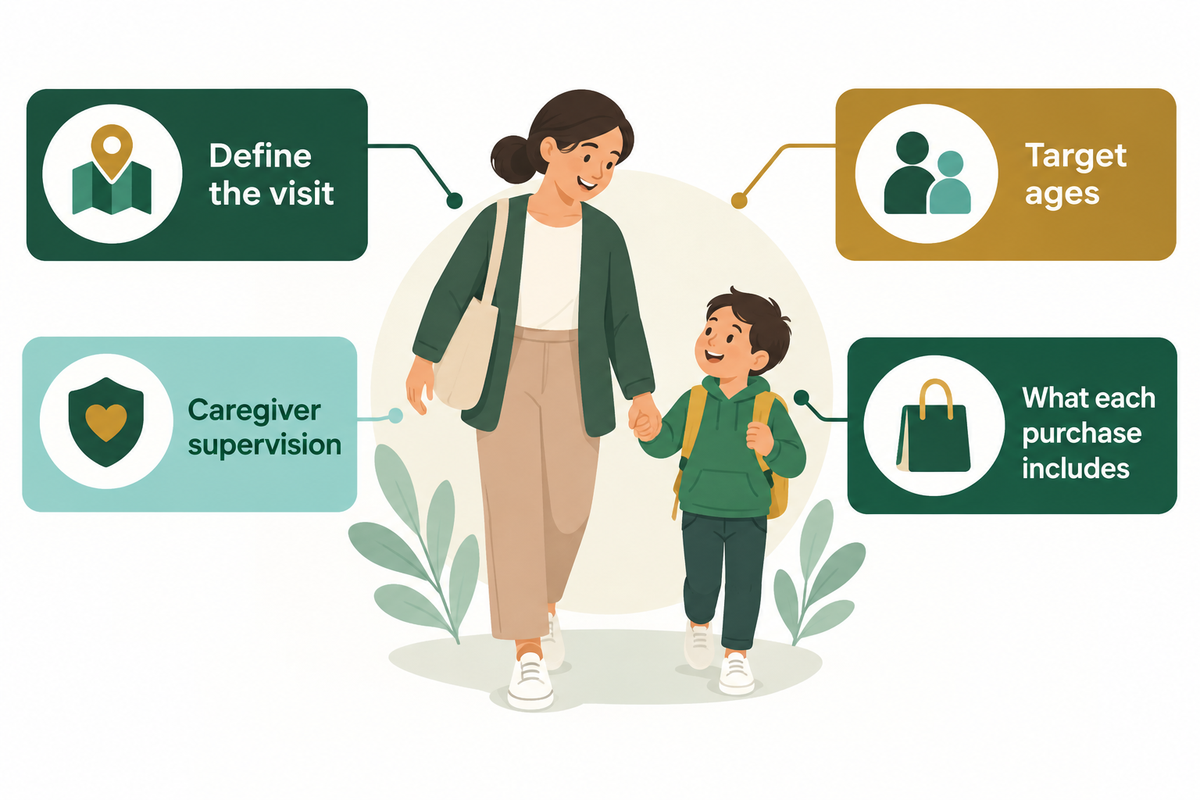
An indoor play space for children and parent seating can be combined with cafe and food service to provide varied income streams, including admission, memberships and birthday parties, in one indoor play cafe plan. A toddler-focused play café can be built around the age range of the primary clientele, suitable equipment and services, and practical caregiver supervision. The business plan must define the target ages, who supervises children, what each purchase includes and when activities can use the space.
Larger play centers can offer more advanced and demanding activities. For a toddler-focused play café, age-appropriate play structures can be offered. A coffee shop with a free kids play corner has a different sales model: food purchases fund the visit.
Start the concept statement with a typical example: a caregiver brings one preschooler after a morning errand. The caregiver buys admission and a drink and stays while the child plays. This example poses the questions that a mood board can’t. Is there an admission charge for the adult? Can siblings enter together? Is play a part of the program? Can a party close the entire venue?
In your proposal, supervision should be addressed separately. Parent-supervised play and drop-off care mean different things to the licensing authority. For the funding structure, it’s advised to use a complete indoor playground business plan framework that includes the ownership, management, funding and financials.
In this example, one child and one adult mean two customers to accommodate for one paid admission. An indoor playground or play cafe business should retain that distinction in its concept statement, layout and budget. Child only patronage forecasts understate total usage of space.
Validate demand before you open a play cafe
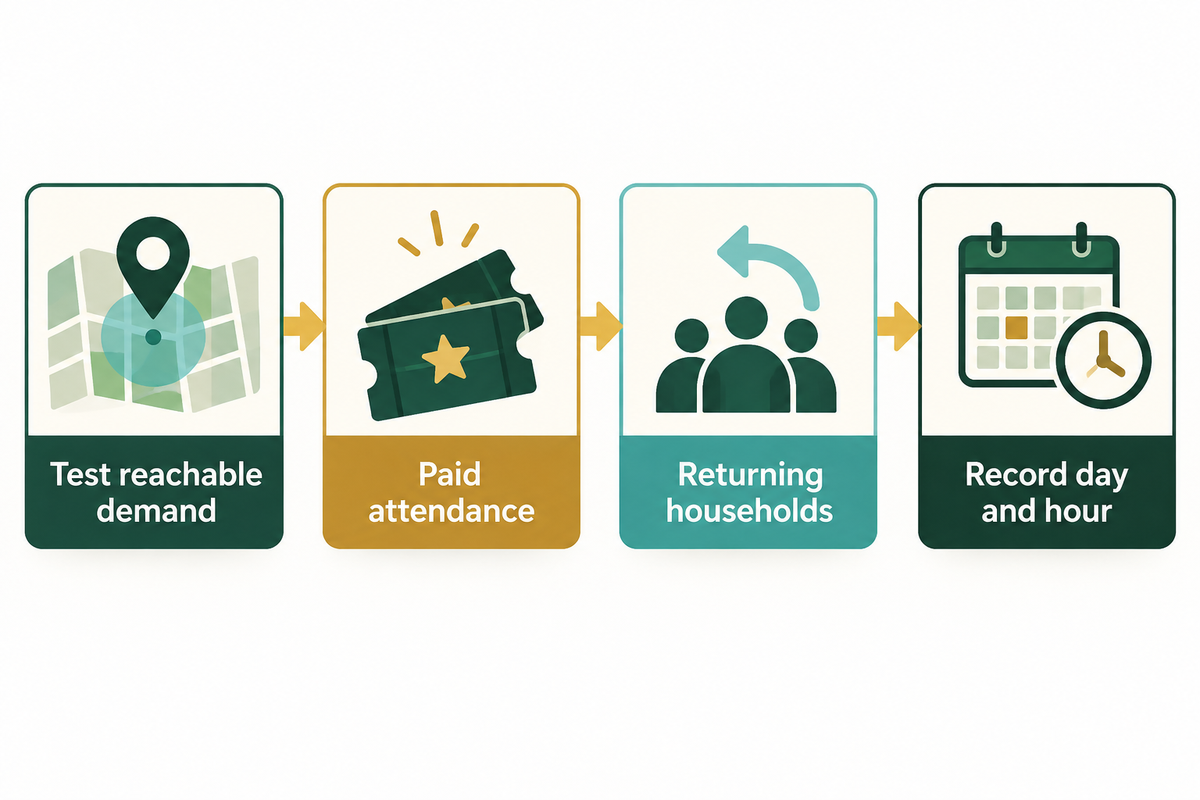
To evaluate a play cafe, seek evidence from the families that can reach the location and pay for the visit. Check out the competition, interview caregivers about their schedules, and, where allowed, test a small paid offer. Track attendance and return visits.
The U.S. Small Business Administration’s market-research guidance separates demand, market size, location, saturation and pricing. Apply those questions locally. Libraries, parks, daycares, classes and family entertainment centers compete for time as well as money. A rainy-day destination and a regular weekday meeting place need different schedules.
Example: A potential neighborhood retail space owner tests two permitted pop-up mornings before buying equipment. The owner charged a small fee for each visit. Twelve families attended the first visit, and eight families attended the second visit. Of the eight families who attended the second visit, six families were returning families. The remaining two families were new families. The owner documented how far families traveled, the ages of children in the family, drinks ordered, and the time families left. Several parents like the concept but cannot use a fixed early start because of naps. That response favors testing a wider arrival window before committing to tightly timed sessions. The small test provided guidance for the following larger tests. The owner wishes to test a larger window over a longer time period, but still needs better demand evidence and a cash flow model before taking on a long lease.
Separate what children love from what caregivers are willing to pay for repeatedly. Keep a list of objections: travel, parking, age appropriateness, food choice, price and hours. A local business partner may help attract customers to a trial or to introduce a parent group. However, a free event answers a different pricing question from a paid visit.
Record paid attendance by day and hour for each day of the proposed 4-week demand test. Also record the number of returning households. A single full day of the demand test doesn’t fill Tuesday morning. Compare the extra rent with the contribution from the additional visits the demand test attracts.
Set play capacity, seating and cafe service limits
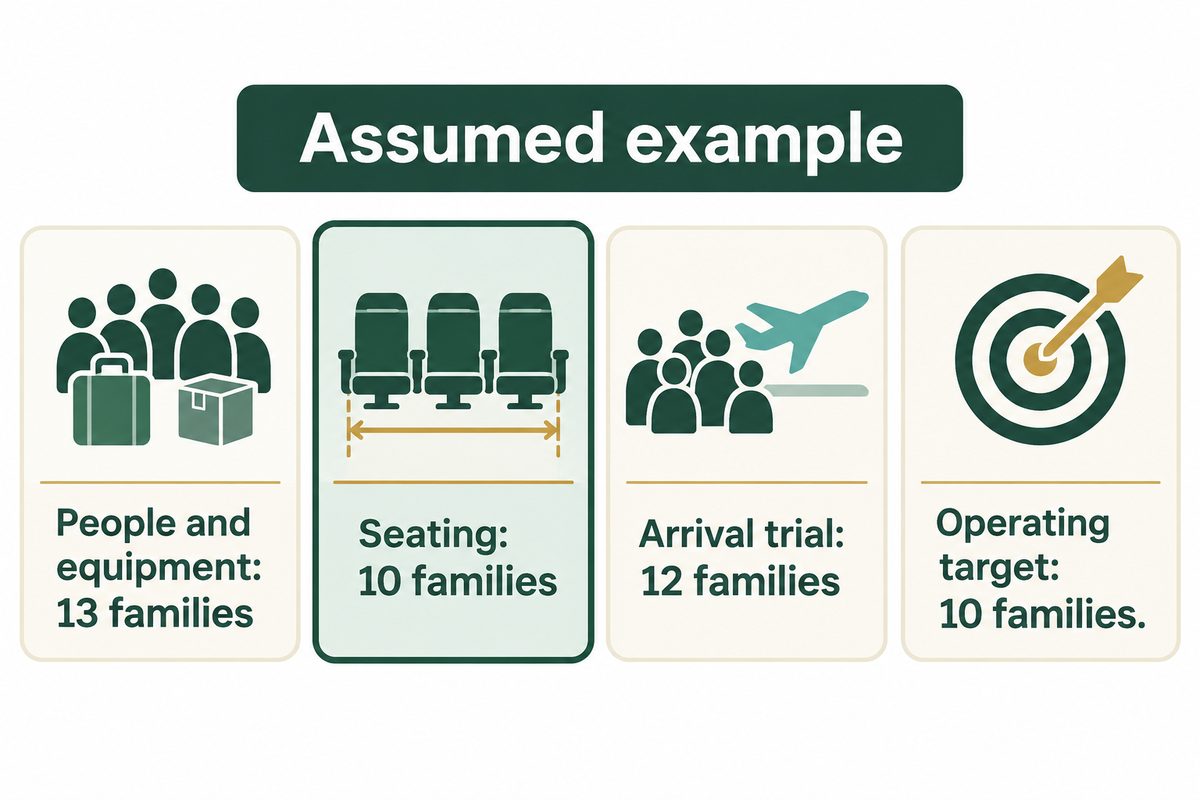
The operating admission target is set from the tightest constraint among the permitted people and equipment envelope, tested service capacity and usable family seating. Count adults, children and staff separately. Preserve aisles, sightlines and exits. Test arrival and departure bursts and create a sales forecast from a floor plan.
How Much Space Does a Play Cafe Need?
A play cafe needs enough space for chosen family capacity, play and seating, food service and support activities. A gross square footage brief for equipment gives a poor equipment analysis. The area available for play is affected by storage, food service and support routes, stroller parking, columns and bathrooms.
The U.S. Access Board’s play-area guide treats soft-contained play structure access separately from other play components. Dining also needs attention: Department of Justice guidance for small businesses describes routes to dining areas, counters and restrooms, maneuvering space with patrons seated, and dispersed accessible tables. Count seats after those needs have been designed into the layout.
3-Limit Family Capacity Sheet
The 3-Limit Family Capacity Sheet compares the allowable people and equipment envelope with usable family seating and tested arrival service to determine the initial operating target.
Assumed inputs: Each visiting family has one adult and one child, and each may need a seat while eating. The equipment and total person limits below are example project inputs. Replace with the applicable approved limits and equipment instructions for the actual site.
| Input or check | Example value | Operating implication |
|---|---|---|
| Total-person limit | 30 people | Includes customers and staff |
| Staff present | 3 people | Leaves space for 27 customers |
| Children per family | 1 child | Do not apply this mix to sibling groups |
| Adults per family | 1 adult | Two customers per family |
| Equipment child limit | 24 children | Separate from total building occupancy |
| People-and-equipment envelope | 13 families | Round 27 ÷ 2 down; equipment permits more |
| Usable customer seats | 20 seats | Preserves occupied circulation and access |
| Seating demand | 2 seats per family | Limits the example to 10 families |
| Arrival service trial | 12 families in 15 minutes | Test check-in and cafe ordering together |
| Initial operating target | 10 families | Lowest of 13, 10 and 12 families |
| People at that target | 23 people | 10 children + 10 adults + 3 staff |
The owner, upon first viewing the equipment, assumes there’s capacity for 24 children. Once adults and staff are included, the assumed total-person limit allows only 13 whole families. Thus, only 10 families may be served. The arrival test serves 12 families. Seating remains the bottleneck. Additional climbing units wouldn’t improve the capacity, and could actually make it worse. Play cafe owners can compare a smaller play footprint and a different furniture layout. A family group of two adults and two children changes the seating demand and the total-person calculation, even though the building hasn’t changed.
In the ten-family example, 10 families at one moment is different from 10 families per hour. A visit lasting 1.5 hours will use the same seats at different times throughout the visit. Track departures and arrivals. Leave equipment inspection, cleaning access and the gate route clear. A daily total that looks profitable still requires a workable busiest-hour schedule.
Choose a food service scope the team can deliver
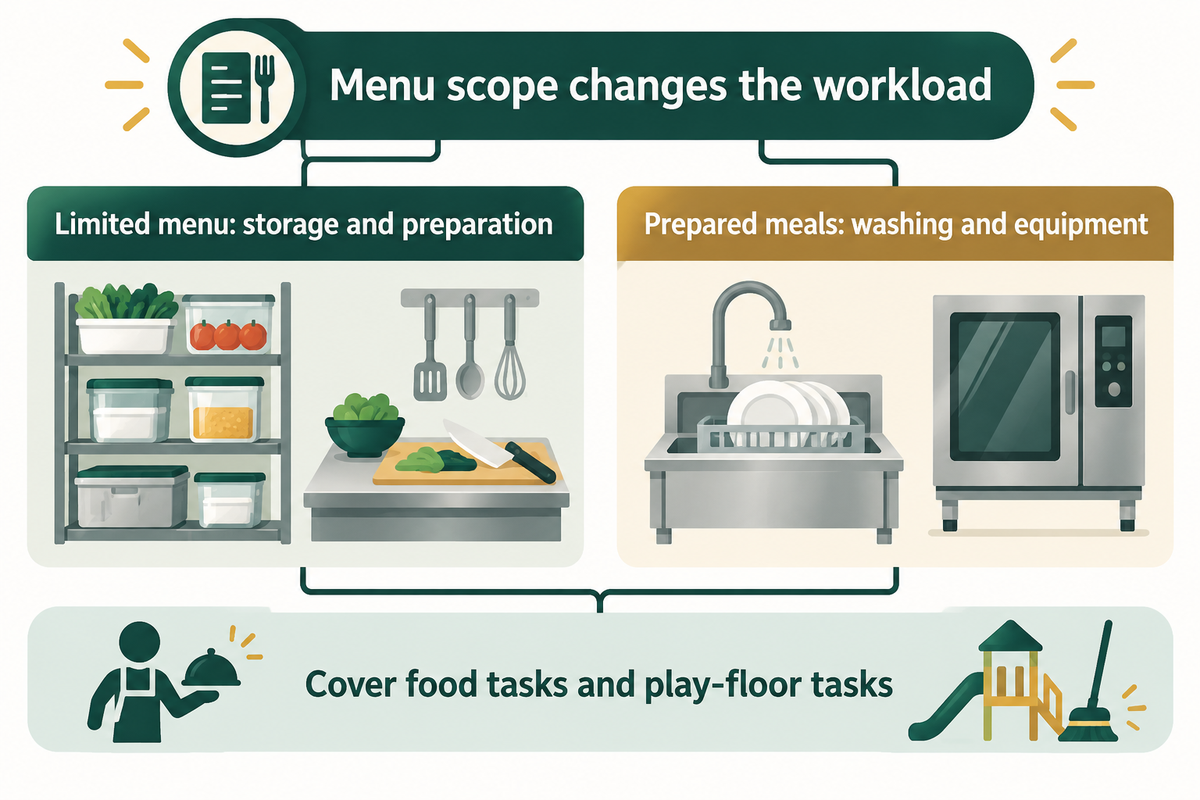
Choose the menu options before pricing the cafe build-out. Packaged snacks and drinks, made-to-order drinks and meals would require different equipment, storage, washing and staffing activities. Align the food offering with the local approval and the team’s busiest shift. Consider the time it takes to check families in and reset the play area.
The FDA Food Code is a model used by jurisdictions to develop food rules; FDA lists the 2026 edition as its latest full edition. The locally adopted requirements govern the project. A limited menu still requires a process for storage and handling as well as cleanup. If you plan to cater birthday parties, include their preparation and storage needs in the menu review. A quote for a supplier’s espresso-machine will not cover all the changes to the premises.
Start with a limited menu
- Match storage and preparation to a short product list.
- Time drink orders during the arrival trial.
- Track waste before adding more items.
Add prepared meals
- Price the extra preparation and washing equipment.
- Assign food tasks alongside play-floor coverage.
- Budget for more ingredients and service time.
How Many Employees Do I Need to Run a Play Cafe?
Staff the simultaneous tasks first, and then calculate the people and paid hours to cover them. A staff member making hot drinks can’t manage every check-in and party-room reset as well as inspect damaged toys at the same time. Include breaks, preparation and closing in the rota.
During the ten-family example’s 15-minute arrival rehearsal, give the team the proposed menu and a realistic mix of first-time visitors. Capture the longest wait and any unattended tasks. If food service takes the only available person away from entry control, simplify the menu or add coverage before admitting more people to the venue.
Build startup costs from separate quote packages
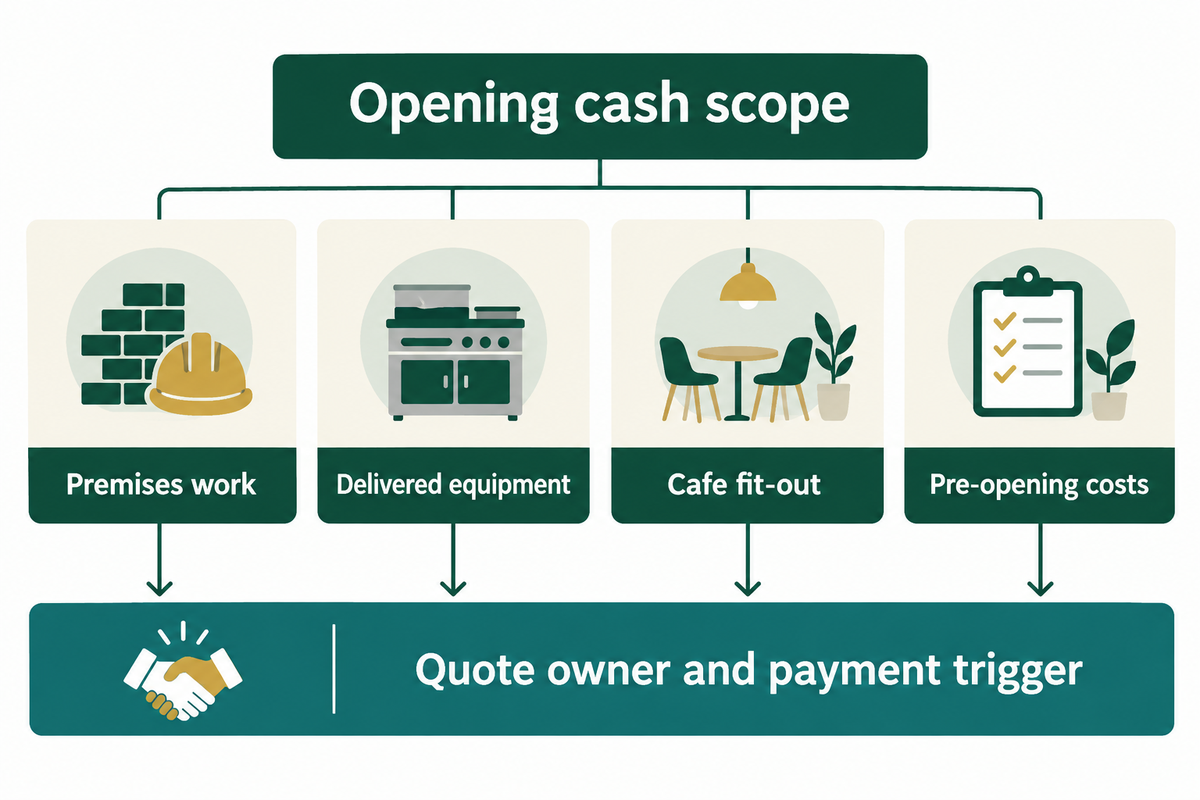
Build startup costs from premises work, delivered equipment, cafe fit-out, professional services and pre-opening costs, and add the cash a new business needs through the opening period. Assign a scope and owner to every cost and ensure the funding request reflects when the cash will leave the business. Keep deposits, recurring costs, and recoverable taxes separate.
The SBA startup-cost method distinguishes one-time costs and monthly expenses. For a play cafe, build-out costs can include work missing between quotes: the equipment supplier delivers the equipment, but the floor, power or unloading is still another party’s work. The Opening Cash Scope Table provides a place for these work interfaces in the budget.
“Monthly expenses typically include things like salaries, rent, and utility bills.”
Opening Cash Scope Table
The Opening Cash Scope Table gives a place for every work interface between quotes, the owner of the quote, and when the payment is triggered.
| Cost category | Quote or decision owner | Cash trigger and likely gap |
|---|---|---|
| Lease deposit and advance rent | Owner and landlord | Signing; distinguish deposit from expense |
| Building and permitted use review | Local design team | Before commitment; change-of-use work |
| Floor, walls and building services | Local contractor | Progress payments; repairs outside fit-out quote |
| Play equipment | Equipment supplier | Order and production stages; agreed specification |
| Freight and import charges | Owner and logistics parties | Shipment and arrival; duty and destination fees |
| Unloading and installation | Named installation parties | Arrival and site readiness; lifting/access equipment |
| Cafe equipment and connections | Cafe vendor and trades | Ordering and commissioning; power, water and waste |
| Furniture and support areas | Owner and fit-out team | Delivery; storage, toilet accessories and seating |
| Licensing and professional fees | Owner and advisers | Application and review; scope-specific fees |
| Insurance and booking systems | Owner and providers | Policy/subscription start; renewal and transaction costs |
| Pre-opening stock and training | Operating manager | Before first sale; paid training and consumables |
| Working cash and contingency | Owner and finance | Monthly cash gaps and separately priced uncertainty |
Use the table as a template to collect opening quotes. Each package must have a quote date, currency, tax basis, and exclusions. These matter more than forcing quotes to fit in a particular cost range. Quote owners organize the work; parties still must settle their legal and contractual obligations.
Example: two otherwise similar premises differ by $1,000 per month in rent. The cheaper unit needs an additional $18,000 of food-service and drainage work. Dividing $18,000 by $1,000 gives 18 months before the rent saving offsets that extra work, ignoring financing and timing. A delayed opening would extend the comparison further because rent and other bills may begin before sales. The owner therefore compares the full lease period, the work schedule and the cash remaining after installation. Choosing the lower rent is sensible only if the project can fund the extra work and the expected trading period justifies it. Neither equipment price nor monthly rent alone settles the choice.
Forecast at least 12 months of operating expenses, and expected inflows and outflows, in the planning model. The required opening cash is the deepest forecast cash shortfall, plus a justified reserve. Use the other monthly financial projection structure for the more extended funding period.
Test profitability across shared revenue streams
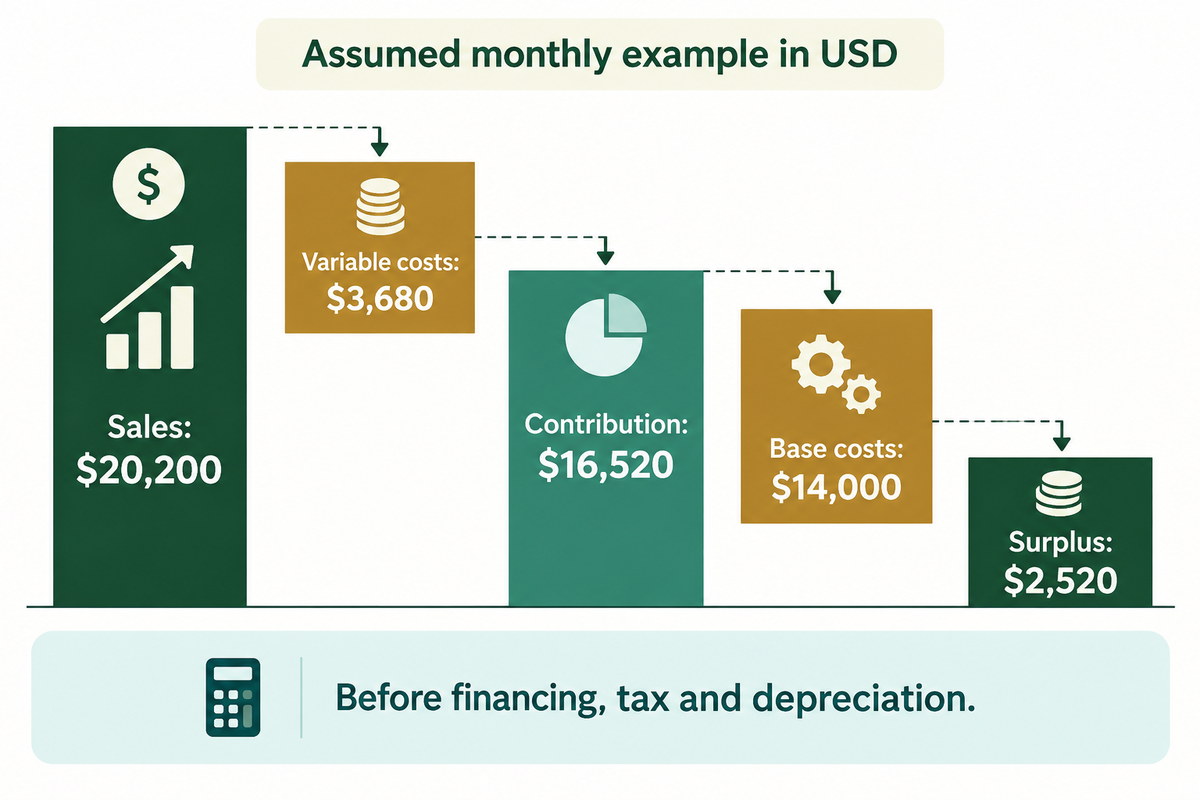
Test profitability by subtracting direct variable costs from each sales stream, then deducting base operating costs, including owner labor. Model private-parties as displaced open play to remove double counting admission. Run a quiet month and compare private-party contribution to open play it displaces.
Separate sales from included visits
Meet operating costs with admissions, membership program, parties and cafe purchases. More revenue streams help if they fit the same operating schedule. An exclusive play party could replace open admissions for a few hours. A membership discount on cafe purchases would also decrease the amount actually collected.
Real offers show why the units matter. Magnolia Play Cafe memberships offer unlimited play and purchase discounts. Blossom’s class descriptions include play admission with some activities. Package inclusions illustrate the difference between a sale and a visit. Use your own prices and expected redemption patterns.
| Line | Assumed calculation | Monthly amount |
|---|---|---|
| Paid child admissions | 800 entries × $12 | $9,600 revenue |
| Monthly memberships | 80 memberships × $45 | $3,600 revenue |
| Private parties | 8 parties × $350 | $2,800 revenue |
| Separately paid cafe orders | 600 orders × $7 | $4,200 revenue |
| Total sales | Four sales streams | $20,200 |
| Admission variable costs | 800 entries × $1 | $800 |
| Member-visit variable costs | 320 child visits × $1.25 | $400 |
| Party variable costs | 8 parties × $100 | $800 |
| Cafe variable costs | 600 orders × $2.80 | $1,680 |
| Total contribution | $20,200 − $3,680 | $16,520 |
| Base operating costs | Includes an owner labor allowance | $14,000 |
| Operating surplus | $16,520 − $14,000 | $2,520 |
The $2,520 surplus is before financing, tax and depreciation. Leave those items in the full accounts and cash forecast; don’t deduct the same owner labor allowance twice. Party direct costs include food of the package and incremental delivery costs. The 600 cafe orders exclude included party food, and their $7 average is the net realized price after any discounts.
The ten-family example’s capacity needs to align with sales. Eight parties with eight children each add 64 child visits. Add 64 child visits for a total of 1,184 child visits this month. At 26 trading days and 9 hours per day, the venue has 234 hours. The venue is open 234 hours this month. Eight party blocks of 3 hours each, including setup and reset, leave 210 open-play hours.
Let’s assume that for the ten-family example, the average length of an open-play visit is 1.5 hours. The 1,120 paid and member visits would require 1,680 child-hours, which is below the 2,100 child-hours available with the example’s 10-child target. Reductions for maintenance closures need to be taken into account. Plot the busiest days and the accompanying adults separately before accepting the forecast; a monthly average can hide a Saturday overload.
The example contribution ratio is $16,520 ÷ $20,200, or about 81.8%. With the same sales mix and cost behavior, operating break-even is about $17,119 per month. That calculation follows the SBA contribution-based break-even approach. Startup investment payback needs a separate cumulative cash-flow calculation.
In a quiet month, reduce paid entries and cafe orders by 30%, and parties from eight to six, while holding memberships unchanged. Sales become $15,360, variable costs $2,736 and contribution $12,624. Against the same $14,000 base costs, the loss is $1,376. Cash reserves must cover such gaps without assuming every member renews indefinitely.
A $350 private party with $100 direct costs contributes $250. If its three-hour block displaces 20 paid entries contributing $11 each and 14 cafe orders contributing $4.20 each, open play would contribute $278.80. The party gives up $28.80 in that scenario. Use package pricing and session allocation to choose a quieter slot or a different offer.
Write the indoor play operating plan
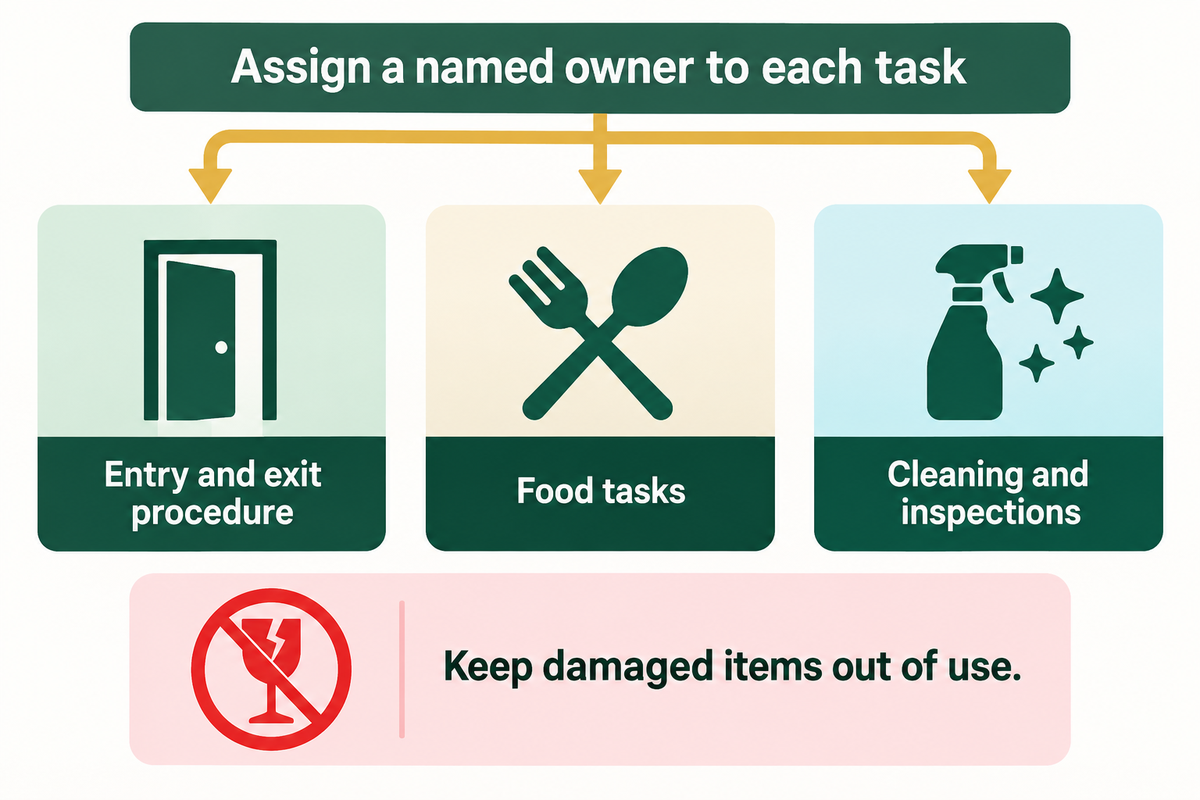
An indoor play operating plan delegates opening checks, entry control, food tasks, cleaning, incidents and closing to individuals. The plan also identifies when equipment isn’t available and shows how guests are notified of the changes. Putting these responsibilities into the rota allows the business to operate when the owner isn’t on the counters.
Michele Caruana’s 2024 comparison of timed and drop-in play says that while reservations help reduce the number of people waiting to play, they can create a different type of peak: multiple people arriving to check-in and place orders at the same time. Resetting between every session increases the overall workload. Assess both the customer experience and the overall workload before deciding which booking system to use. Any walk-in availability should stay within the same admission target as reservations.
Separate tidying from cleaning, sanitizing and disinfecting. The CDC’s guidance for early-care settings explains the need for cleaning before treatment, the product-label contact time and complete drying for applicable sanitized items. Use the process guidance in addition to local requirements and equipment instructions. A toy can’t be returned to use just because the next booking has started.
- Keep damaged or contaminated items out of use until the appropriate checks and treatment are complete.
- Assign an entry and exit procedure, including the gate and any re-entry policy.
- Keep hot-drink collection away from children’s main route through the play zone.
- Place cleaning supplies out of children’s reach and provide space for items awaiting cleaning.
- Include bathroom checks, suitable step stools where needed, and clear stroller storage in the daily tasks.
- Record incidents and communicate closures, cancellation terms and refunds consistently.
Do I Need a Child Care License to Start a Play Cafe?
You must obtain a child-care license for activities covered by local licensing requirements when no applicable exemption exists. A parent staying in the building isn’t a nationwide exemption. Ohio’s section 5104.02(B)(4) requires a director’s determination, a parent, guardian or custodian readily accessible on the premises, and care limited to two and one-half hours per child per day.
Your insurance must match the activities you actually provide. Programs involving dropping off children, food preparation and private rentals need clear descriptions when discussing insurance coverage. The Venue liability planning guide addresses more operating risks. A 30 minute reset window must be task trialed before it can be offered to the public.
Turn the business plan into an equipment brief
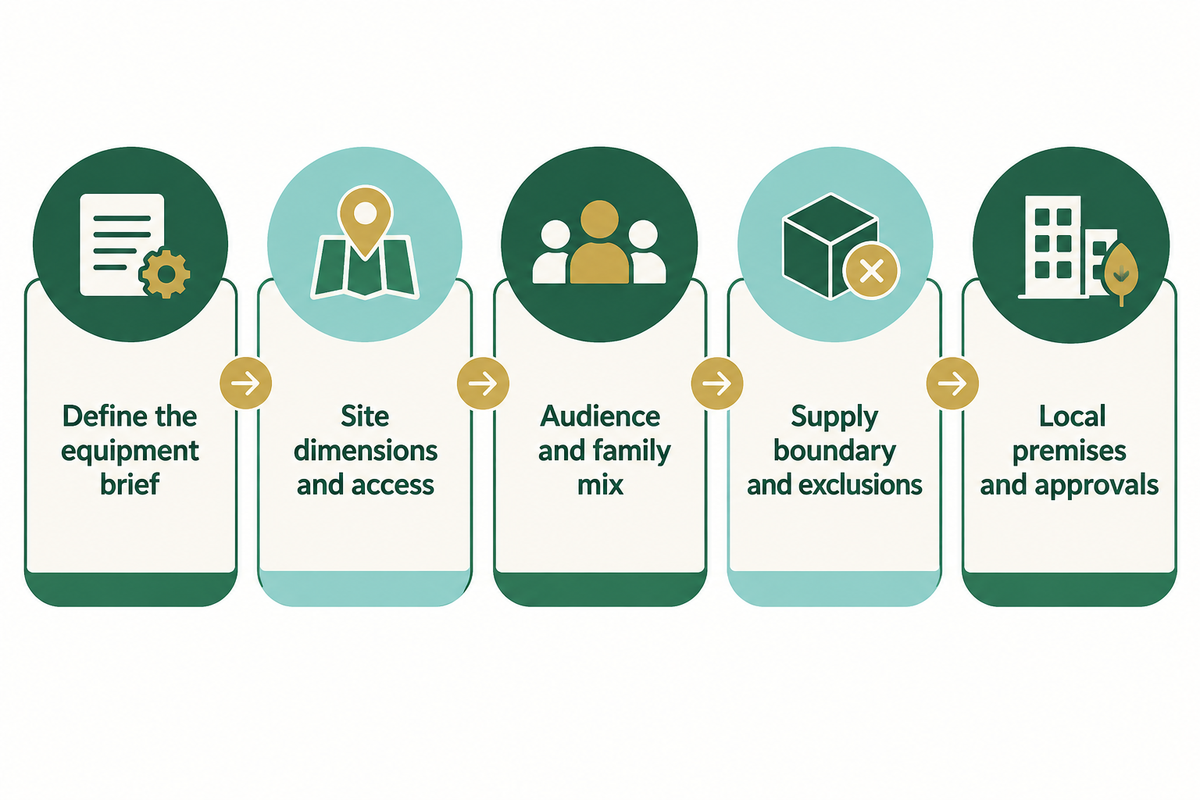
An equipment brief outlines the chosen audience, capacity and operating model. Floor plans and supply scopes are defined. Play objectives and access to services are addressed. Equipment delivery is separate from premises work and local approvals. Each quote is specific to the project requirements.
Dreamland covers Space Planning, Floor Plans and 3D Designs. We also cover equipment production, shipping, installation support and after-sales service. Our work on designing and manufacturing indoor playground equipment starts with Space and the Intended Use. The customizable playhouse or soft play equipment layout requires clear access for inspection, cleaning and replacements.
Food service equipment has its own requirements. For instance, Iowa’s food-establishment plan review requests the menu, scaled plan, equipment specifications and supply/waste connections. Generally, the lesson here’s to include the requirements of the cafe equipment in the layout early in the process, before separate vendors provide prices on equipment that doesn’t coordinate with the assumptions of the other vendors.
- Confirm the site inputs: usable dimensions, ceiling restrictions, columns, exits, delivery access and building services.
- Specify the audience: target ages, expected family mix, accessible circulation and activities that children can return to.
- Ask for the supply boundary: equipment list, materials, installation responsibilities, freight terms and exclusions.
- Verify the project documentation: applicable equipment evidence, drawings, instructions and the local parties responsible for approvals.
- Define after-sales needs: cleaning compatibility, inspection access, replacement parts and the process for an equipment upgrade.
When estimating for a 10-family target, evaluate proposals against the same seating and service plan, then compare equipment counts. High-quality play equipment earns its space through appropriate activities, durable construction and maintainable details. Send the layout, menu scope and quote responsibilities when you build your wider play business plan.
Plan repeat visits without relying on trend forecasts
Keep families coming back with an offer they can use regularly: appropriate play, reliable hours, cleanliness, and an offer that works for their schedule. Test weekday programs and memberships for available capacity. Keep positive industry growth outlooks outside the sales model, especially if paid demand doesn’t support the projected visit frequency.
A homeschooling group, for instance, might prefer a weekday block, while working caregivers need weekend availability. For a play business, a promotion should fill a low-demand window without crowding out full-price visits. Manage activities, e.g. rotate playdough vs. more loose parts. A clean, familiar play area can be more useful to a regular family than an ever-changing play area.
Current planning includes verifying the edition of local rules: the FDA’s 2026 model update is a prompt to align the menu and project review with the relevant authority. The booking technology should support the operation chosen. A system that can handle shared sessions and member access is useful only if its booking rules are congruent with the available space.
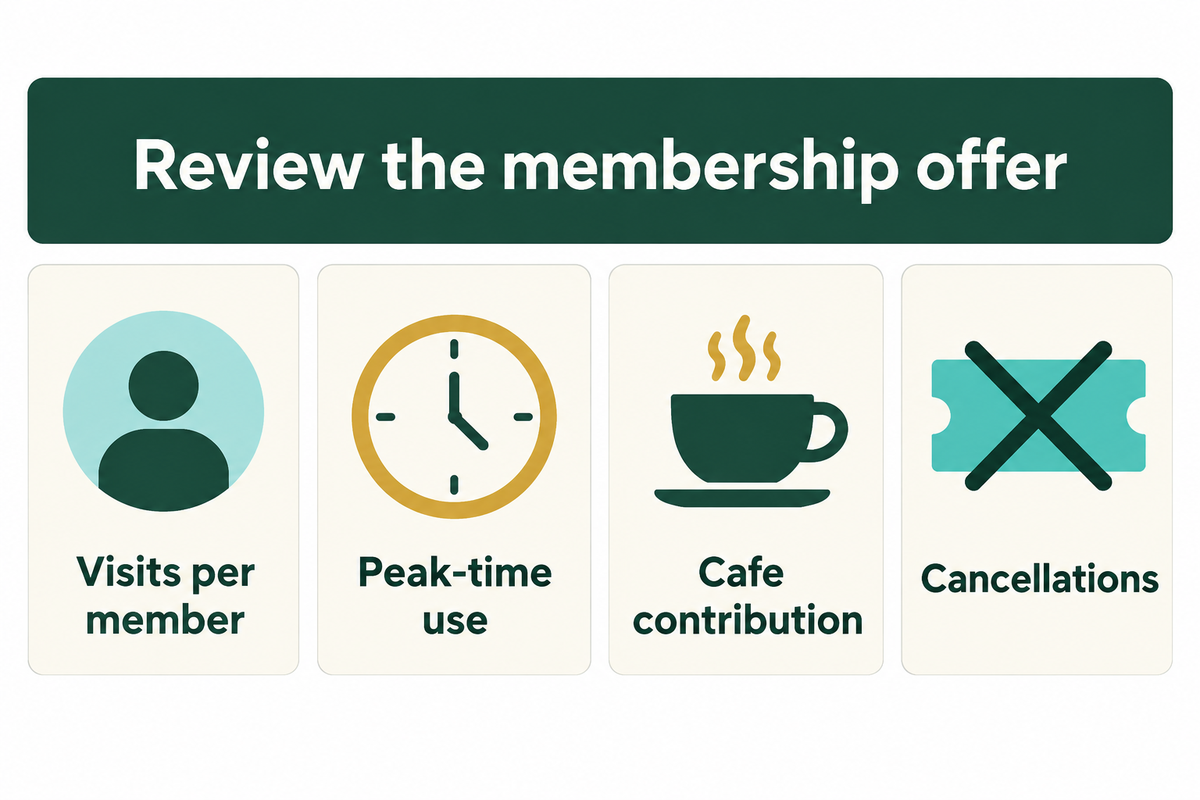
Review a proposed membership after 30 days of operation based on visits per member, peak-time use, cafe contribution and cancellations. Compare the results to the promised experience. If members can’t access when expected, selling more subscriptions increases the problem. Adjust the offer or availability before changing promotion.
Key takeaway
A play cafe plan works when the same family visits fit the room, the schedule and the cash model. Set the operating target first, then choose the equipment, menu and sales mix that can deliver it.
Play cafe business plan FAQs
A play cafe business plan requires a case for local demand, a workable layout and a cash forecast based on the same operating assumptions. The responses below cover profitability, opening costs, launch needs and the decision between an independent concept and a franchise, tied to the proposed venue.
Are play cafes profitable?
Play cafes can be profitable when contribution from their sales covers the full operating cost of the venue.
Count paid admissions, membership fees, parties and separately sold food once each. Then deduct direct delivery costs and the base costs of keeping the doors open, including owner labor. Membership redemptions still consume space even when no new admission is paid. Test a quiet month and the busiest hour before treating the sales forecast as achievable. Financing, tax and recovery of the original investment require their own cash-flow analysis.
How much does it cost to build a play cafe?
Build the cost estimate from local premises work, delivered play equipment, cafe fit-out, professional fees and opening cash.
Price the same scope with each supplier and record what’s excluded. Rent deposits, electrical or drainage changes, freight, unloading, installation and paid training can fall outside an equipment quotation. Add the monthly cash shortfalls expected while attendance develops. The building condition and food-service choice can change the total substantially, so a useful budget identifies the quote owner and payment date for every package before the lease is signed.
What does it take to open a play cafe?
You need a defined audience, suitable premises, funding, the required approvals and a team able to run play and cafe service together.
Begin with the age range, supervision arrangement and menu. Test local paid demand, then translate the concept into a layout with seating, accessible circulation and support areas. Prepare the cost packages and operating schedule before ordering equipment. Local building, food and child-care classifications need attention according to the activities proposed. An opening rehearsal should cover arrival queues, drink orders, cleaning, incidents and the handoff between open play and parties.
How long does it take for a play cafe to break even?
The timing comes from the monthly forecast, not a fixed industry timetable.
Find the month when contribution covers operating costs. Calculate recovery of the initial investment separately from cumulative cash flows, including financing and later capital spending.
Should I open an independent play cafe or buy a franchise?
Choose a franchise when its verified support and brand recognition justify the fees and restrictions for your project.
Compare the franchise fee, royalties, required purchases and operating rules with an independent budget. Keep the same premises, owner labor and demand assumptions in both cases.
Ready to develop the play-equipment scope?
Share the floor plan, target ages, family capacity and cafe arrangement with Dreamland. We can discuss the play layout and equipment package while your local project team develops the premises and approval work.
References & Sources
- U.S. Small Business Administration: market research, business plans, startup costs and break-even analysis
- U.S. Food and Drug Administration: FDA Food Code
- U.S. Access Board: guide to accessible play areas
- U.S. Department of Justice: ADA primer for small businesses
- Centers for Disease Control and Prevention: cleaning early-care and education settings
- Ohio Revised Code: section 5104.02
- Iowa Department of Inspections, Appeals, and Licensing: food-establishment plan review