Get in touch with Dreamland Playground Company

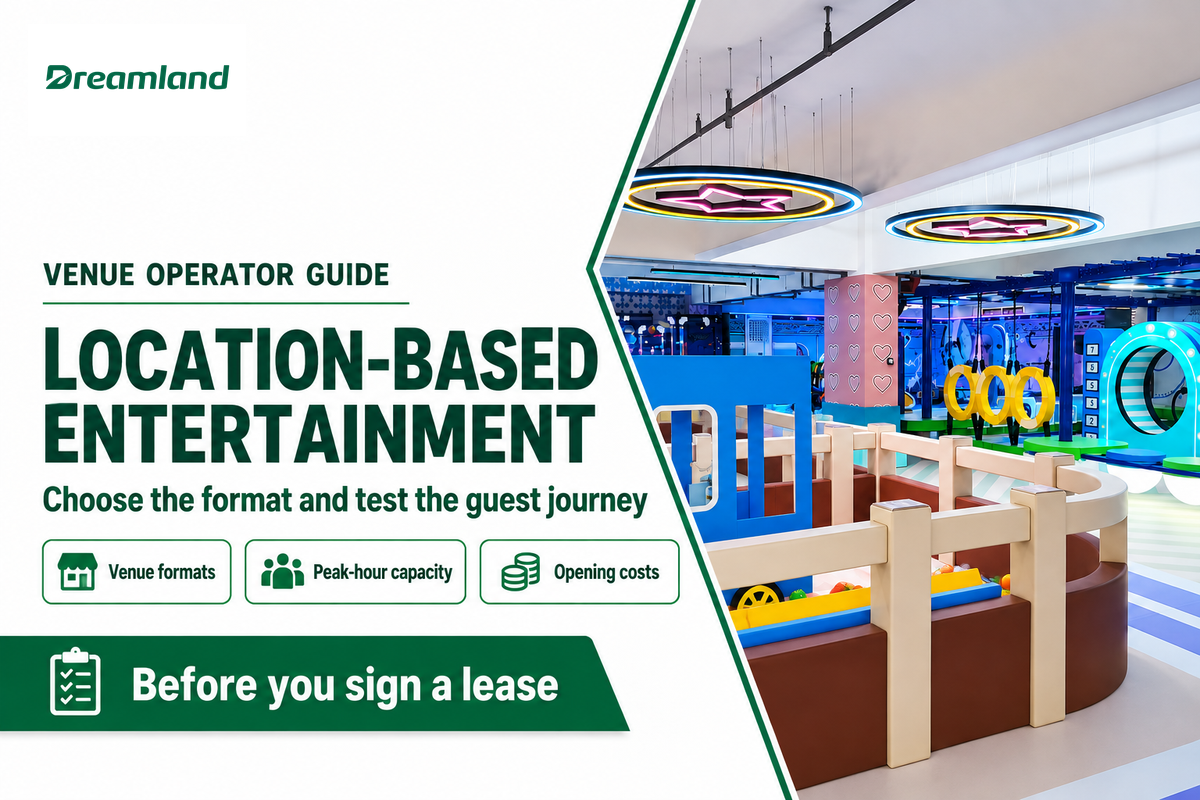
Location based entertainment (LBE) can draw consumers to your venue, but booking a full day can result in long lines out the door. Trace a guest’s journey from arrival to the end of their experience. Identify what bogs down that journey and address it through your layout and booking process.
Location based entertainment is an experience designed for a physical venue, from indoor play and interactive museums to immersive experiences like group VR. Guests may buy entry, a timed session or individual activities. Compare formats by what guests buy and how many groups the venue can serve at peak.
What Is Location-Based Entertainment?
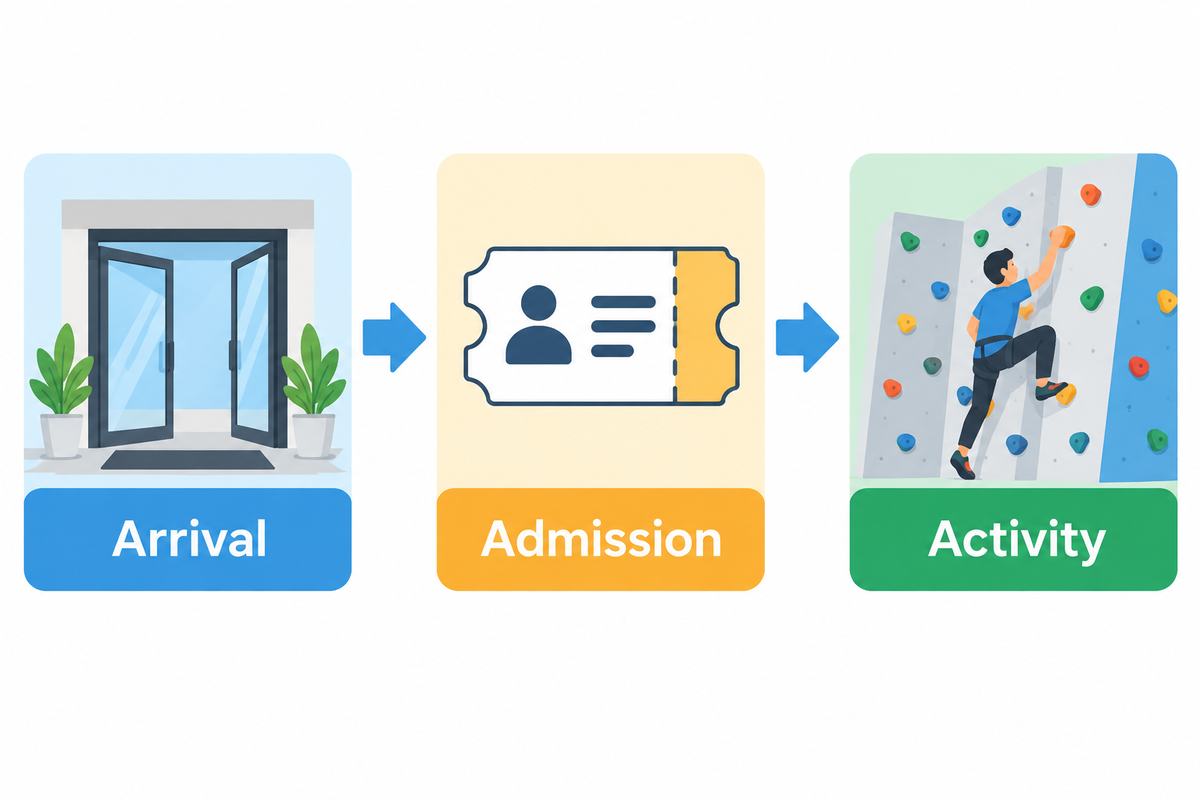
Entertainment that draws people to travel to your venue is Location-based entertainment (LBE). Think of a family entertainment center, an escape room, or a free-roam VR experience. Guests can pay for admission, pay per play, or enter for free with paid activities inside.
Think about the guest journey from the guest’s perspective. Who are the guests and how do they interact with your offering? Are guests putting on headsets to enter a VR experience? Are guests taking turns to climb a course? Are fans stepping into a set based on their favorite show?
The International Association of Amusement Parks and Attractions covers bowling, trampolines, immersive arcades and interactive museums alongside other family entertainment. LBE experiences span a neighborhood arcade and a theme park. In the broader entertainment industry, LBE venues sell entertainment experiences outside the home. People visit a specific location because its rooms, scenery or physical equipment make the activity possible. For a venue operator, the useful distinction is what guests come to do, what they pay for and how they move through the building. Compare physical entertainment, interactive gaming and audience experiences built around a story by the visit each can deliver.
Real Examples of Location-Based Entertainment
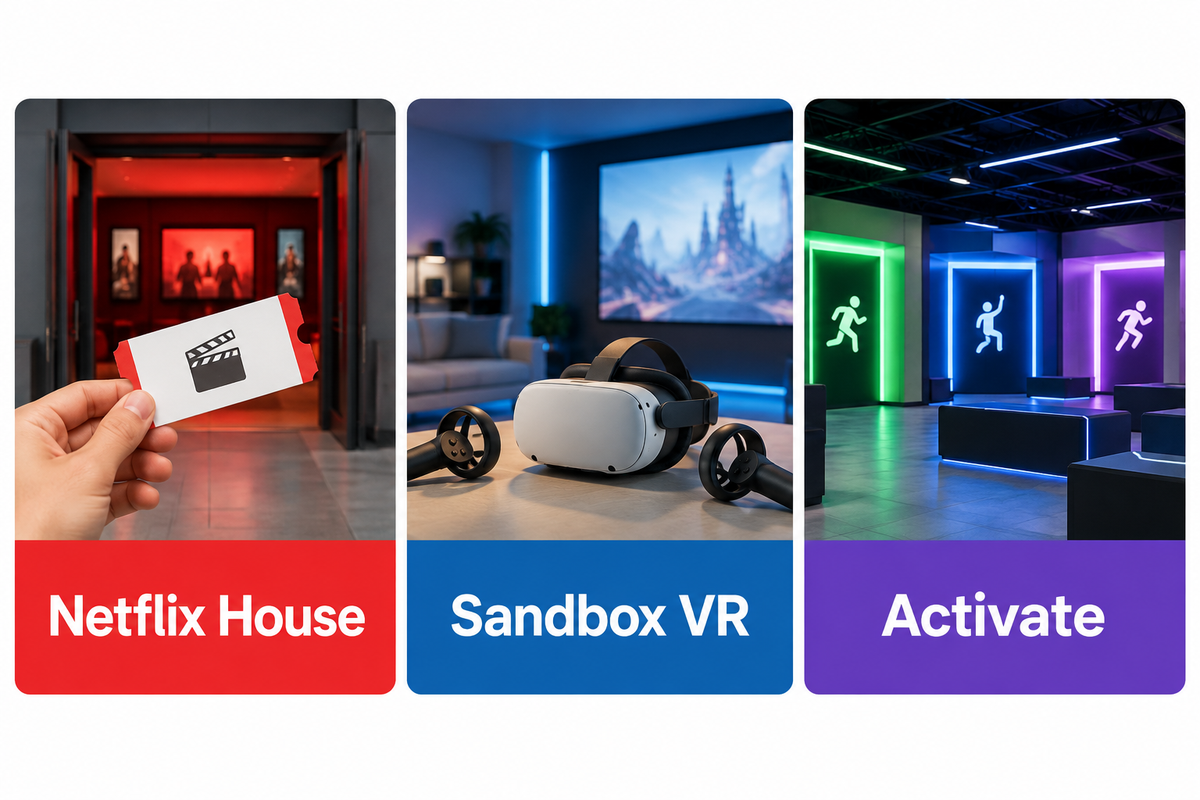
Netflix House, Sandbox VR and Activate illustrate three different ways of selling a visit. At Netflix House, guests can enter select areas for free, with separate tickets required for some experiences. Sandbox VR sells a slot for a particular room. Activate uses Open Mode to let guests move between game rooms during their visit.
- Attractions at individual locations include themed mini golf, interactive experiences and virtual reality. With free admission, operators can count a visit and an attraction purchase as distinct events. See the Netflix House visitor FAQ.
- Sandbox VR. The operator’s booking FAQ says two to six guests can play together. The specific room maximum appears during booking. At the upper end of that range, the group fills more places. Smaller groups still use the same room and time slot.
- Activate. In Activate’s live-action game format, groups play in rooms designed around physical challenges. In Open Mode, guests can choose their own order. On the floor plan, make space where groups stop between rounds, particularly around the challenges they’re most interested in playing.
Virtual reality (VR) builds a digital environment around the player. By contrast, augmented reality (AR) superimposes digital elements in a user’s view of the physical space. Immersive technologies like VR and AR can support different forms of entertainment. For an immersive entertainment venue, mixed reality can also integrate a physical space with digital objects that respond to players. Evaluate whether guests appreciate the feature before investing to create and maintain it. For technologies like virtual reality, include fitting and staff time in the evaluation. Use the results to determine whether technology adoption helps the venue achieve the experience it offers. Budget staff training and ongoing support for advanced technologies alongside the attraction equipment. An indoor playground or mini golf course can provide guests with a complete reason to visit through physical equipment, scenery and a game they understand before they buy.
Which Format Fits Your Audience?
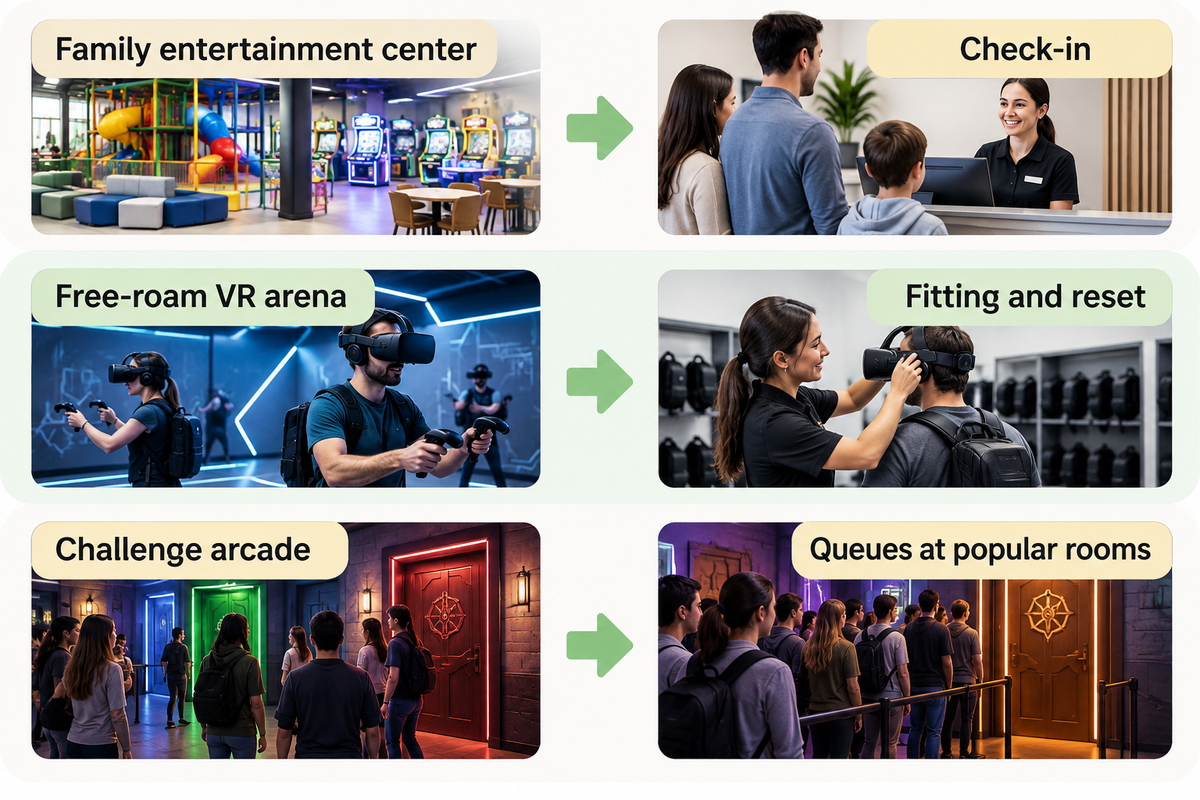
Choose a family play center for a mixed-age group or a free-roam VR arena for a shared adventure. Prioritize activities and flexible seating for mixed age groups. A themed exhibit may work if visitors book at intervals the staff and layout can support.
| Venue type | What guests buy | What to test at peak | Reason to return |
|---|---|---|---|
| Family entertainment center | Open play, an attraction bundle or a party package | Check-in, age-zone coverage and party turnover | Repeat family outings and birthdays |
| Free-roam VR arena | A timed session for a group | Room schedule, equipment fitting and reset | A new game or another group occasion |
| Challenge arcade | A timed pass to several rooms or games | Queues at popular rooms when other rooms have space | Scores, levels and new challenges |
| Immersive exhibit | A ticket to a themed walkthrough or show | Entry intervals and crowding around popular scenes | A change of story, exhibition or program |
| Escape room | A reserved room for a group | Reset between groups and the arrival briefing | A different room or storyline |
| Indoor mini golf | A round booked by a group or player | Spacing between groups on the course | League nights or a different group outing |
| Bowling venue | A lane or timed booking | Lane availability and changeover between groups | League play and social bookings |
| Trampoline park | An entry session or party package | Check-in and staff coverage by zone | Parties and recurring active-play sessions |
| Limited-run pop-up | A ticket to a temporary program | Timed entry and the speed of loading each group | A new run or changing program |
Give the shortlisted format an anchor attraction. JLL describes Level99 locations of 40,000 to 45,000 square feet with more than 50 challenges and a pub. At that scale, check guest circulation between games and dining. For a smaller unit, test the layout around one activity before committing space to the second. Large entertainment complexes can offer several activities, including interactive gaming and food. Experiences that combine entertainment with a meal work best when the seating and arrival pattern can serve the same group. Smaller venues can start with one strong reason to visit and a second revenue stream that shares the same audience, such as parties. For a family entertainment center, that might be an indoor play structure supported by a party room and an arcade. Check whether the same group can use the planned activities during one visit. If adults have nowhere to wait, adding another game solves a different problem. If parties come to a standstill at check-in, give arrivals somewhere to gather before buying more play equipment.
How to Test a Venue Before Signing a Lease
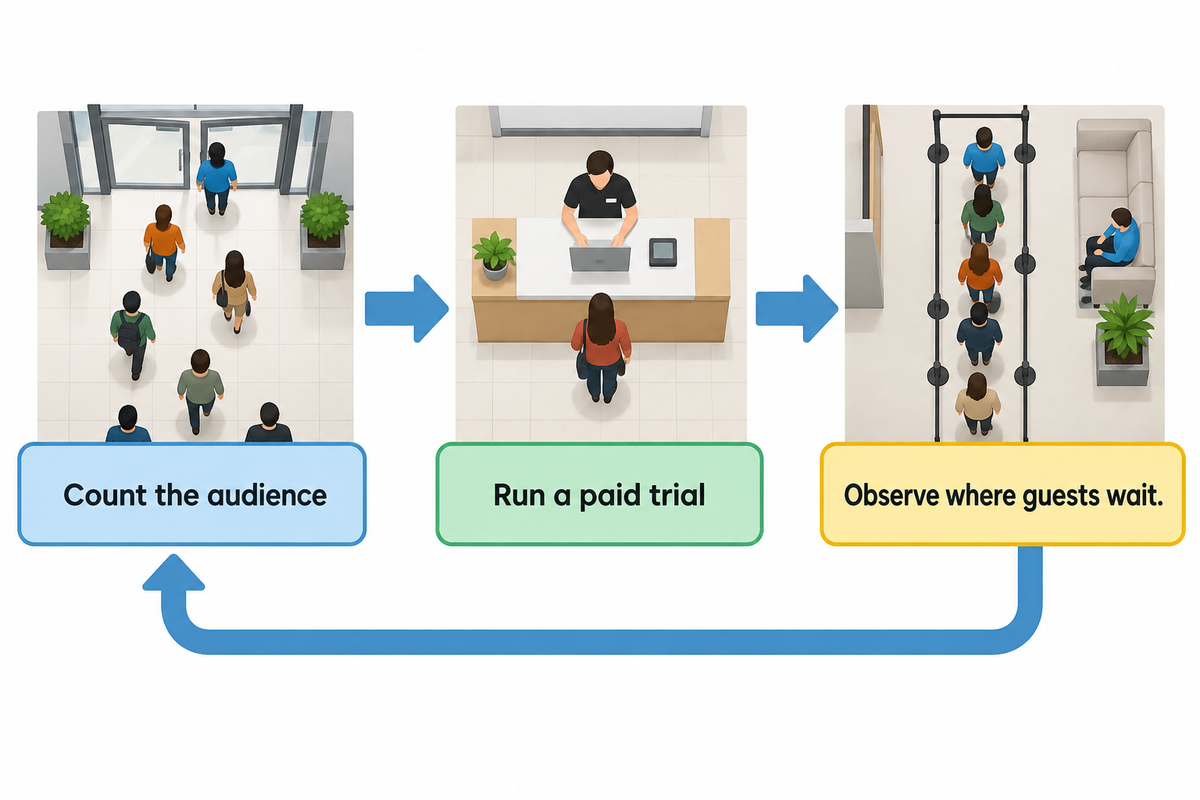
Test a venue by observing who passes the actual unit and finding out how many of those will pay to do the planned activity. Compare arrivals in weekday and weekend windows. Run a timed demonstration or offer a real paid trial at the proposed price. Keep reservations, people who turn up and completed paid visits in separate columns.
In its May 2026 entertainment tenant study, JLL identified 721 planned or announced locations representing 16.5 million square feet of pipeline demand. Its study tracks concepts operating across the United States and Canada. JLL’s report depicts real estate trends in the location-based entertainment market. Market data can help identify which concepts are entering retail space. A proposal that mentions a market size or compound annual growth rate (CAGR) should cite the geography, time frame and types of attractions counted. Using different definitions can make two forecasts hard to compare. When evaluating your unit, measure the share of relevant visitors who will buy at the price you plan to charge. With local market share, assume the same catchment, time frame and definition of a paid visit for your venue and your closest competitors. In a competitive market, outline the alternatives by the occasion they serve. A birthday party might compete with the same-day booking at a pool or cinema.
- Count the intended audience at the door. With concepts that are primarily for families, look for family groups when counting your target audience. Use the same metric when estimating your audience in a paid trial, like a party booking.
- Include specifics. Disclose the experience, the price and the actual time availability. With paid trials, capture actual payments to gauge how the offer stands up against the competition. With a sales offer, determine how customers learned of the offer and distinguish between guests who were invited and those who received a discount.
- Note where guests wait, whether they can find the entrance, and how long a party takes to move from check-in to the activity. Note the staff and equipment utilized during the test.
Use the observed conversion and the share of sessions you can staff to sketch a quiet day and a busy day. Check if growing demand is clustered in a few time slots before extending hours. The mall landlord may be interested in evening traffic, and how long guests remain in the mall. An operator has to cover staffed hours and pay rent. Both are interested in the same daypart observations. With regard to questions that are specific to the property, use this mall playground lease guide.
Before committing to the unit, have the building team check the intended use, concurrent occupancy and the accessible route on the same drawing. These conditions describe the site’s limitations. The peak-hour worksheet below estimates how many people a staffed process can serve over time.
How Many Guests Can You Serve in a Peak Hour?
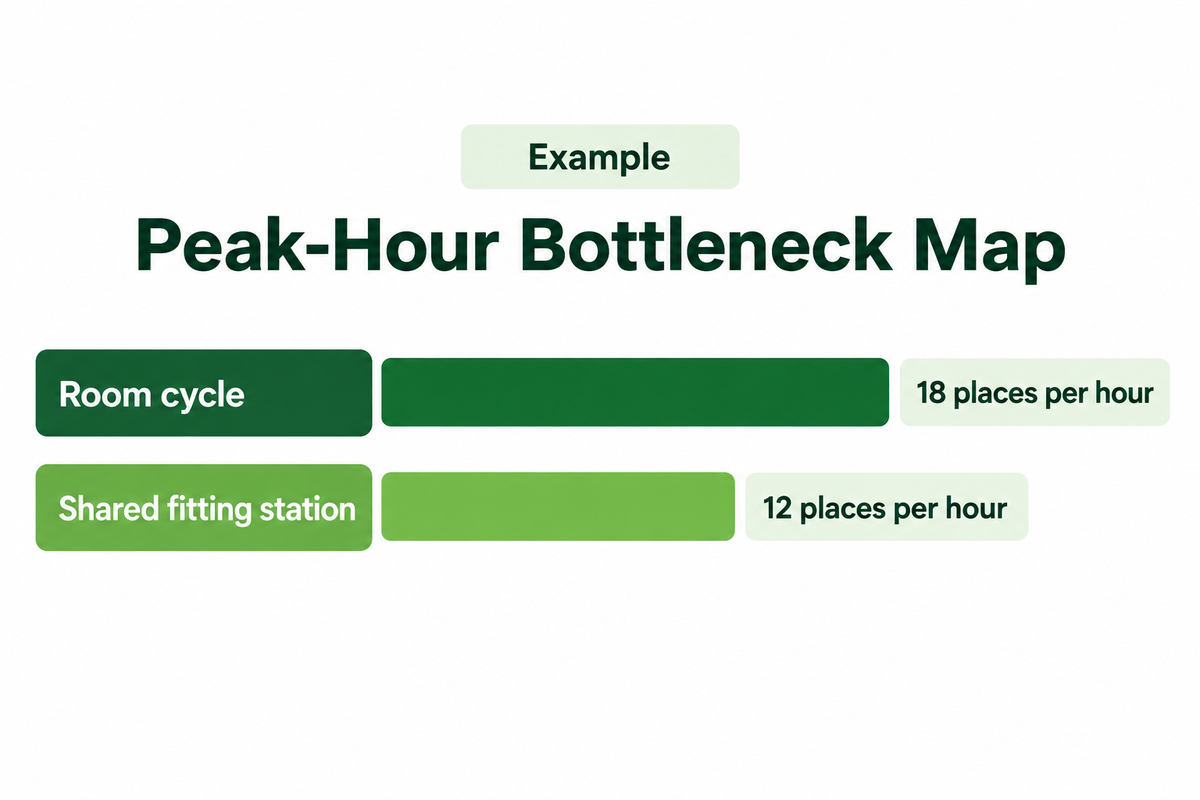
In the case below, schedule up to 12 guests per hour. That’s what the shared fitting station can prepare on time. Work through the same timetable for your venue and set bookings by the step with the fewest available places.
Say you have two VR rooms each holding 6 guests. Each group plays for 30 minutes, and the room takes 10 minutes to reset. Stagger room starts by 20 minutes and the rooms can accept three groups per hour. Now add one shared fitting station that can prepare only one six-person group every 30 minutes. Guests go through that station before the start of their session. The timings are worked-example inputs for a venue test.
| Step | Example inputs | Peak-hour result |
|---|---|---|
| Room cycle | Two rooms, six places each, 40 minutes per cycle | Three starts or 18 places per hour with staggered rooms |
| Shared fitting station | One group of six ready every 30 minutes | Two starts or 12 places per hour |
| Booking calendar | Alternate rooms at half-hour intervals after each group is ready | Up to 12 places per hour, assuming full groups |
You want to record the actual time each group checks in, finishes their briefing, starts play, and clears the room. You want to capture actual times the next group is ready to play. If fitting is going faster on a trial day, watch where the waiting is moving to. Staff and room availability determine if a second fitting station adds starts. If guests arrive late or book in smaller groups, continue to model those conditions for the booking team to see.
Think about soft play in the same way. VR headset starts become entry or arrival times. Room reset becomes party-room clearing, cleaning or a shift change at check-in. The practical test is how many guests the staff can serve using the sequences you’ve planned. Once the venue is running, a separate indoor playground operations guide can help turn observations into routines.
What Does It Cost to Open an Indoor Entertainment Venue?
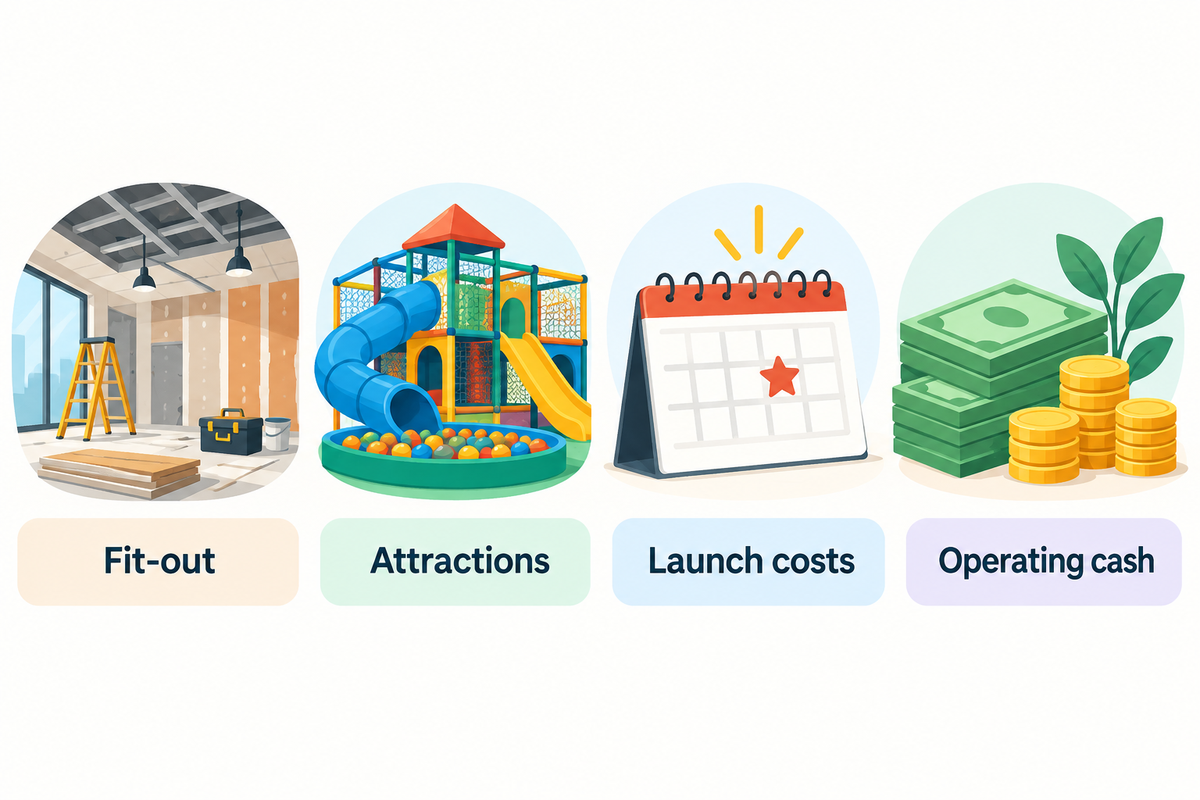
Your opening cost is the sum of premises and fit-out costs, installed attractions, launch costs, and the operating cash you need until regular visits can cover operations. Quote against the same plan and inclusions. Existing utilities can change a fit-out budget even when the equipment stays the same.
Two Texas project filings show how much the scope can change at similar floor areas. A McAllen indoor play renovation listed a $110,000 construction estimate for 3,600 square feet, including interior demolition and work on a cafeteria, restrooms, play area and office. A Cedar Park indoor play project listed $200,000 for a 3,770-square-foot interior finish-out. Both amounts are estimates filed for particular construction projects. Request the equipment, lease and launch cash figures separately.
The U.S. Small Business Administration’s startup cost guide separates one-time and monthly costs. Running indoor entertainment venues means pricing recurring obligations, such as content licenses, replacement headsets, ongoing tech support and a service agreement for a VR format. Family play venues could require a host for parties, as well as replacement and cleaning of soft good items. Exhibits that use projection mapping carry costs for media updates and projector maintenance.
- Premises and fit-out. Request a costed plan showing the existing condition, services to be provided, and landlord works. Keep track of who’s paying for what and when payment is due.
- Attractions. Separate costs for equipment, freight, handling, installation, and training. Clearly mark the items that will be priced by a third party.
- Launch cash. Include booking setup, initial supplies, recruitment and training. Visible recurring costs for wages, rent, insurance, utilities and maintenance should be shown on the monthly side. Revenue diversification can make use of spare capacity, such as a weekday party slot that would otherwise be empty.
Look at attendance the same way for a quiet day and a busy day. Subtract variable cost for one paid visit from its revenue, then divide monthly fixed costs by that contribution to find the number of paid visits needed to cover those costs. A one-fifth reduction in that contribution increases the number of paid visits needed to cover the costs by one-quarter. Financing payments and capital recovery, where applicable, should be shown separately in the cash flow forecast.
How Do You Give Guests a Reason to Return?
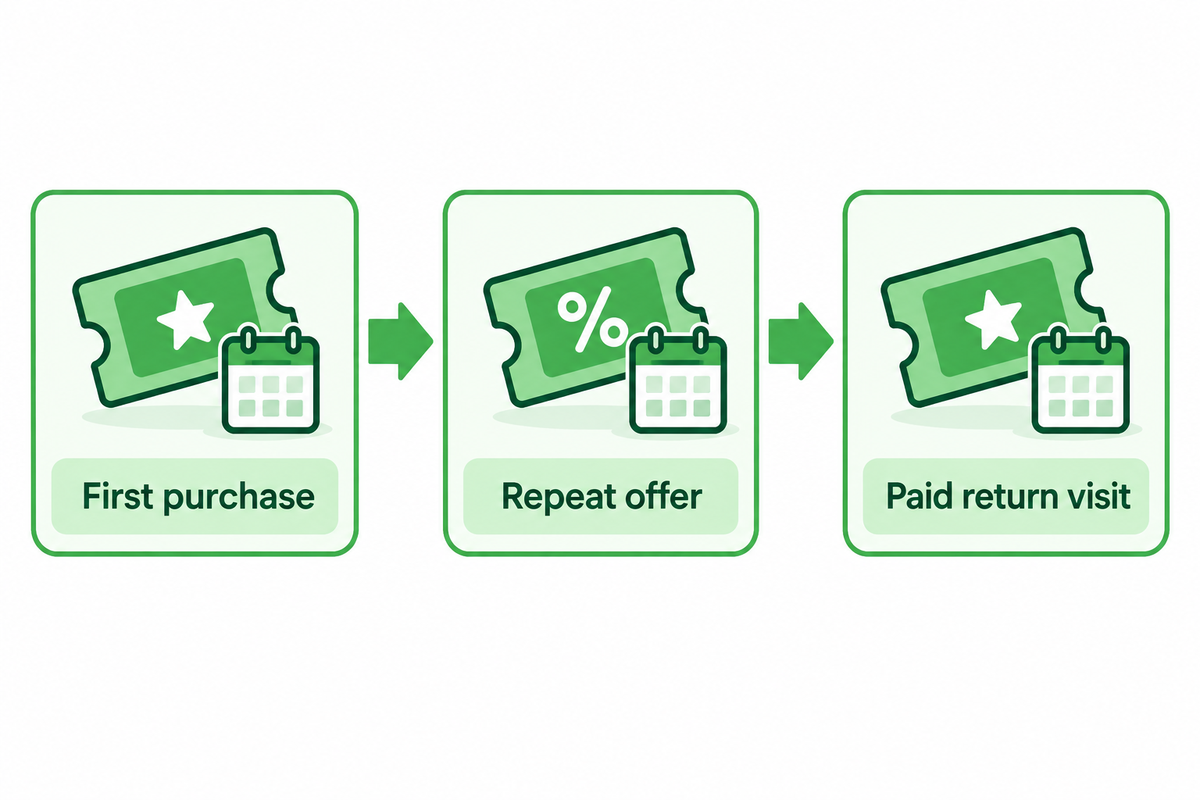
Use after-school play or birthdays to bring families back, new difficulty levels to draw challenge arcade groups, and refreshed scenes to give exhibition guests another reason to book. Track paid return visits for each promotional offer to determine whether it’s worth running again.
Choose the return visit that applies to your audience. If local trial bookings show rising demand for immersive experiences, test which activities people are willing to book again and what each costs to refresh. In participatory attractions, level advancement can give guests a reason to return. JLL’s entertainment tenant study describes how Netflix House uses rotating content to give guests a reason to return. Budget content creation and content management where each new immersive program needs production work and a scheduled changeover. Local families may need regular after-school hours and a quick check-in. Destination exhibits can sell a special occasion to people who travel further. Recognizable brands can create an opening draw. To extend interest beyond the opening, schedule events, add new games or refresh a scene guests can book again.
Track the first purchase and a subsequent paid visit together. Analyze groups that first came in the same time period. Consider separate party bookings, single-visit tickets, and membership redemptions, which all have different economics. Record the staffing and content cost attached to each offer. If a new Virtual Reality title increases return bookings while adding downtime and licensing costs, finance can evaluate those costs against the paid return visits it generated. Basic booking analytics can separate first visits from repeat purchases. If the venue shows strong growth, check whether that growth reflects repeat visits or a promotion-driven surge in new guests.
What to Send an Indoor Play Supplier
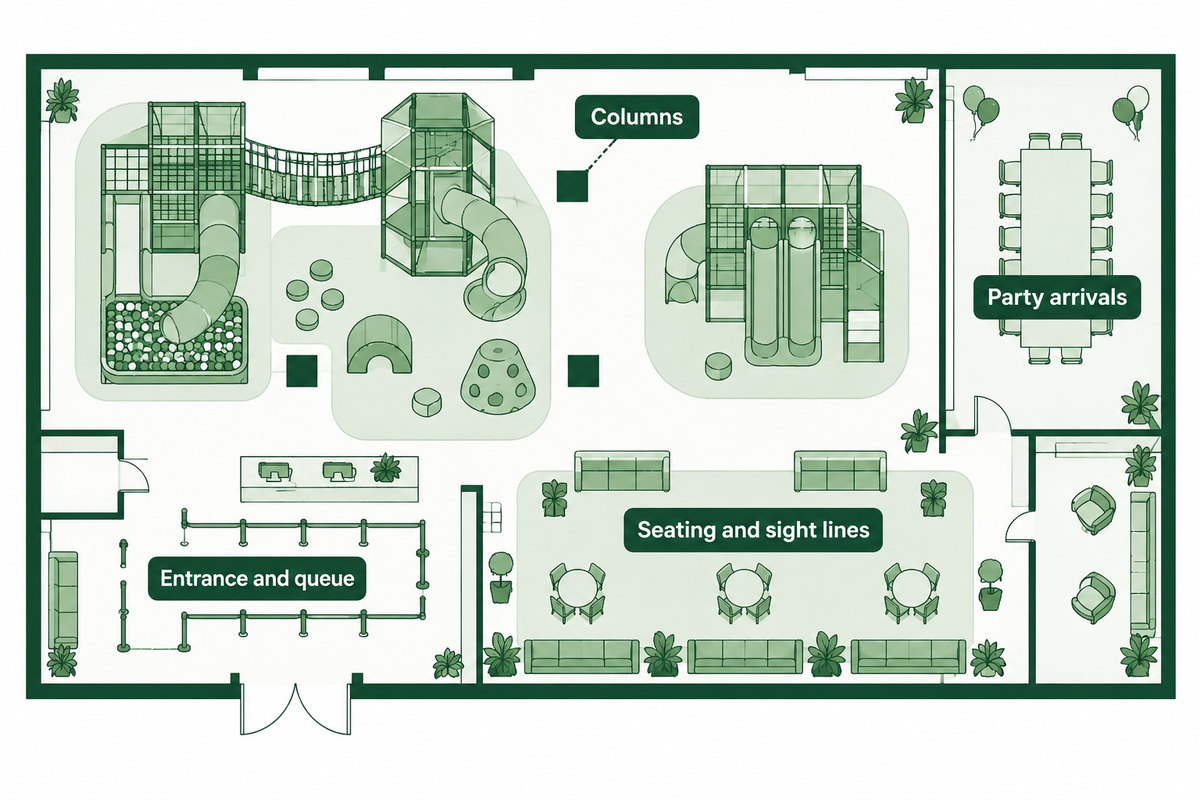
Send the supplier a plan with dimensions, the lowest clear height, and the target age groups. Provide information about the expected pattern of arrival, especially in the case of open play and parties occurring at the same time. Give the same drawing to all bidders to allow a comparison of quoted footprints, viewing positions, and responsibilities for system installation.
Dreamland Playground’s project process starts with floor area, column positions, the height below the lowest duct and movement through the unit. The team uses those details to plan the layout, then moves through 3D design, production, shipping and installation support. Bring in the appropriate specialist for location-based virtual reality, projection or another standalone attraction system. When you combine interactive entertainment with an experiential retail visit, share the same drawing with each supplier so that they can identify where their systems meet.
| Mark on the plan | Decision it informs |
|---|---|
| Dimensions, lowest duct, columns | Usable play footprint, structure height and access for delivery |
| Entrance, queue, counter and waiting | Check-in space, the accessible route and where guests gather before their slot |
| Target ages, seating and sight lines | Age-zone boundaries, caregiver views and staffing positions |
| Party arrivals and clearing schedule | When the party room and play entrance both need capacity |
Ask for the first drawing to depict the queue and seating before determining the project theme. The top companies on your shortlist should share their assumptions on the equipment footprint and scope of installation. That puts operations and the equipment supplier on the same plan. For a shopping-center unit, see the options for a custom mall entertainment zone.
Frequently Asked Questions
Is a family entertainment center the same as location-based entertainment?
Family entertainment centers are one type of location-based entertainment. Indoor centers might combine soft play, arcade games, mini golf and birthday parties under one roof. VR arenas and immersive art exhibitions also belong to the category. Those businesses may sell a single ticketed experience to a different audience and run on scheduled starts.
How does location-based VR work?
Location-based VR venues sell access to virtual reality equipment and a dedicated play space. In a free-roam arena, a group wears tracked headsets and moves together inside the room. The operator plans the booking around the whole visit, including fitting, briefing, play and equipment turnaround, so each of those steps can affect the number of groups served.
How do I plan a family entertainment center layout?
Begin with a dimensioned floor plan and mark the lowest overhead obstruction, columns and entrances. Draw how guests arrive, check in and reach the attractions and seating. Add party arrival and turnover to the same sketch. Use that flow to decide which spaces need separate queues or staff coverage before placing equipment.
How do I count paid visits in a free-entry venue?
Keep a door count and an attraction sales count. If people can buy more than one ticket, also track unique purchasers so conversion measures people as well as transactions.
Can a pop-up test a permanent attraction?
A pop-up can show whether people pay for the core experience at a particular price and how they move through the space. It also gives the operator a chance to time arrivals, briefing and turnover. Record which costs and traffic sources are specific to the temporary site. During a test, the host venue may provide staff, power or marketing. Price those items in the permanent plan and repeat the demand test in the catchment you intend to serve.
Planning an indoor play venue?
Send Dreamland Playground your floor plan, clear height and target age groups to discuss an indoor play layout.