Get in touch with Dreamland Playground Company

Quick Specs
- Best for: church boards, children’s ministry teams, facility leaders, and project donors
- Decision tool: seven capital-scope lines, two control records, and a 4-gate quote route
- Use this guide when: your ministry has an idea, a site or room, and a need to compare options without mistaking a vendor quote for the whole project
Church Playground Budget Guide is a scope-first planning guide for defining the play space, ages served, operating needs, and project responsibilities before anyone compares equipment prices. Treat the first quote as a scope conversation, not a total-project answer. This guide gives a church team a repeatable way to turn a playground idea into a decision brief, a comparison sheet, and a funding plan.
Short answer: A church playground budget should cover the full approved capital scope, site or room readiness, equipment, surfacing, logistics, installation, approvals, and contingency, then keep lifecycle checks separate. Compare proposals after those decisions are recorded.
What this guide does: It helps a board compare like-for-like project scopes. It doesn’t provide legal, tax, insurance, grant-eligibility, accessibility, or compliance advice.
Turn a Church Play Idea Into a Board-Ready Brief
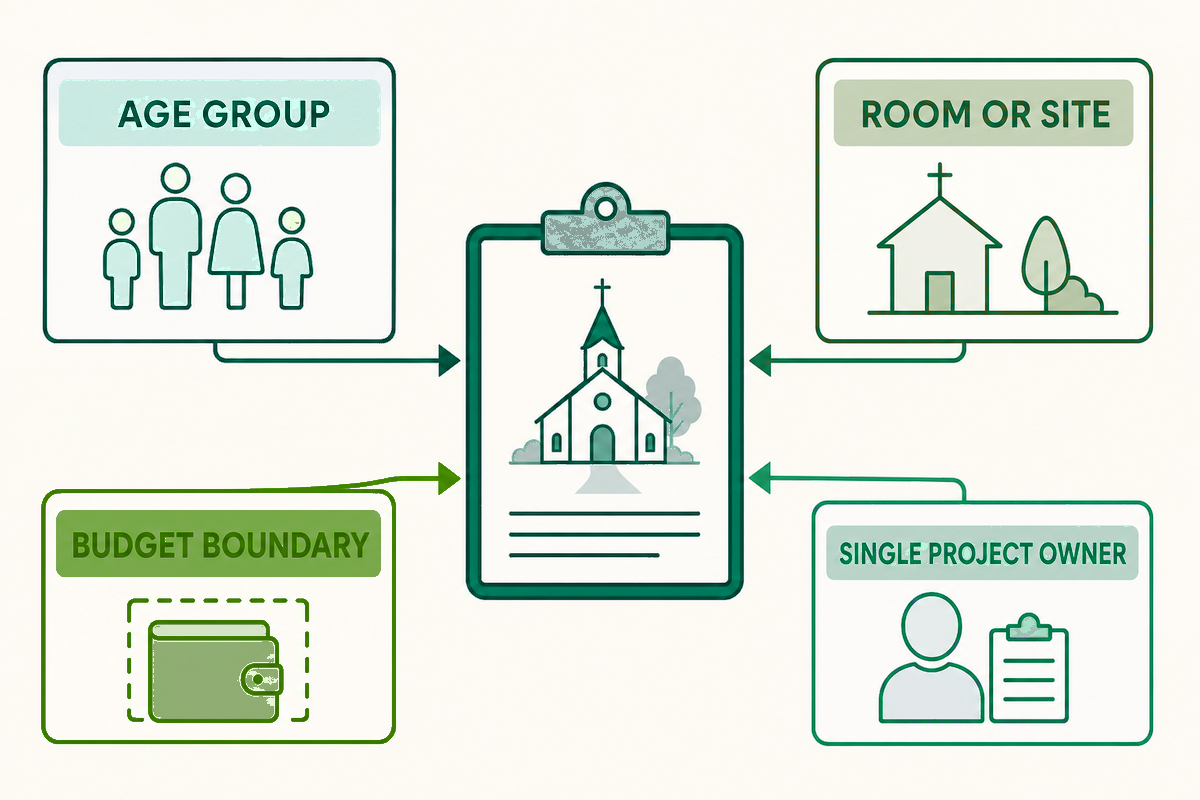
A board-ready playground brief is a practical way to make a church playground budget useful. It turns a general wish—“we need a better place for children”—into choices a supplier, facility team, and finance committee can test: who will use the space, where it will operate, what must be included, and who owns each decision.
Begin with the ministry outcome. Is the project intended for weekday programs, Sunday check-in periods, a preschool, community events, a hotel-style family area, or a dedicated outdoor play space? Record the primary age group, expected supervision pattern, usable footprint, operating hours, and target opening date. Small children’s play areas and multi-age commercial playgrounds can share a name but may require different layouts, circulation, surfaces, and installation support.
Then name a single internal project owner. That person doesn’t need to design the playground equipment; they keep the church’s decisions consistent between board discussions and supplier conversations. Ask the owner to maintain one version of the brief, one list of non-negotiables, and one log of open questions.
Planning note: Start a scope request with the room or site, ages served, operating context, budget boundary, and timeline before pricing a play system.
Dreamland Playground’s project services describe a process that can include early planning, floor-plan and 3D design, production, shipping, and installation support. For any church project, clarify which of those steps belong in the requested scope and which remain local responsibilities.
Build the 7-Line Church Project Scope Ledger
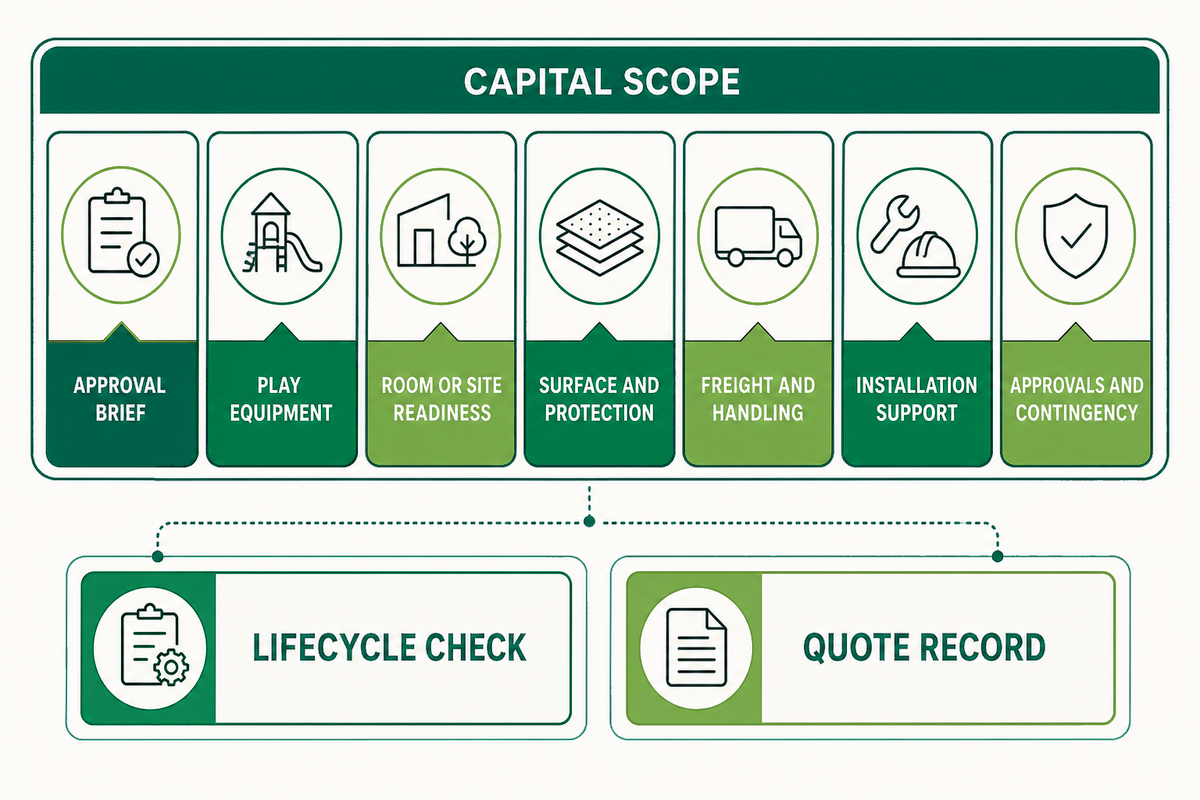
The 7-Line Church Project Scope Ledger is an article-defined capital-scope checklist that separates seven scope decisions before quote comparison. It isn’t a lifetime-cost promise and it isn’t a substitute for local professional review. Its purpose is simple: make sure every bidder is asked to price the same approved project boundary.
Use the first seven rows as the capital scope. The last two rows are control records: one holds lifecycle questions outside the current capital total, and one keeps the scope version and exclusions visible. Don’t fold future upkeep into a claimed total unless your church has its own support assumptions and a qualified way to validate them.
| Scope line or control record | What the church should define | Decision owner | What to compare |
|---|---|---|---|
| 1. Approval brief | Age group, purpose, room or site, opening target, and budget boundary | Board project owner | One approved version shared with every bidder |
| 2. Play equipment | Play experiences, capacity intent, theme, and age separation | Ministry and design lead | Included structures, panels, climbers, and loose accessories |
| 3. Room or site readiness | Usable footprint, entry path, utilities, drainage, or indoor conditions | Facilities lead | What is already ready and what still needs work |
| 4. Surface and protection | Surface system, transitions, edge details, and cleaning needs | Facilities lead | Materials, preparation, and finishing responsibility |
| 5. Freight and handling | Delivery address, unloading plan, storage, and site access | Operations lead | What delivery service includes and excludes |
| 6. Installation support | Installer role, schedule, tools, site coordination, and acceptance steps | Project owner | Labor scope, handoff, and unresolved local work |
| 7. Approvals and contingency | Local review path, decision timing, and open change questions | Board and facilities lead | Assumptions, exclusions, and change-control process |
| Control record: lifecycle check | Inspection, cleaning, repair, replacement, and operating ownership | Facilities lead | Questions to validate later; not an assumed lifetime total |
| Control record: quote record | Issue date, scope version, named exclusions, and expiry | Project owner | Whether each quote answers the same brief |
Capital-scope review and separate lifecycle check:
| Review area | Include in the current capital scope? | Record for later validation? |
|---|---|---|
| Equipment and installation support | Yes, when approved in the brief | Confirm handoff conditions |
| Room or site work | Yes, when assigned to the project | Confirm local owner and timing |
| Surface and protection details | Yes, when required by the agreed concept | Confirm maintenance process |
| Freight and handling | Yes, when delivery is in scope | Confirm access and storage plan |
| Inspection, repairs, and replacement | No assumed total | Yes—assign an owner and review method |
Use this as a scope ledger, not a five-year calculation or a return-on-investment claim.
Keep capital decisions and operating questions in separate records. Vendors can help define equipment and project services; a church still needs its own facilities process for inspection, cleaning, repairs, seasonal conditions, and replacement planning. The church playground calculator is optional website navigation; it does not replace the church’s own validation of its actual scope.
Use Scope Bands Instead of a Universal Price List
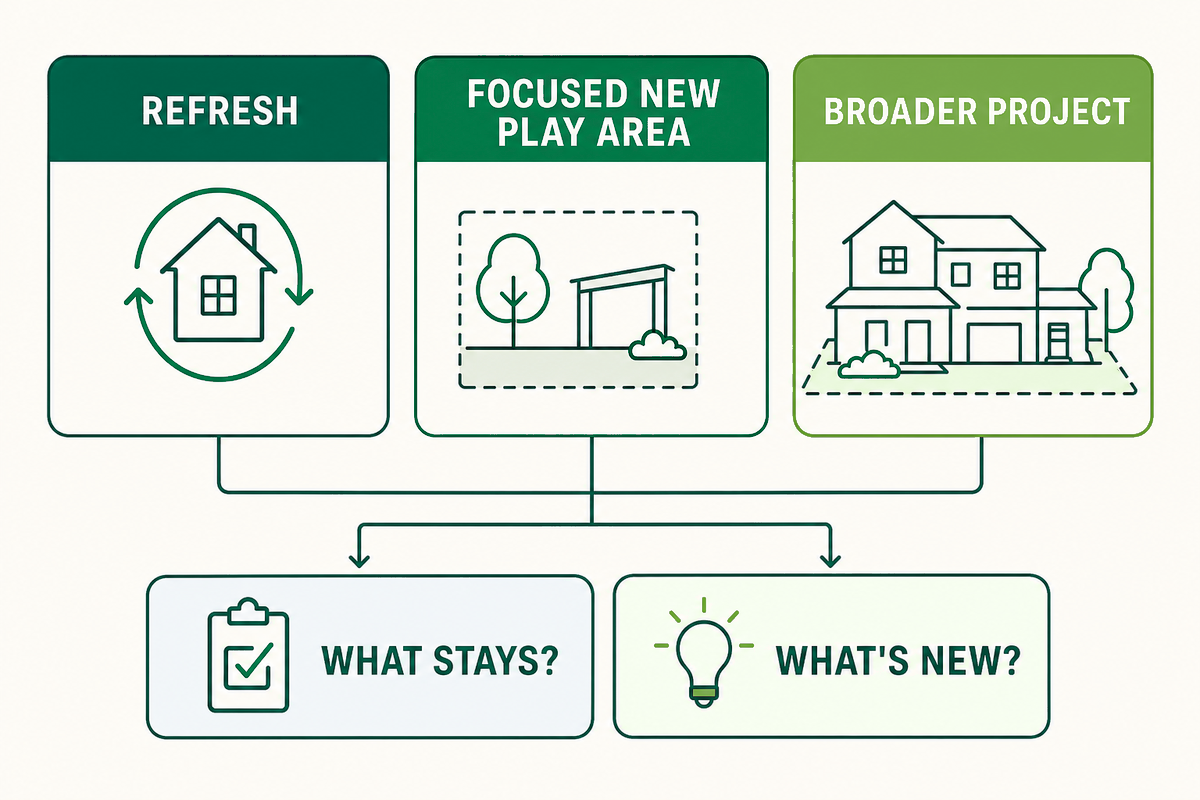
This guide uses scope bands instead of a published “church playground cost” range. A board can use three bands, refresh, focused new play area, and broader project, to decide what to request while recording the site, equipment, surface, delivery, and installation responsibilities.
A refresh may focus on an existing play space that needs selected replacement, reconfiguration, or a clearer supervision layout. A focused new play area may add a contained indoor playground or an outdoor zone for a defined age group. A broader project can involve several play experiences, more site coordination, different circulation needs, or a larger family-entertainment-style footprint. The words aren’t price tiers; they’re prompts for a more complete brief. Whatever band applies, keep planning references such as the CPSC’s public playground safety handbook in view while defining what belongs in the initial equipment conversation.
For each band, ask four questions. What stays? What’s new? What local work is outside the equipment proposal? What could change after the first site or room review? Record the answers beside every initial quote so responsibilities remain visible during comparison.
Translate category language into decision questions
Supplier pages and search results may use different labels for the same church discussion. The matrix below is not a product recommendation or a claim that every term applies. It helps a board convert category language into questions for the actual room, site, ministry use, and approved scope.
| Label group | Terms a church may encounter | Question to put in the brief |
|---|---|---|
| Mission and audience | faith-based; playgrounds for faith-based organizations; small churches; sunday school; families with young children | Which ministry setting and users does this project actually serve? |
| Children and participation | children’s development; ages and abilities; children of all ages; children of all abilities; age range; number of children | Which ages, abilities, and supervision needs are in the approved brief? |
| Equipment terms | play equipment; play structures; playground structures; play system; commercial playground equipment; playground equipment for churches | Which equipment is required, and which item is only an option? |
| Play experience terms | commercial play; play activities; play elements; play opportunities; play value; independent play | What experience is needed, rather than what label sounds attractive? |
| Scale and starting point | compact play; larger play; new play; new playground; building a new playground; existing equipment | Is this a refresh, an addition, or a clearly defined new project? |
| Setting and feature terms | play area; school playground; school or daycare; site amenities; climbing walls; activity panels | Which room or site conditions and play features belong in scope? |
| Planning and design terms | playground planning; planning guide; design a playground; playground design; custom designs; playground industry | Who approves the concept, layout, and changes before pricing? |
| Site and installation terms | installer; playground installation; site preparation; safety surfacing; playground surfacing; engineered wood fiber | Which party verifies the local work, materials, delivery path, and installation handoff? |
| Safety and inclusion terms | playground safety; safety standards; inclusive; inclusive playground | Which project-specific questions need appropriate local review before approval? |
| Budget language | total cost; reasonable budget; realistic budget; playground pricing; commercial playground costs; cost annually | Which items are capital scope today, and which lifecycle questions need separate evidence? |
| Funding language | funding guide; playground grant; grant guide; grant opportunities; grant programs; fund playground projects; budget and timeline | Which route is eligible, restricted, timely, and documented—not merely discussed? |
Do
- Compare quotes against one approved brief.
- List exclusions beside the offered equipment.
- Ask who owns every local task.
- Keep a church-held change process.
Don’t
- Treat an online range as a project total.
- Don’t assume freight includes handling.
- Don’t assume a surface is included.
- Don’t mix different age or footprint concepts.
Separate Indoor and Outdoor Scope Before Pricing
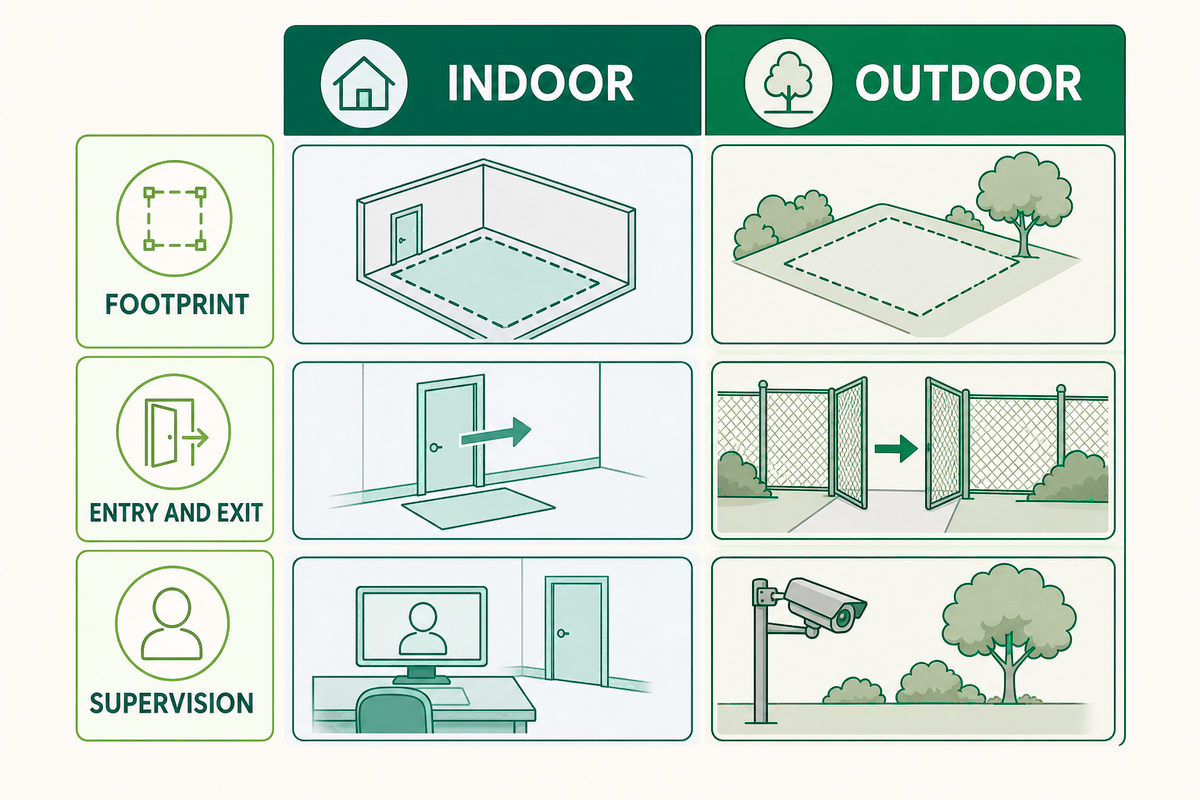
Indoor and outdoor church playground projects should be compared as different operating environments before they’re compared as equipment lists. The central question isn’t which setting is cheaper; it’s whether the room or site can support the intended play experience, supervision, circulation, surface, access route, and maintenance plan.
For an indoor playground, document ceiling constraints, entrance and exit flow, floor condition, lighting, cleaning routines, noise expectations, and how adults supervise children entering and leaving the area. For an outdoor play space, document the usable site, approach route, drainage observations, shade strategy, storage, weather exposure, and coordination with other campus uses. These are planning questions, not certification findings. One reference point for framing entry, exit, and circulation questions in either setting is the U.S. Access Board’s play-area guide, though it doesn’t replace a project-specific review.
| Decision area | Indoor planning prompt | Outdoor planning prompt |
|---|---|---|
| Footprint | Measure usable room area and obstructions | Map usable site area and protected zones |
| Entry and exit | Record check-in and adult-flow facts; record emergency-route questions for qualified local review | Plan gate, approach, and campus circulation |
| Environment | Record ceiling, lighting, acoustics, and cleaning context | Record sun, weather, drainage, and shade context |
| Surface | Identify floor condition and transition needs | Identify ground preparation and surface responsibility |
| Supervision | Define sightlines from the assigned adult position | Define sightlines, boundaries, and entry control |
| Equipment mix | Match features to room height and target ages | Match features to site, ages, and activity zone |
| Logistics | Check delivery path, doors, and temporary storage | Check vehicle access, staging, and installation path |
| Local work | List work the facility team owns before installation | List site work and coordination the church owns |
| Lifecycle check | Assign cleaning, inspections, and repairs | Assign inspections, weather response, and repairs |
Don’t use this matrix to decide whether a particular code or rule applies. It helps a project team identify the questions to take to the appropriate local professionals, program administrators, and facility reviewers.
Use the Four-Gate Budget Route: 4 Gates Before Collecting Quotes
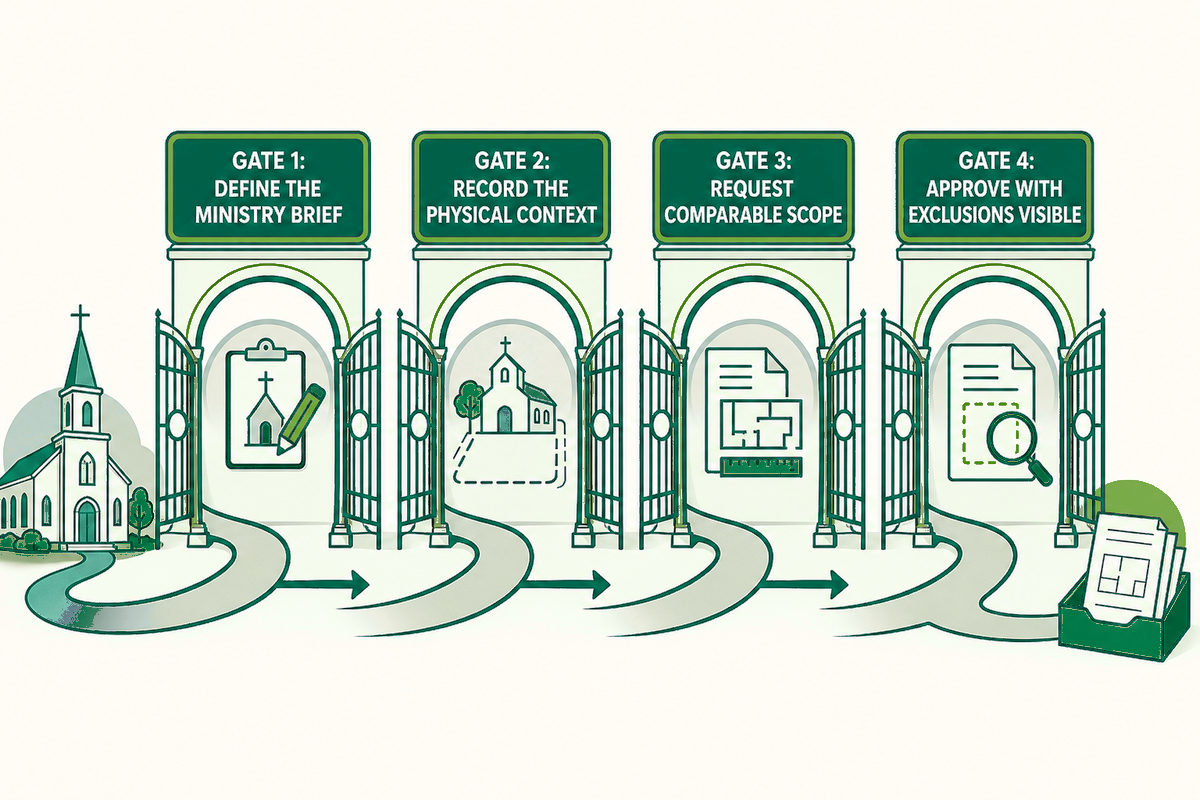
The Four-Gate Budget Route is an article-defined sequence for moving from a church idea to comparable quote requests while keeping scope questions visible. Each gate has one output: a brief, a site-or-room record, a comparison request, and an approval record. A team passes forward only when it knows what’s still unknown and who will resolve it.
- Gate 1: define the ministry brief — confirm the target children, use case, setting, board boundary, and internal owner.
- Gate 2: record the physical context — capture the room or site facts, access path, local work questions, and known constraints.
- Gate 3: request comparable scope — send the same ledger and questions to each prospective solution provider.
- Gate 4: approve with exclusions visible — compare scope, responsibilities, timing, and unresolved decisions before selecting a path.
Gate 3 organizes a supplier discussion. Ask every provider to identify what’s included, what depends on a site or room review, what’s explicitly excluded, and what information could change the proposal. If an answer is conditional, record the condition next to the item rather than treating it as a guaranteed figure.
Quote-comparison checklist — copy these into your request:
| Parameter | Planning boundary | Why it matters | How to verify |
|---|---|---|---|
| Target ages | State the primary and secondary age groups | Compare age assumptions in the written proposal | Confirm in the written proposal |
| Usable space | Supply measured room or site information | Connects layout to the actual setting | Review against the site or room record |
| Equipment scope | List required play experiences and exclusions | Makes equipment lists comparable | Mark each item included or excluded |
| Surface scope | State the proposed surface responsibility | Separates equipment from local work | Ask for materials and handoff details |
| Freight path | Describe delivery, unloading, and storage facts | Reveals logistics assumptions | Confirm services in the quote |
| Installation support | Name local coordination and installer roles | Clarifies schedule ownership | Request a written responsibility split |
| Open questions | Attach unresolved site or approval items | Keeps provisional items visible | Log a response owner and due date |
Use the same written project record for funding discussions. Funding leads shouldn’t promise that a grant, donation, or sponsor will cover an undefined project. Instead, give supporters a stable project summary and explain which parts of the scope are confirmed, which are conditional, and when the board will revisit the budget. Grants.gov’s own guidance for applicants models the same discipline: confirm eligibility and required documentation before treating any funding conversation as committed money.
Research Seven Funding Routes With an Eligibility-First Screen
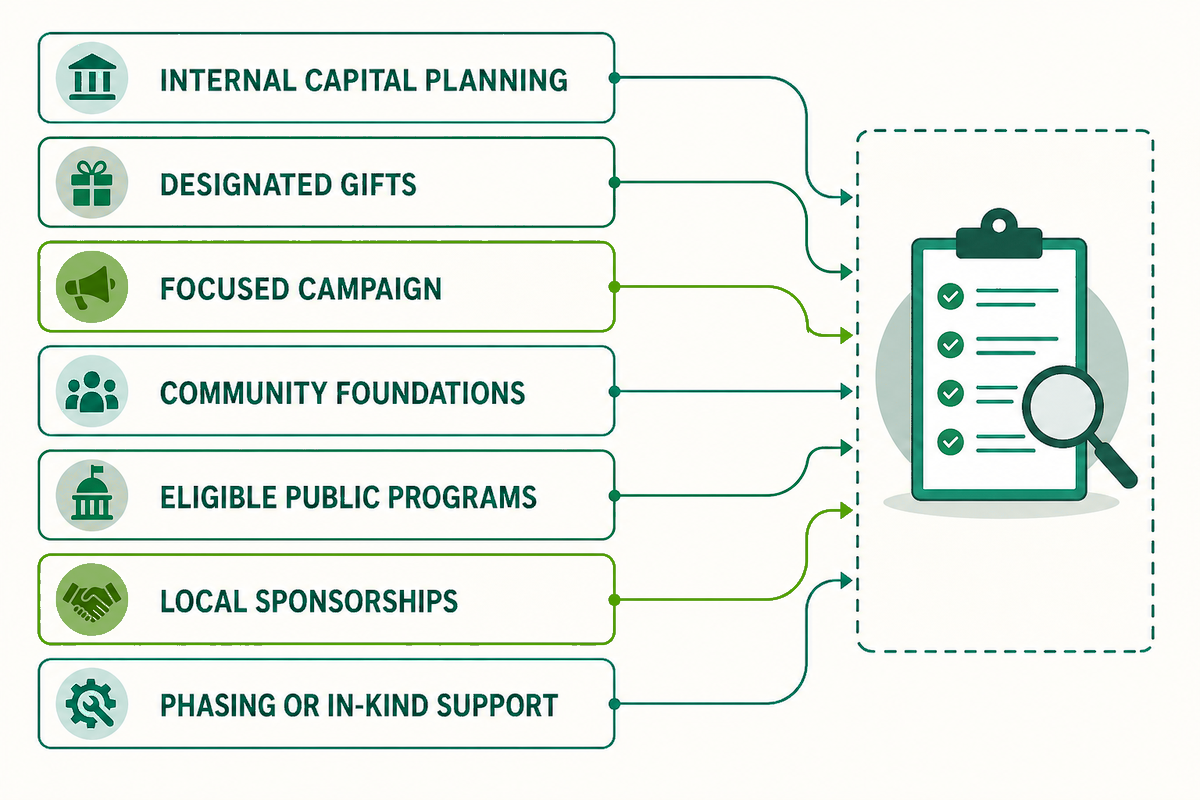
Screen each route for fit before identifying it as available funding. Use seven routes as article-defined research lanes, not guarantees: internal capital planning, designated gifts, a focused fundraising campaign, community foundations, eligible public programs, local sponsorships, and phased delivery or in-kind support. The same project brief should travel with every funding conversation.
1. Internal capital planning. Connect the play space to the church’s approved facility priorities, timing, and decision process. 2. Designated gifts. State the intended use and how donors will receive updates. 3. A focused campaign. Tie the request to a defined play outcome rather than an unsupported equipment total.
4. Community foundations. Review local program purposes and application timing before spending effort on a narrative. 5. Eligible public programs. First ask the program administrator whether the applying entity, proposed use, timeline, reporting, and any matching conditions can be considered; don’t assume a church qualifies. Grants.gov likewise directs prospective applicants to review eligibility before applying, which is a useful discipline even when a local program is involved. Review grant eligibility guidance.
6. Local sponsorships. Consider whether a business, family, or community partner can support a clearly bounded part of the approved scope while respecting the church’s policies. 7. Phasing or in-kind support. Separate a later phase or a documented professional contribution from the base project so the board can see what’s actually funded today.
For all seven routes, assign one funding owner, one document version, one deadline calendar, and one approval checkpoint. Keep donor intent, program restrictions, and timing conditions in the same record as the project scope. A promising conversation should change the order of research, not silently change the equipment, surface, or installation scope that the board approved.
Put Current Guidance, Access, and Lifecycle Checks Before Approval
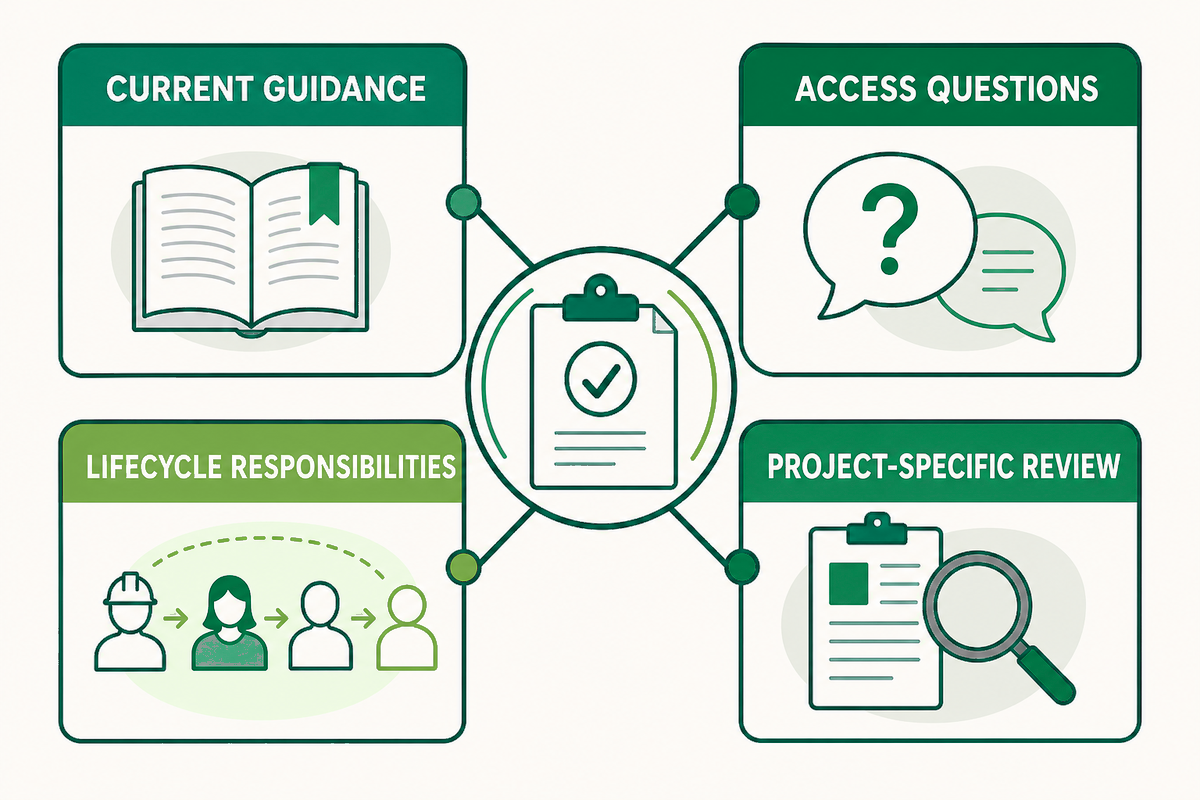
Current playground guidance, access questions, and lifecycle responsibilities belong in the approval record before a church treats a proposal as complete. They don’t produce a universal yes-or-no answer for every project. The practical move is to identify the applicable local review path, ask project-specific questions early, and assign a facilities owner for the checks that continue after installation.
The U.S. Consumer Product Safety Commission’s public-playground safety handbook is planning guidance, not a compliance determination for an individual project. For a dated availability notice, see the CPSC handbook update notice. Read the source material, then ask appropriate local professionals how it relates to the specific site, operation, and local requirements.
For access questions, the U.S. Access Board’s play-area guide is a reference point for project-specific discussion, not a substitute for determining what applies to a particular church operation or property. The guide notes a religious-entity exception. Federal funding and other federal, state, or local requirements may require separate review; applicability depends on the entity, operation, property, and funding. Do not treat this article as an applicability determination. Put the questions, answer owner, and required local review into the project record before final approval.
Finally, assign the lifecycle check. Decide who will keep inspection notes, respond to wear or repairs, coordinate cleaning, and revisit the play space after operating conditions are known.
Request a Church Playground Project Scope Review
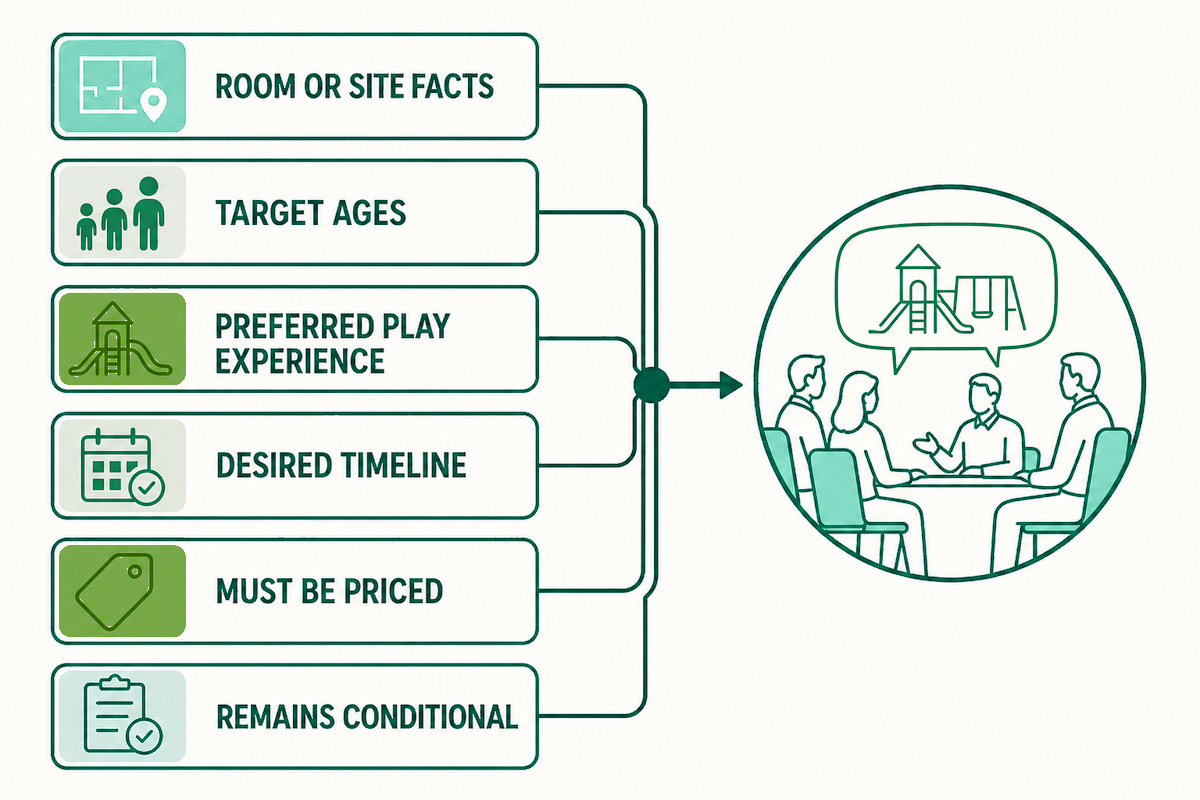
Before a supplier conversation, complete the brief, ledger, and Four-Gate Budget Route used in this article. Bring the room or site facts, target ages, preferred play experience, desired timeline, and a written list of what must be priced versus what remains conditional.
Dreamland Playground’s stated process can include planning, floor-plan and 3D design, production, shipping, and installation support; the scope still needs to be agreed for the individual project. Review its playground project services and the linked church playground budget calculator as optional website navigation for a later internal conversation, then use the church playground project scope review page when you’re ready to turn the board brief into a provider discussion.
Key takeaway
A written scope ledger gives a church board a way to make equipment, site work, delivery, installation, exclusions, and follow-up responsibilities visible before comparing proposals.
Church Playground Budget FAQ
Is it cheaper to build or buy a playground?
Compare responsibilities rather than labels.
“Build” and “buy” can hide different responsibilities. Compare the whole approved scope: design coordination, materials or equipment, local work, surface, delivery, installation, acceptance, and future operating ownership. The route with the lower visible equipment line may still leave more work with the church, so make exclusions explicit before deciding. Keep the written comparison focused on the same approved scope.
How do indoor playground costs differ from outdoor projects?
They differ because the operating environment differs.
Indoor projects may hinge on room dimensions, entrances, ceiling conditions, floor preparation, cleaning, and supervision flow. Outdoor projects may hinge on site access, drainage observations, weather exposure, surface responsibility, and campus circulation. Use separate records and then compare the full scope each setting requires. Keep the final comparison tied to the setting-specific scope.
What should be in a playground quote request?
Send the same brief to every provider.
Provide target ages, measured usable space, required play experiences, the expected surface responsibility, freight and handling facts, installation-support expectations, target timing, and open local questions. Ask each provider to name inclusions, exclusions, conditions, and information that could change the proposal. Keep one written version so every response addresses the same request.