Get in touch with Dreamland Playground Company

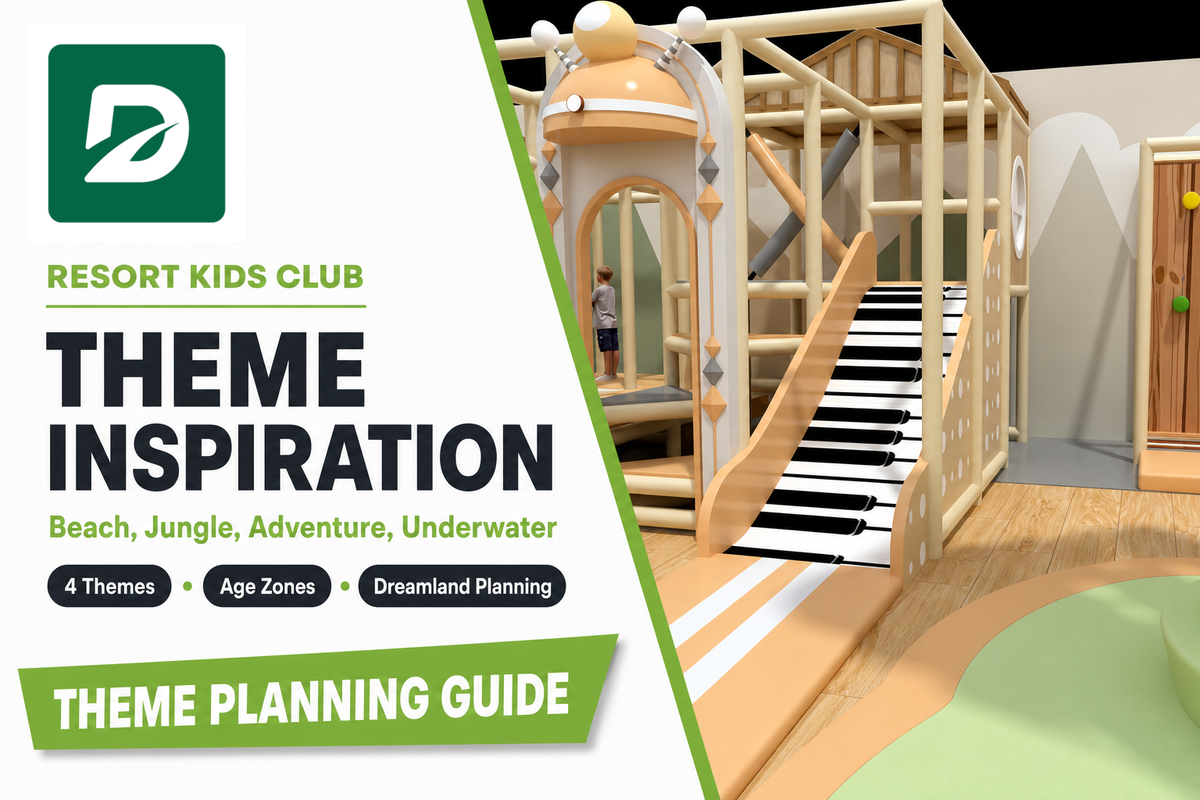
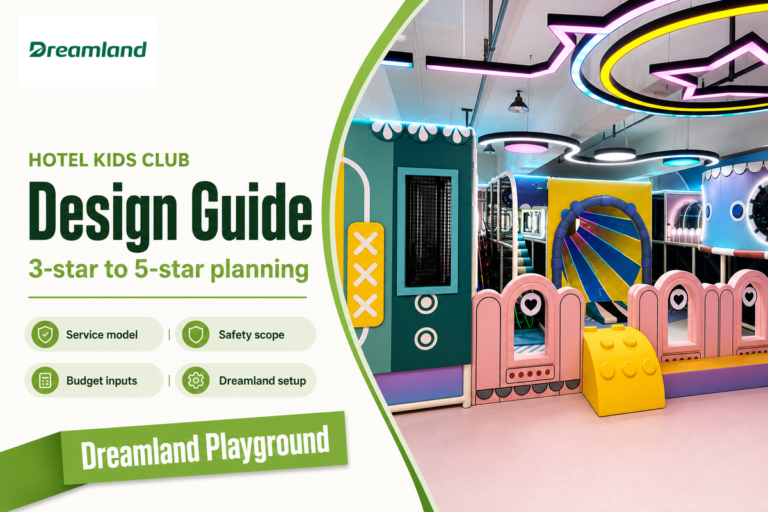
Resort Playground Themes, resort indoor playground ideas are planning choices that connect the resort brand with age zones, play routes, supervision, and operations. This guide starts with theme fit before equipment count. A strong hotel kids club theme can carry beach calm, jungle discovery, adventure challenge, or underwater imagination through the whole guest stay. Theme choice also influences cleaning routines, access paths, and future equipment refresh planning.
Quick answer: the best resort kids club themes are not usually the loudest ideas. They fit the resort brand, room size, guest ages, supervision structure, and operating plan. Beach and underwater themes fit family resorts that want gentle discovery, while jungle and adventure themes fit longer play sessions, stronger climbing value, or repeat resort stays.
Why Resort Indoor Playground Ideas Need A Theme System
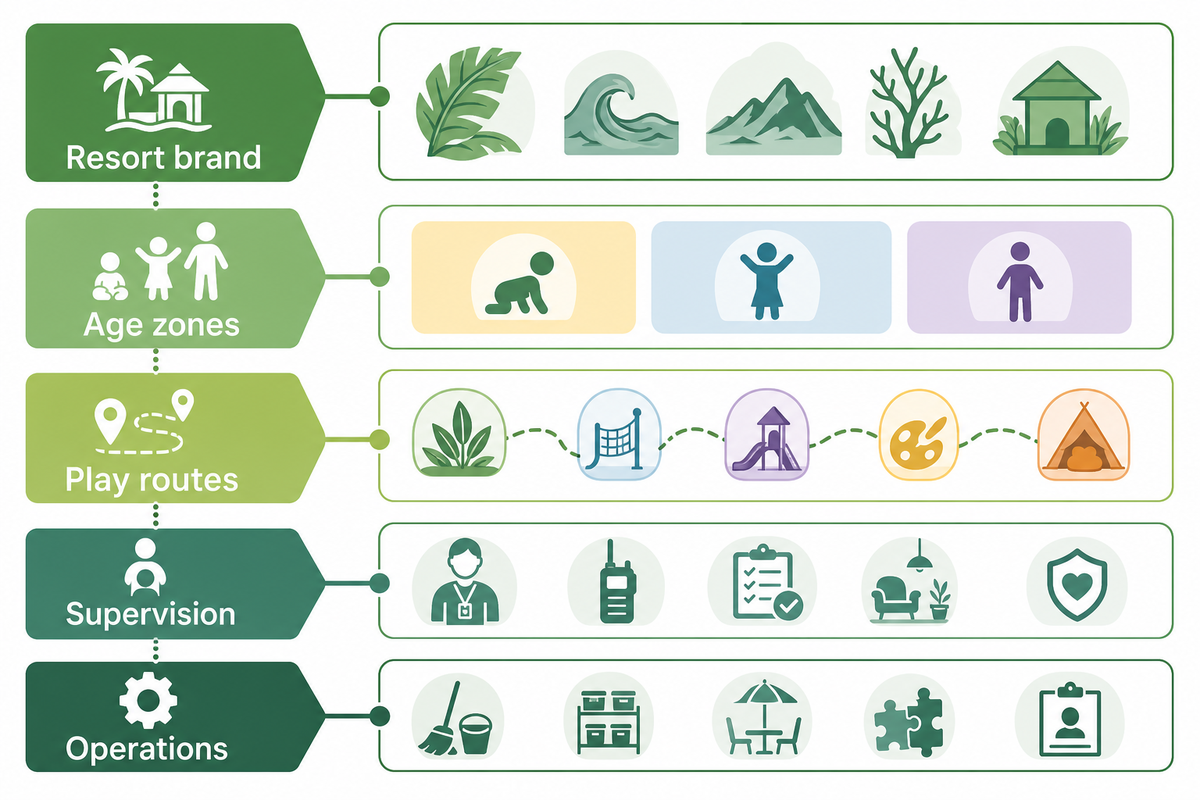
A resort kids club is not a neighborhood drop-in play spot. Families may use it between pool time, breakfast, spa appointments, conference breaks, or rainy-day backup plans. First-time guests should understand the room quickly, while children still need enough detail to do more than circle the space once.
These three layers: customer promise, flow, operating plan are integrated through a powerful theming concept. Our beach theme promise relaxation for families; our jungle promise adventure. An ocean promise is imagination and “Instagrammability”; an adventure theme promises growing up with confidence through overcoming a challenge.
From the theme, it’s time to build the sign that invites you in, age zones, parent experience, back-of-house access, floors, colour, and selection of indoor play equipment.
The Access Board defines a play area as a site containing play components designed and constructed for children. That definition matters because a resort theme is not only decoration. It is part of a planned play area with routes, components, boundaries, and user expectations.
Beach Theme: Calm Movement For Family Resorts
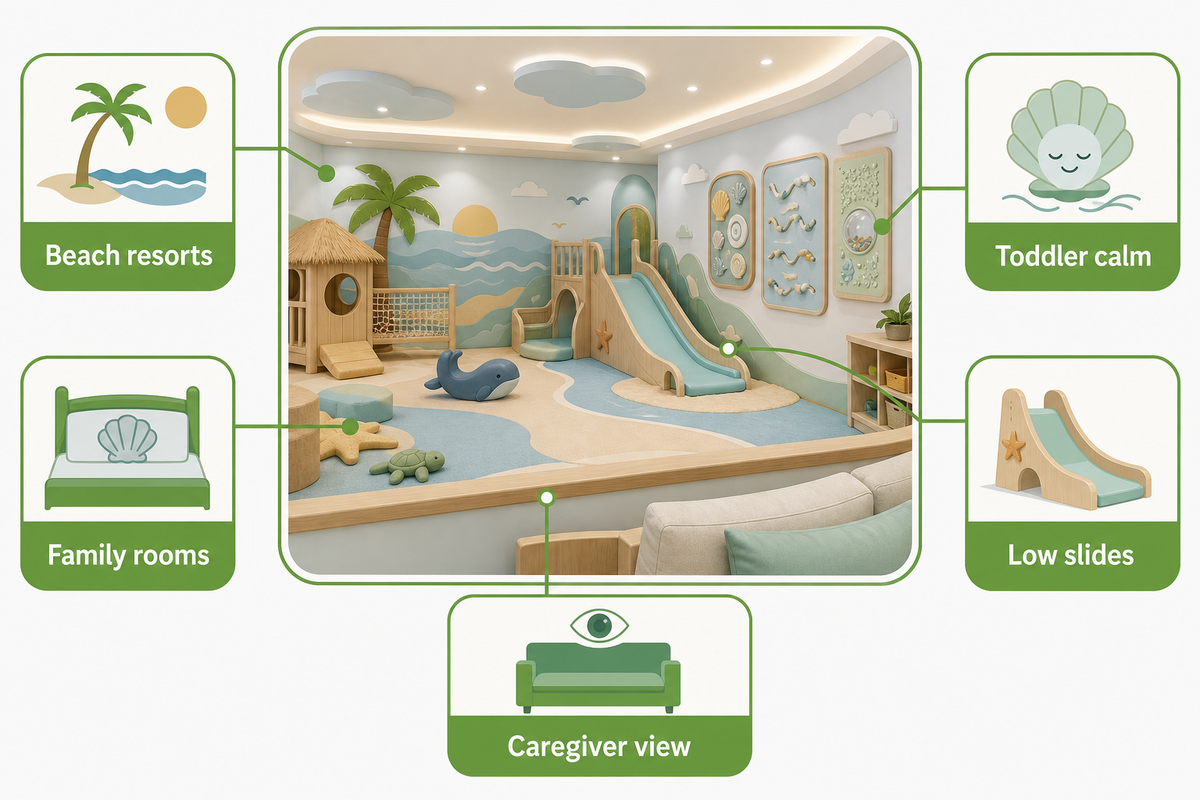
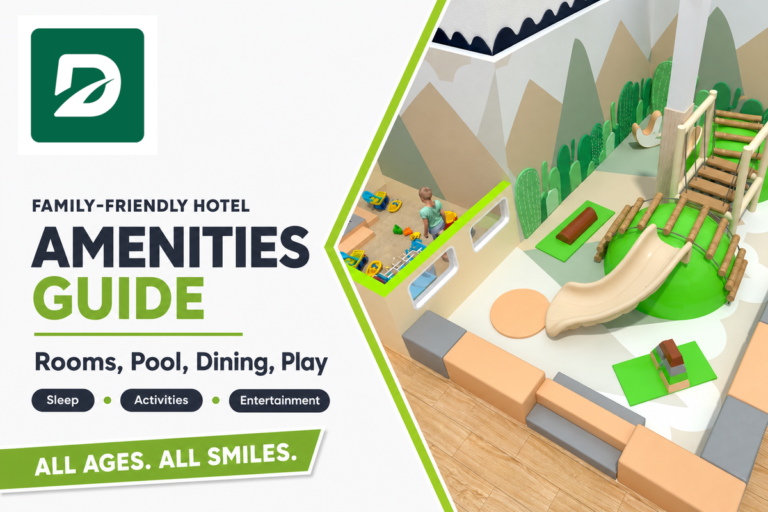
A beach theme is successful if the resort aims for soft, light colors, moving gently and maintaining a strong connection to pool/ocean/island branding. Dune appearence soft play, wave slides, shell-shaped sensory panels, lighthouse role-play corners, sand-coloured flooring, a related but calmer toddler bay can be used than in older-kid routes, for example.
If you’re looking for a resort with plenty of young families around, your beach theme should avoid a long run down the middle of the room. Opt for a loop with little stops here: snack bar stand-in, mini dock, low crawl through tunnel, and parent facing photo wall. It feels laid-back yet kids have several places they can stop.
- Best fit: beach resorts, island properties, spa hotels with family rooms, and calm kids clubs with many toddlers.
- Core play features, low slides, sensory walls, soft play mounds, wave climbers, pretend boats and photo ready role play.
- Planning check, try to maintain the water-style colors on the tiles to be bright enough for pictures but not so shiny to make the room cool or slippery.
If your main commercial page is still being planned, connect the article and the offer with a clear next step such as hotel kids club setup so buyers can move from theme inspiration to project planning.
Jungle Theme: Layered Exploration For Longer Play
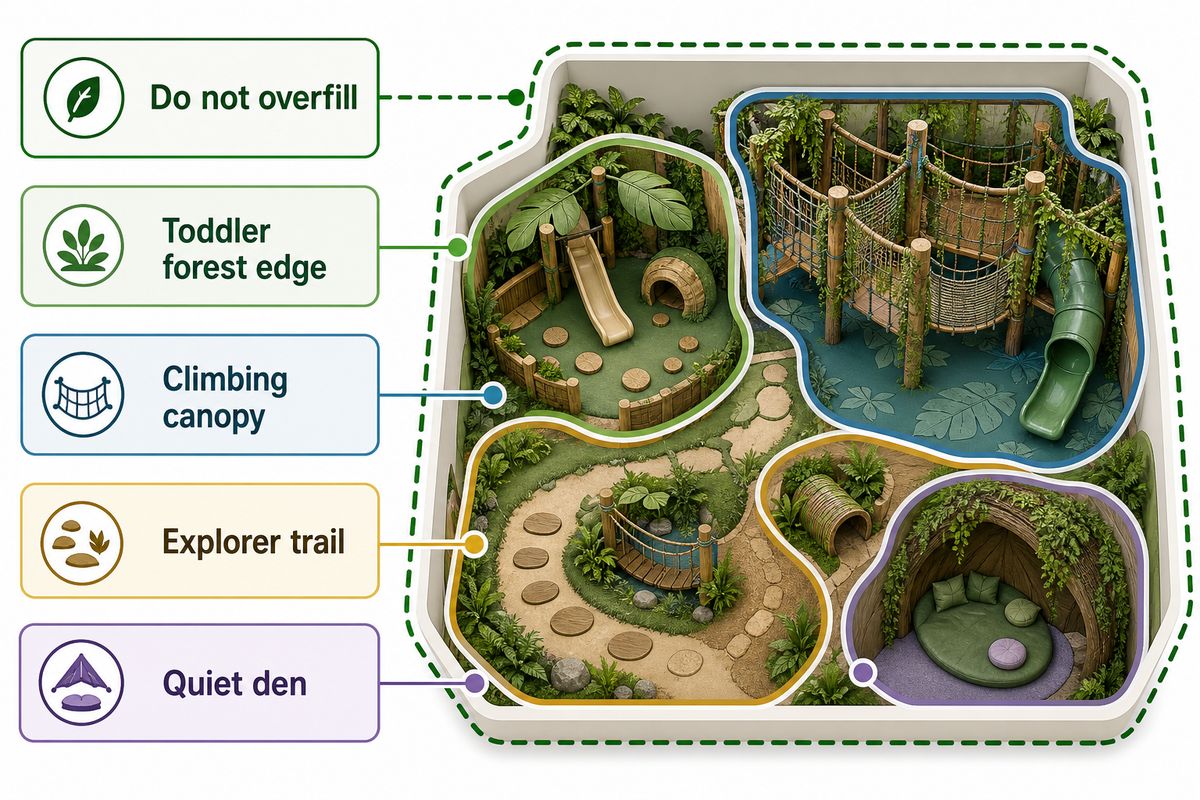
A jungle theme can occupy attention readily by naturally embracing levels-crawl, climb, hide, swing, slide, and discover. By including elements such as treehouse decks, leaf canopies, animal footprints, rope bridges, soft log tunnels, and viewpoints, the planner has an easy rationale to vary heights, textures, and lengths of play journeys without the feel being random.
A common hazard is filling the space too full.
Jungle treatments readily become busy, especially if every flat panel is treated as an animal or vine-covered tree. A more successful design organizes treatments into zones. For a jungle theme, consider a toddler forest edge, a climbing canopy area, an explorer trail, and a private den space to allow children in different age ranges to read the play space at a glance.
The CPSC public playground safety handbook identifies falls, impact attenuation, openings, protrusions, entrapment, age separation, layout, installation, inspection, and maintenance as planning concerns. In a jungle theme, those topics should shape deck heights, openings, net areas, surfacing, and inspection access before the design moves into production.
Adventure Theme: Challenge Routes For Older Kids
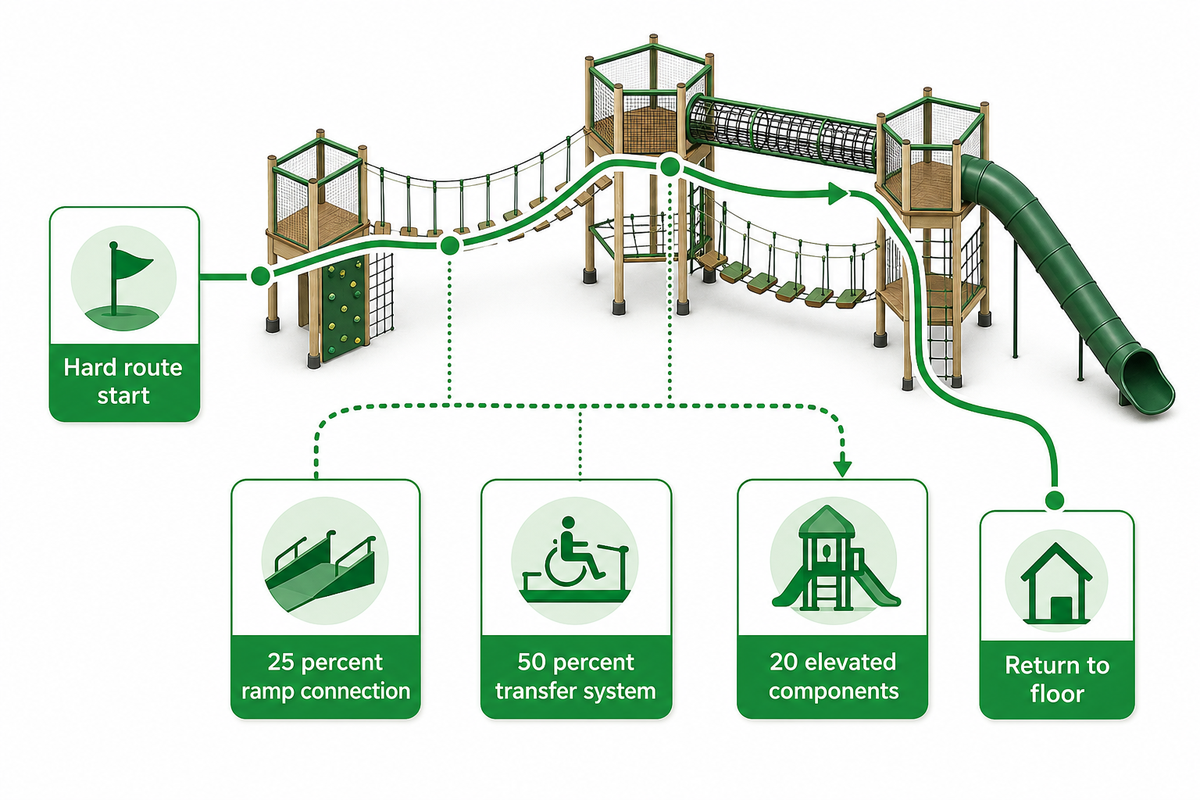
Adventure themes often come to resort properties where planners anticipate older kids, repeat family guests, birthday groups, or mixed-activity resort operations. Useful elements can include a soft challenge course, climbing equipment, ninja-style attractions, balance paths, short tunnels, and a clear finish point for the route.
Caregivers need to see, at a glance, where the main route starts, where it becomes harder, and where it returns to floor level.
Some age ranges require additional activity value, and others need to play along a path to avoid being run over by bigger children. This can be accomplished by offering a different entry point for each child age range.
For play areas with 20 or more elevated play components, the Access Board guide says ramps must connect at least 25 percent of the elevated components. For play areas with fewer than 20 elevated components, the Access Board guide allows a transfer system to connect at least 50 percent of elevated components. A resort project still needs local code and professional review, but these thresholds show why access planning belongs early in the concept stage.
Underwater World: Immersive Play With Clear Boundaries
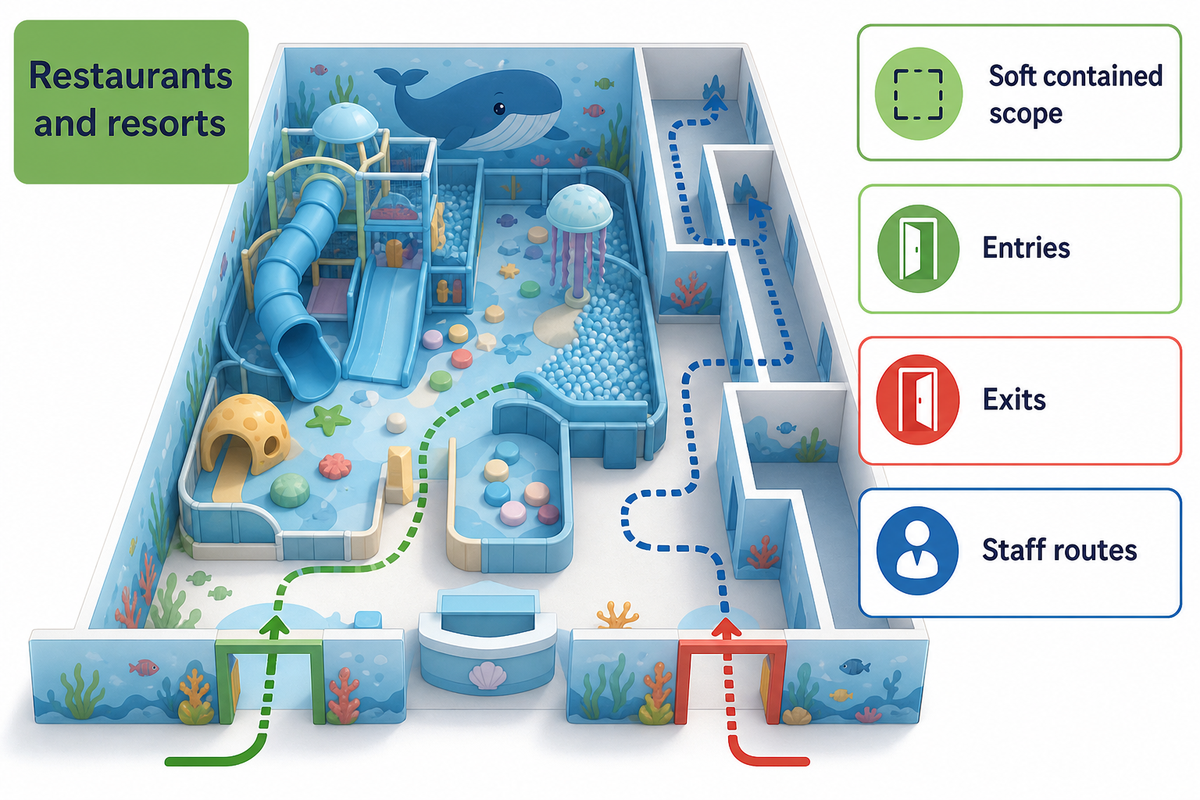
An underwater theme lends itself very well to a vacation-inspired and stimulating environment, as it taps into the child’s natural imaginative powers and has broad appeal for the vacation traveler.
Designers might use coral caves, a submarine, fish graphics, a soft seaweed-covered tunnel, and bubble-viewing portholes. A blue and green palette can set the tone without making the room look like a dim aquarium.
Defining the boundaries is especially critical for an underwater themed setting. Underwater designs can make it hard for a child to discern where one component or one net ends, or how to locate a particular exit route.
Clear, contrasting color at key locations including all entries, exits, staff access points, parent boundaries, emergency releases, and entrances to toddler safe spaces matters for a readable, immersive, and safe environment.
The CPSC handbook notes that its public playground guidance can apply to public-use play areas at restaurants and resorts, while soft contained play equipment has a different scope. That is why a resort buyer should ask which parts of the design are soft contained play, which are public-playground-style components, and which local requirements apply to each part.
Plan Age Zones, Accessibility, Safety, And Operations Together
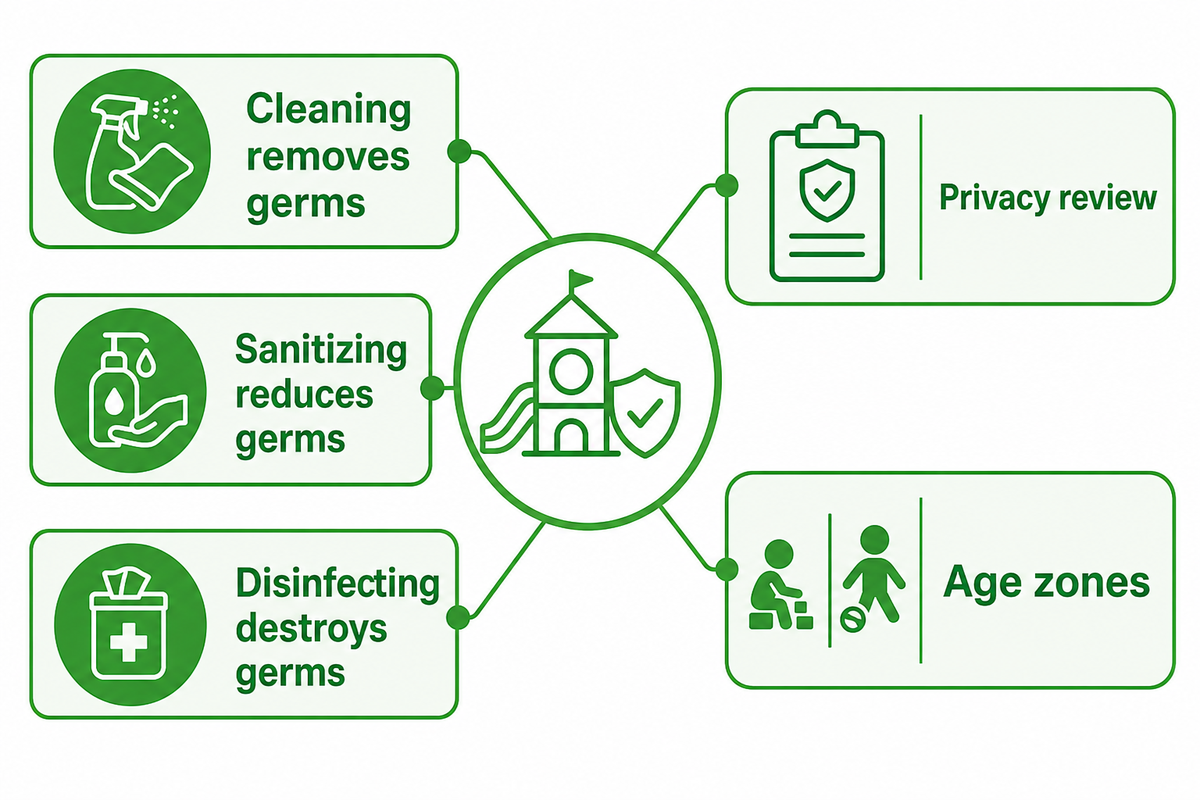
Theme choice should never hide operating basics. Those resort indoor playground ideas that look attractive in a mood board can fail if toddler play, older-kid climbing, staff access, cleaning routes, and caregiver seating are decided too late.
The FTC COPPA FAQ states the rule is designed to apply to websites and online services that are directed at children and collect personal information from children, including persistent identifiers, photos, video, audio, and geolocation data. If a resort kids club adds smart toys, camera-based games, accounts, leaderboards, or connected check-in tools, privacy review should happen before purchase.
The CDC explains that cleaning removes germs, dirt, and impurities, while sanitizing reduces germs and disinfecting destroys remaining germs after cleaning. For resort kids clubs, that means washable material choices, cleaning access lanes, handwashing prompts, and staff routines should be part of layout work rather than an afterthought.
| Planning layer | Theme question | Resort operations check |
|---|---|---|
| Age zones | Can toddlers read their safe area? | Separate entries, lower challenge, adult sightlines. |
| Accessibility | Can routes and transfer points be planned before production? | Review routes, floor changes, transfer systems, and local rules. |
| Hygiene | Can the theme use washable finishes? | Plan cleaning access, toy rotation, and handwashing cues. |
| Staff support | Can staff see route conflicts? | Avoid hidden corners and narrow bottlenecks. |
Theme-To-Resort Decision Matrix
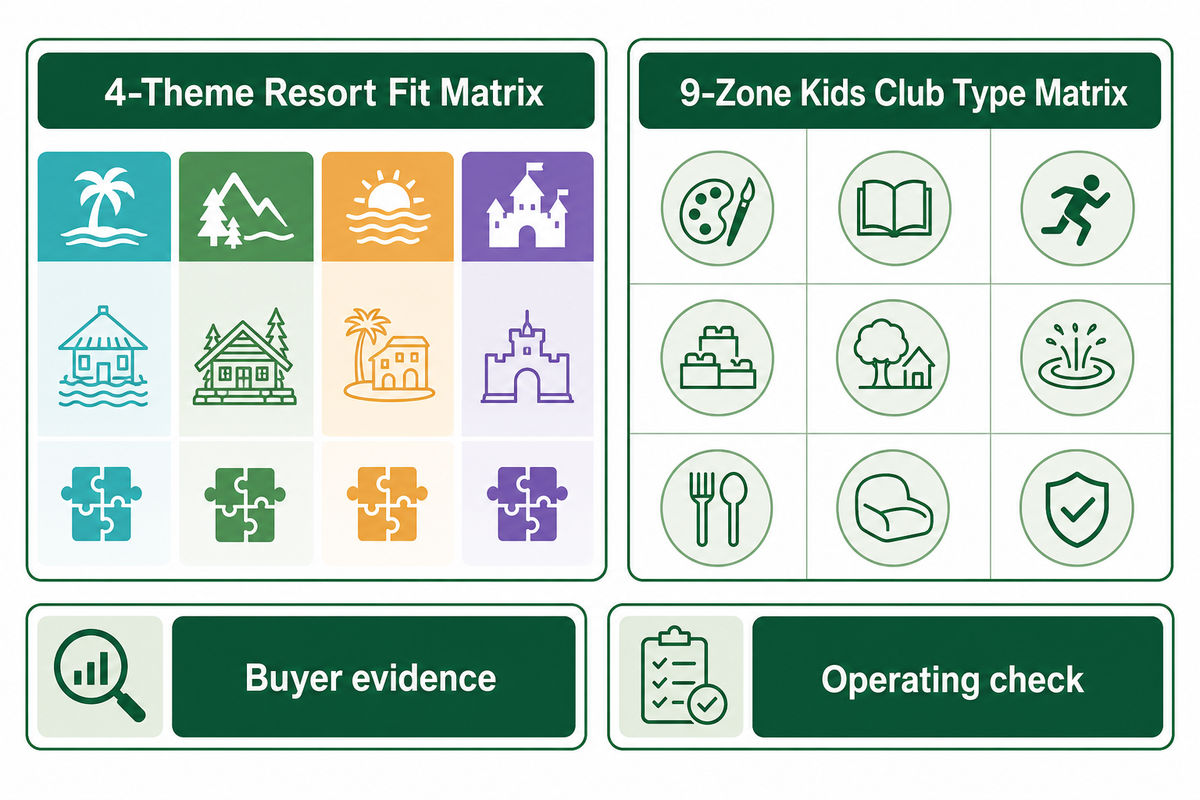
Use the theme as a buyer filter, rather than a decoration vote. A family beach resort, a conference hotel with weekend families, a ski resort, and a tropical all-inclusive resort may all need an indoor playground, but they don’t need the same playground design.
| Theme | Best resort match | Design priority | Question before 3D design |
|---|---|---|---|
| Beach | Coastal, island, pool-focused family resorts. | Calm movement and toddler comfort. | Should the space feel quiet, bright, or photo-led? |
| Jungle | Nature resorts and longer-stay family hotels. | Layered exploration and repeat routes. | How many age zones can the room support? |
| Adventure | Active resorts, ski resorts, and mixed-age kids clubs. | Challenge sequence and supervision clarity. | Where does the hard route start and end? |
| Underwater | Tropical, cruise-style, and ocean-branded resorts. | Immersive discovery with clear boundaries. | Which exits, gates, and staff routes need contrast? |
A strong theme decision comes from a short brief: space size, ceiling condition, target age group, local market, resort brand, operating model, budget, timeline, and relevant safety requirements. That brief should come before final equipment selection.
4-Theme Resort Fit Matrix
Use the 4-Theme Resort Fit Matrix as a practical comparison table for matching theme source, resort setting, guest value, and buyer evidence before production.
| Theme source | Resort setting comparison | Guest value | Buyer evidence to check |
|---|---|---|---|
| Beach | Coastal and island resorts. | Calm photos and toddler-friendly discovery. | Room brightness, washable finishes, caregiver seating. |
| Jungle | Nature resorts and longer-stay hotels. | Layered routes and repeat play. | Deck access, openings, sightlines, inspection route. |
| Adventure | Ski, mountain, sports, and active family resorts. | Challenge value for older kids. | Route difficulty, age separation, staff view. |
| Underwater | Tropical and ocean-branded properties. | Immersive story and photo value. | Contrast at entries, exits, gates, and staff routes. |
| Local culture | Destination hotels with strong regional identity. | Place-based memory for family guests. | Brand review, motif sensitivity, repairable graphics. |
| Snow and ice | Ski resorts and winter destinations. | Indoor backup play during bad weather. | Warm color balance, slip-resistant floor choice. |
| Space and science | Urban resorts and conference hotels. | Role-play, learning moments, and technology caution. | Privacy review for any connected play element. |
| Mini city | Business hotels and resorts with party rooms. | Role play and quieter indoor play area value. | Queue paths, party flow, cleaning access. |
| Hybrid resort story | Large resorts with several guest segments. | Multiple play zones without visual conflict. | Theme hierarchy, budget split, refresh plan. |
9-Zone Kids Club Type Matrix
Use the 9-Zone Kids Club Type Matrix to turn the theme into a space plan by grouping each zone category by age group, play elements, and operating check.
| Zone type category | Age group | Play elements | Operating check |
|---|---|---|---|
| Arrival and shoe zone | All ages. | Theme sign, cubbies, stroller pause. | Queue does not block staff or exits. |
| Toddler soft play | Younger children. | Low slide, sensory panel, soft mound. | Separated from faster older-kid routes. |
| Explorer loop | Mixed children. | Tunnel, small climb, role-play stop. | Caregivers can see the whole loop. |
| Challenge route | Older kids. | Climbing structures, balance, soft obstacle course. | Harder section has clear entry and exit. |
| Quiet reset corner | Sensitive or tired children. | Soft seating, low sensory wall, book nook. | Not hidden from staff view. |
| Parent view edge | Caregivers. | Bench, shoe storage, charging point if allowed. | Adult comfort does not narrow child paths. |
| Photo and brand point | All guests. | Theme wall, logo-safe graphic, prop feature. | Photo area avoids active route conflicts. |
| Staff and cleaning lane | Operations team. | Gate, storage, cleaning access. | Supplies can move without crossing fast play. |
| Refreshable feature zone | Repeat guests. | Swap panel, seasonal prop, modular play piece. | Future refresh fits the same floor plan. |
Project Measurement Checklist
The sample values below are placeholders for formatting only; replace them with site measurements before Dreamland Playground starts final layout or production review.
| Measurement field | Example notation | Why the designer asks |
|---|---|---|
| Room length and width | 8 m x 6 m | Sets the main play footprint. |
| Ceiling height | 3 m | Limits deck height and overhead theme pieces. |
| Entrance clear width | 900 mm | Keeps check-in and parent flow readable. |
| Toddler step height | 150 mm | Shows whether low play needs a softer route. |
| Cleaning aisle | 800 mm | Lets staff reach toys, panels, and corners. |
| Stroller parking depth | 1200 mm | Keeps bags and strollers out of play routes. |
| Parent seat edge | 450 mm | Improves adult comfort without narrowing paths. |
| Staff walk-through interval | 5 min | Connects layout to supervision routine. |
| Party reset time | 30 min | Shows whether storage and cleaning access are enough. |
| Opening lead time | 8 weeks | Helps coordinate design, production, shipping, and installation support. |
| Theme refresh cycle | 12 months | Protects future update space in the first design. |
| Floor pad thickness | 40 mm | Gives the designer a starting point for soft play comfort review. |
| Wall protection pad height | 600 mm | Shows where children may lean, crawl, or pause. |
| Maintenance gate width | 900 mm | Lets larger parts move without crossing fast play. |
| Role-play counter depth | 600 mm | Keeps pretend play useful without blocking the route. |
| Storage shelf depth | 300 mm | Keeps toy rotation close to staff access. |
| Quiet corner footprint | 2 m x 2 m | Protects a calmer zone inside an active room. |
| Photo wall width | 2.4 m | Helps frame the theme without narrowing movement. |
| Reception wait zone | 1.5 m | Keeps check-in outside the active play loop. |
| Inspection access gap | 500 mm | Lets staff inspect hard-to-reach corners. |
| Daily cleaning window | 45 min | Connects hygiene planning to the resort schedule. |
| Emergency marker spacing | 2 m | Keeps wayfinding visible in a themed room. |
| Handwashing sign check | 15 min | Links hygiene prompts with staff rounds. |
| Storage cart width | 700 mm | Shows whether supplies can move through service paths. |
| Soft panel review height | 300 mm | Helps review low contact areas near toddlers. |
| Photo queue buffer | 1 m | Keeps the photo point from blocking active play. |
Plan A Resort Kids Club With Dreamland Playground
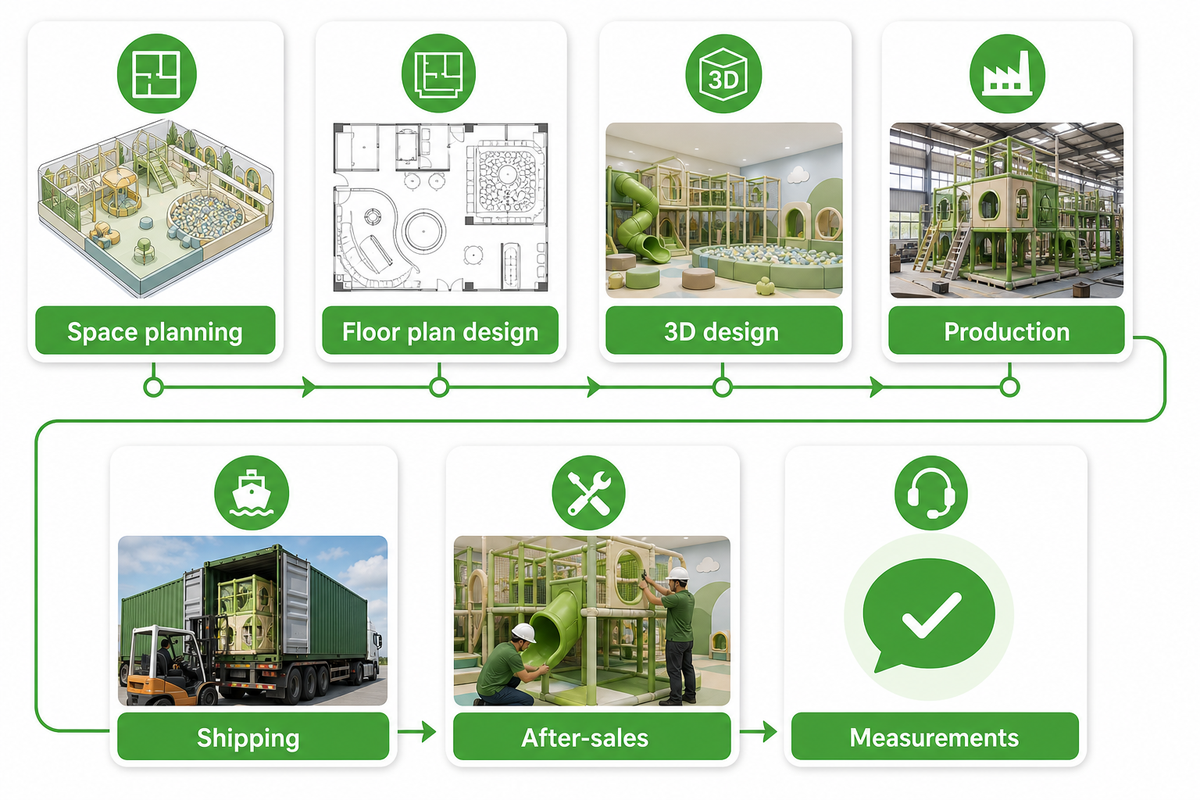
Dreamland Playground designs each project around the client’s space, target age group, local market, theme, budget, and business needs. That makes resort playground themes more practical because the same visual idea can be adjusted for a small children play room, a full hotel kids club, or a larger family entertainment center inside a resort.
Dreamland Playground can support space planning, floor plan design, 3D design, equipment production, shipping, installation support, and after-sales service. Its team can also align custom indoor playground solutions with relevant EN and ASTM safety requirements, depending on the product type and target market.
For smaller spaces, Dreamland can still plan indoor playground equipment that feels family friendly and can attract families without overcrowding the room. A kids indoor playground may use compact play structures, natural wood accents, soft play details, and childcare-friendly sightlines so different age groups get physical activity while the layout can fit your space. In high-traffic kids clubs for various ages, monkey bars or climbing walls should wait until safety standards, staff supervision, and local review are clear.
For a resort project, the most useful next step is a theme brief with floor plan dimensions, ceiling height, guest age range, preferred color direction, local safety requirements, target opening date, and the business role of the kids club. Dreamland can then turn that brief into a themed plan that fits the space, market, and guest experience.
Related Dreamland Project Pages
For a broader service view, compare this theme article with Dreamland Playground project services. Resort owners who need supplier background can read About Dreamland Playground, then use Dreamland Playground contact when the room data is ready. The Dreamland Playground homepage is useful for product and project navigation.
FAQ
What are the best resort indoor playground ideas for a hotel kids club?
Strong ideas are theme systems, not isolated features. Beach, jungle, adventure, and underwater worlds work well because each one can guide layout, color, age zoning, play elements, caregiver views, and photo value. Buyers should also check whether the idea helps staff see children, clean surfaces, separate age groups, and refresh the room later without rebuilding the whole kids club.
Which theme is best for younger children?
For toddler-heavy clubs, beach is usually the easiest starting point because it supports low slides, soft play mounds, sensory panels, and calm color zones. Underwater can work too when contrast, exits, and staff access stay clear for young guests and staff.
Which theme is best for older kids?
Jungle and adventure concepts usually support more climbing, obstacle course elements, tunnels, bridges, and active play routes. Design teams should separate faster movement from toddler areas, mark the harder route clearly, and keep staff sightlines open from the adult edge.
Should a resort kids club add digital or interactive play?
Interactive play can add replay value, but not every resort kids club needs connected games. Review staff support, maintenance access, analog fallback, data collection, and child privacy before purchase. When a digital feature does not improve the theme route or staff control, a strong analog play element is often the better fit. For example, a role-play submarine, jungle lookout, or beach shop may deliver the same repeat value with fewer maintenance and privacy questions.
How can Dreamland Playground help with a themed resort project?
Dreamland Playground can transform a theme brief into concept planning, floor plan design, 3D design, production, shipping, installation support, and after-sales service for a custom indoor playground or resort kids club. Send room dimensions, ceiling details, target age range, theme direction, budget range, and opening timeline so the first layout responds to the project. Add expected daily use, party plans, entry supervision, calm-corner needs, cleaning windows, and hotel brand rules for colors, entry signs, or photo points.
References & Sources
- U.S. Access Board: Chapter 10 Play Areas
- U.S. CPSC: Public Playground Safety Handbook 2025
- U.S. CPSC: Voluntary Standards for Public Playground Equipment
- FTC: Complying with COPPA Frequently Asked Questions
- CDC: Cleaning and Disinfecting Early Care and Education Settings
- CDC: About Handwashing
Transparency note: these sources are planning references, not universal legal advice. Resort owners should check local accessibility, safety, fire, food-service, privacy, insurance, and inspection rules before purchase or installation.