Family-Friendly Hotel Amenities: Complete Planning Guide | Dreamland Playground
Plan family amenities beyond the kids club. Pool, activities, dining, and entertainment ideas for family-friendly hotel amenities and resort play spaces.
Family-friendly hotel amenities work when they reduce friction for parents and give children useful choices across the whole stay. Plan the pool, rooms, activities, dining, cleaning routines, and entertainment room together, then decide where a kids club or indoor playground fits.
A family-friendly hotel is not simply a hotel with a kids club. Families compare the whole operating model: hotel rooms, family suites, connecting rooms, the pool area, early meals, laundry, stroller movement, quiet sleep, and whether hotel staff can answer practical questions at check-in for kids. The 2025 U.S. Family Travel Survey from the Family Travel Association and NYU places family-friendly activities and amenities alongside cleanliness, sanitation, safety and security, and family dining in accommodation preferences. That is a planning signal for hotels and resorts, not a decorative feature list.
Dreamland Playground builds custom play spaces for hotels, resorts, family entertainment centers, trampoline parks, ninja courses, adventure parks, shopping mall play areas, schools, and outdoor play spaces. This guide looks at family-friendly hotel amenities beyond the kids club, while linking the dedicated hotel kids club setup page where clear height, floor area, budget band, and equipment planning become a specific indoor playground brief. Buyers who need the broader delivery scope can also review Dreamland’s custom playground services and company profile.
Direct answer: the most important family-friendly hotel amenities are clean and spacious rooms, flexible sleeping layouts, a child-aware pool area, age-appropriate activities, family dining, laundry or kitchenette support, a planned entertainment room, accessible routes, and a clear cleaning and supervision routine. A kids club becomes stronger when it sits inside that wider amenity plan.
What Family-Friendly Hotel Amenities Should Include
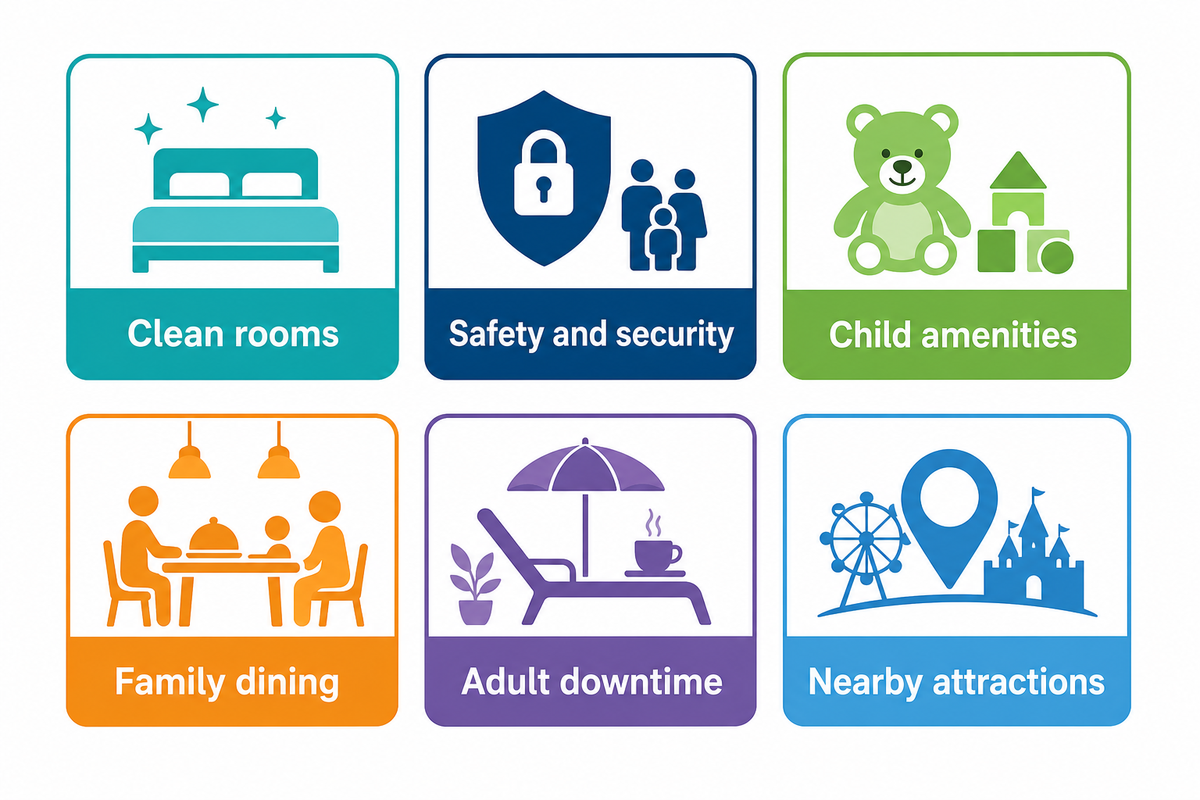
A useful amenity plan starts with parent priorities, not supplier catalogs. Families looking at family hotels usually ask six questions before booking: will the room sleep everyone, can younger kids rest, is the property easy to move through, will kids be entertained during downtime, can adults get some relaxation, and does the hotel feel prepared for guests of all ages?
The answer should cover clean rooms, safety and security, child amenities, family dining, adult downtime, and nearby attractions. The Family Travel Association survey supports that order because accommodation choices are not driven only by fun family features. Cleanliness and sanitation, safety and security, amenities for children, user reviews, and family-friendly dining options all appear as parent selection factors. A family-friendly hotel amenity is therefore something that lowers daily effort, not just something that photographs well.
Use this plan as a kid-friendly hotel amenities checklist, but do not turn it into a generic inventory. Amenities for families appeal to families when they fit the trip: the hotel’s amenities should help kids’ sleep, meals, play, and movement while giving adults time to reset. Especially for families traveling with family members across ages, the property should allow kids to enjoy clear play choices and give kids and adults a reason to stay on site. If the goal is to attract families planning a family vacation, cater to actual guest routines, not only photos.
Amenity layer
What parents notice
Planning question for the hotel
Room and sleep
Bed count, blackout, quiet, bathroom setup
Can every member of the family sleep without moving furniture?
Movement
Stroller route, elevators, front desk support
Can a family trip work with bags, toddlers, and wet pool gear?
Water and activity
Pool area, splash option, activity board
Can the hotel keep kids entertained when weather changes?
Food and convenience
Menu, high chairs, early dining, laundry
Can families eat and reset without leaving the property?
Entertainment room
Kids club, game room, soft play, quiet corner
Is the space designed for families with young children and older kids?
This is also where the hotel decides what not to promise. A small boutique hotel may not need a supervised kids club, while a beach resort or all-inclusive resort may need indoor and outdoor play, a pool zone, and a staffed program because guests expect families to enjoy long on-property days.
Room, Arrival, and Sleep Amenities
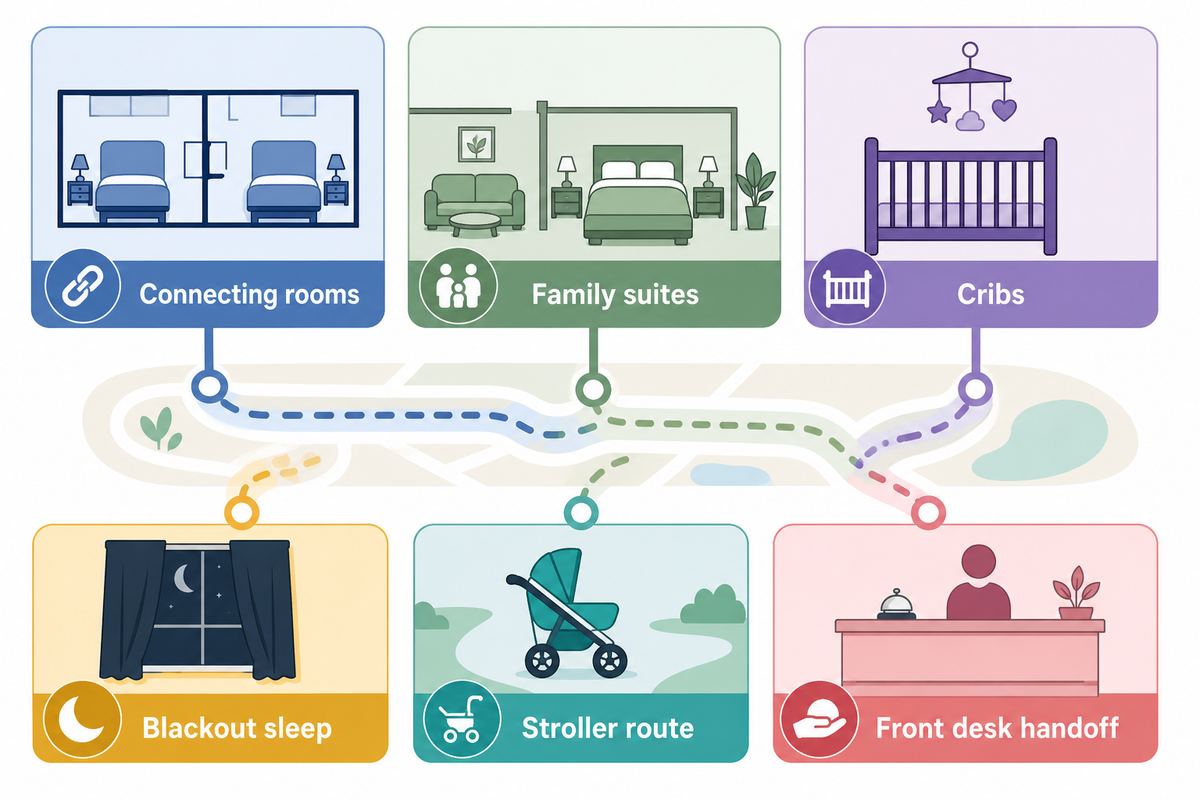
Room planning is the first family amenity because a bad guest room makes every other feature work harder. Connecting rooms, family suites, cribs, blackout sleep, stroller route, and front desk handoff decide whether a family vacation starts smoothly. A family-friendly hotel can advertise a pool and family fun, but if the room only works for two adults and one child, larger family bookings will leave or split into two hotel rooms.
Family suites and rooms and suites with separate sleep zones help families with young children keep bedtime intact. In-room amenities matter as much as public spaces: a kettle, microwave, small fridge, bottle-washing area, drying hooks, night light, and enough towel storage can make the difference between a good getaway and a stressful accommodation. Complimentary crib setup is useful only if the front desk can confirm inventory before arrival and the housekeeping team knows where it goes.
For luxury hotel properties, luxury hotel amenities often include concierge support, turndown, and premium bath products. For kids and families, the luxury is usually simpler: a spacious suite, quiet HVAC, a safe balcony door, an easy breakfast route, and hotel staff who can answer practical questions without sending parents between departments. Four Seasons, IHG, and other hotel brands make family-facing features visible because family travel buyers want certainty before they book.
Pre-arrival: ask ages, bed needs, stroller needs, allergy notes, and whether the family is traveling with kids who nap.
Arrival: make the elevator, room, pool, dining, and activity locations clear at check-in.
Sleep: protect blackout, quiet, bedding, and separate zones before adding decorative extras.
Pool and Water Play Planning
For many family-friendly hotel searches, the pool is the deciding amenity. Keyword data around family hotel with swimming pool and family friendly hotel with indoor pool reflects the same behavior: families use the pool as a shortcut for whether kids will have something to do on site. But a pool area must be planned as a family system, not a blue rectangle beside lounge chairs.
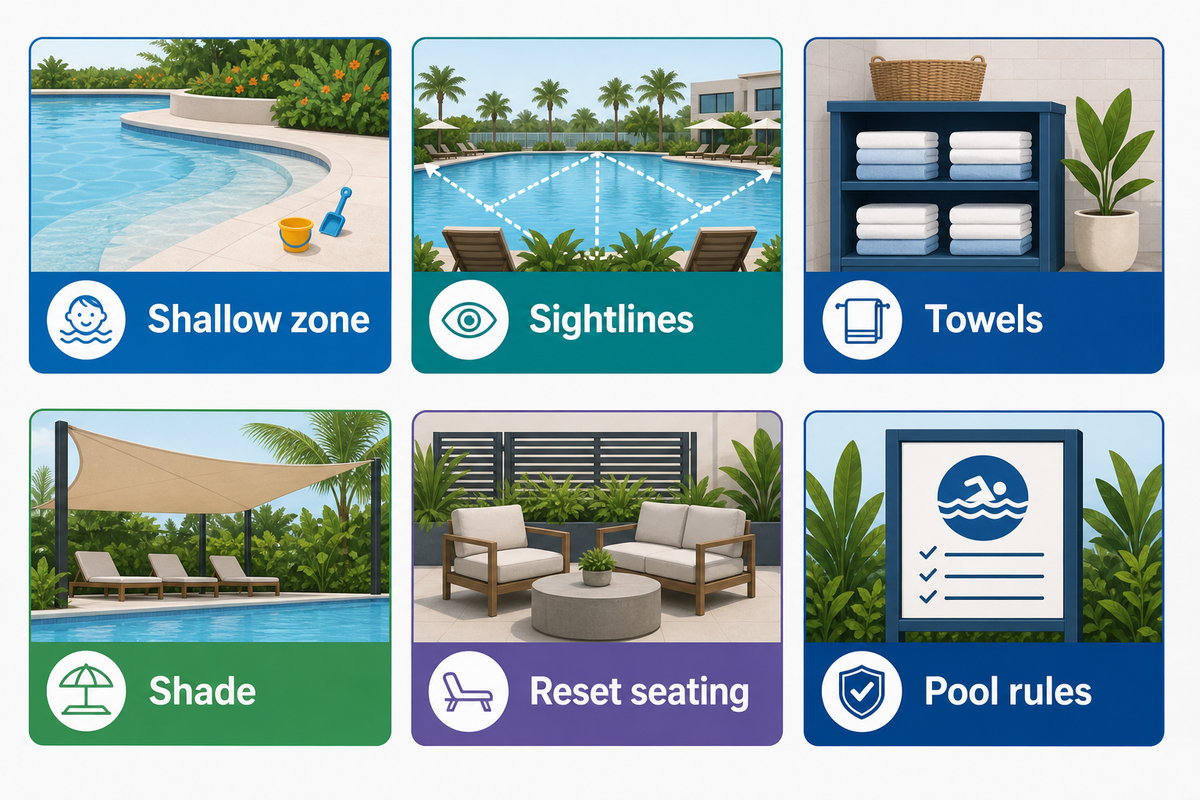
The pool layer should include shallow zone, sightlines, towels, shade, reset seating, and pool rules. Younger kids need a low-stress edge where parents can stand close. Older children need a visible area that does not collide with toddlers. Adults and kids alike need seating that lets a parent watch without blocking circulation. Towels, changing access, water stations, and wet-bag movement are part of the amenity because they decide whether families can enjoy the pool twice in one day.
Resorts may add splash pads, zero-entry water play, pool toys, or a family cabana system. City hotels may only have an indoor pool, but even that can be a strong family-friendly amenity if it has clear hours, a child-friendly depth note, and a route from elevator to pool that works with towels and shoes. Pet-friendly amenities can sit nearby for properties where families travel with pets, but they should not mix with children’s wet play routes.
Activities Beyond the Kids Club
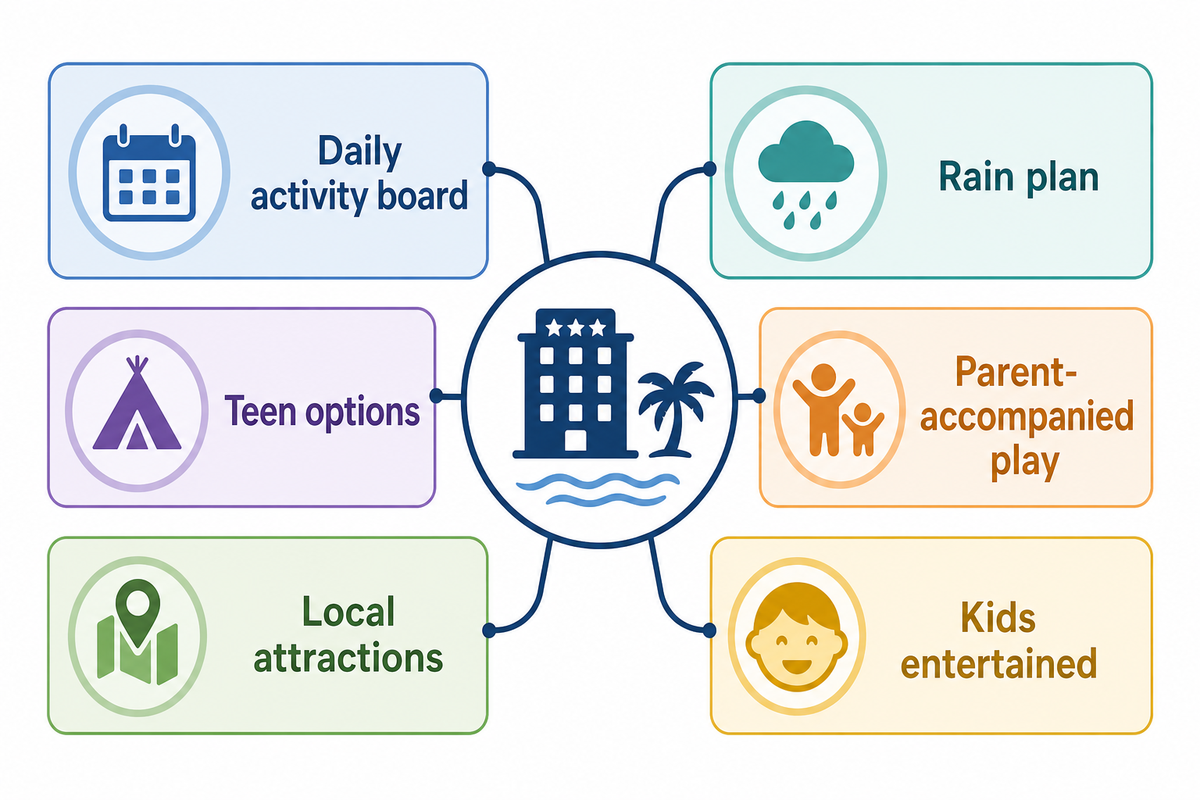
A kids club is one activity engine, not the whole activity plan. Strong family-friendly amenities include a daily activity board, rain plan, teen options, parent-accompanied play, local attractions, and ways to keep kids entertained during downtime. Families seeking a family getaway want choices before dinner, after a pool session, and during bad weather.
Activities should be grouped by age and supervision level. Parent-accompanied play works for the youngest guests. Short craft sessions help younger kids settle. A game room or arcade can work for older children when staff can manage sound, closing time, and queue behavior. Outdoor lawns, mini golf, sports courts, movie nights, and family-friendly attractions within walking distance give the hotel options when the kids club is full or closed.
Hotels with activities for families should publish the real schedule. Do not hide every activity behind “ask at reception.” Families consider timing, cost, age range, and whether adults must stay. A hotel that can say “kids of all ages have a place to go, but some programs require parents” sounds more trustworthy than a hotel promising children will be entertained without explaining how.
Dining and Convenience Amenities
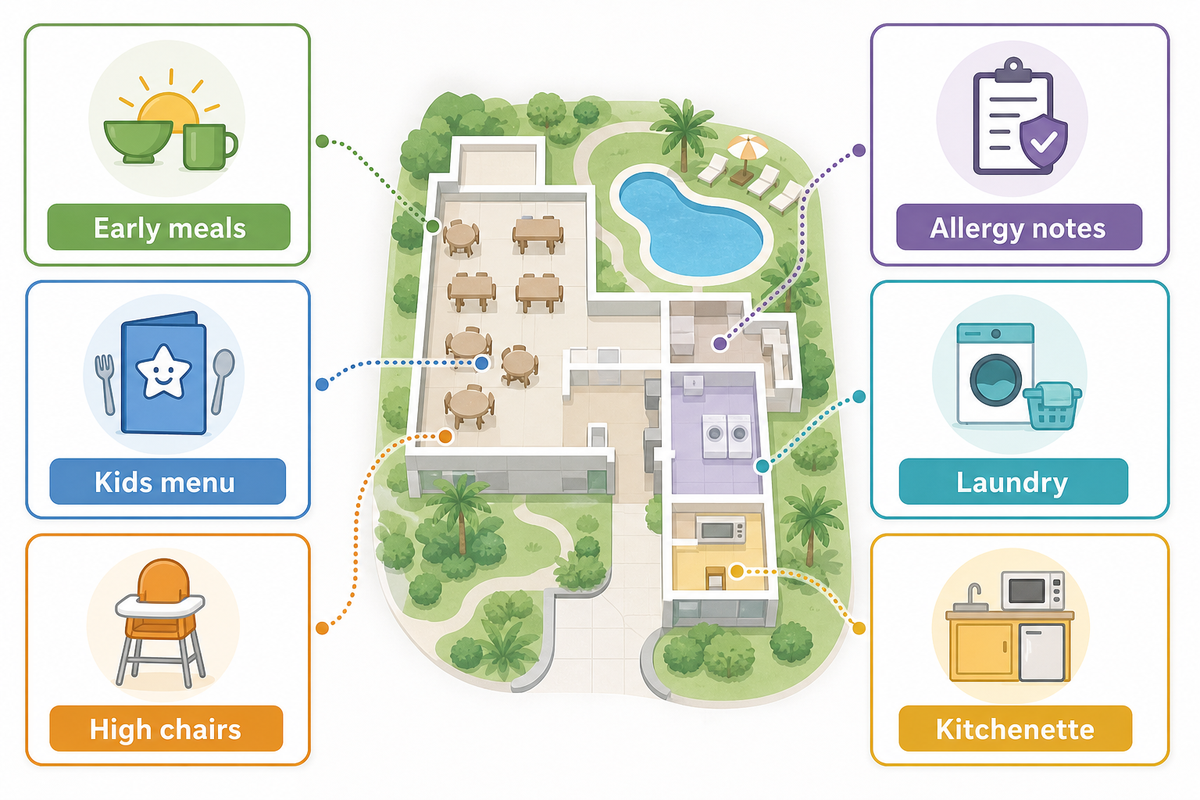
Dining is where family-friendly fun either lasts or falls apart. A family-friendly hotel menu should cover early meals, kids menu, high chairs, allergy notes, laundry, and kitchenette support. HBX Group’s hotel amenities guide lists family ideas such as connecting rooms, cradles, children menus, high chairs, swimming-pool child areas, laundry facilities, stroller-friendly spaces, and accessibility. Those examples are useful because they sit across departments instead of inside one kids’ room.
Families can enjoy a restaurant when it moves at family speed. Early dinner windows, fast breakfast flow, high-chair availability, booster seats, safe plateware, plain options for tired little ones, and clear allergen handoff help families stay on site. A kitchen that can handle a 5:30 p.m. child meal may drive more food and beverage capture than a more elaborate dinner menu served too late.
Convenience services also matter. Laundry reduces luggage. A kitchenette or bottle-washing station helps families with young children. Vending or small snack retail can prevent late-night front desk requests. A shuttle to nearby attractions or family-friendly attractions can turn a hotel into an easy base. These are not glamorous hotel amenities, but they are the reason family bookings turn into repeat stays.
Kids Club, Soft Play, and Entertainment Room
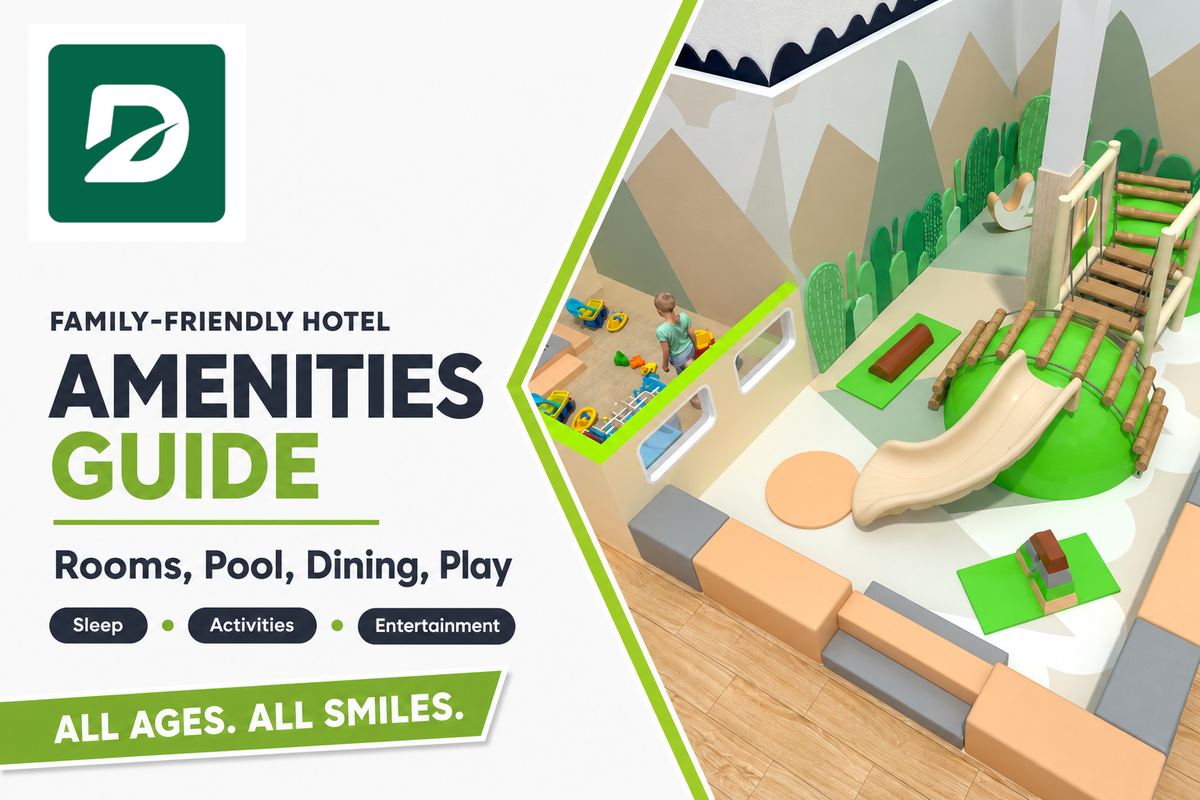
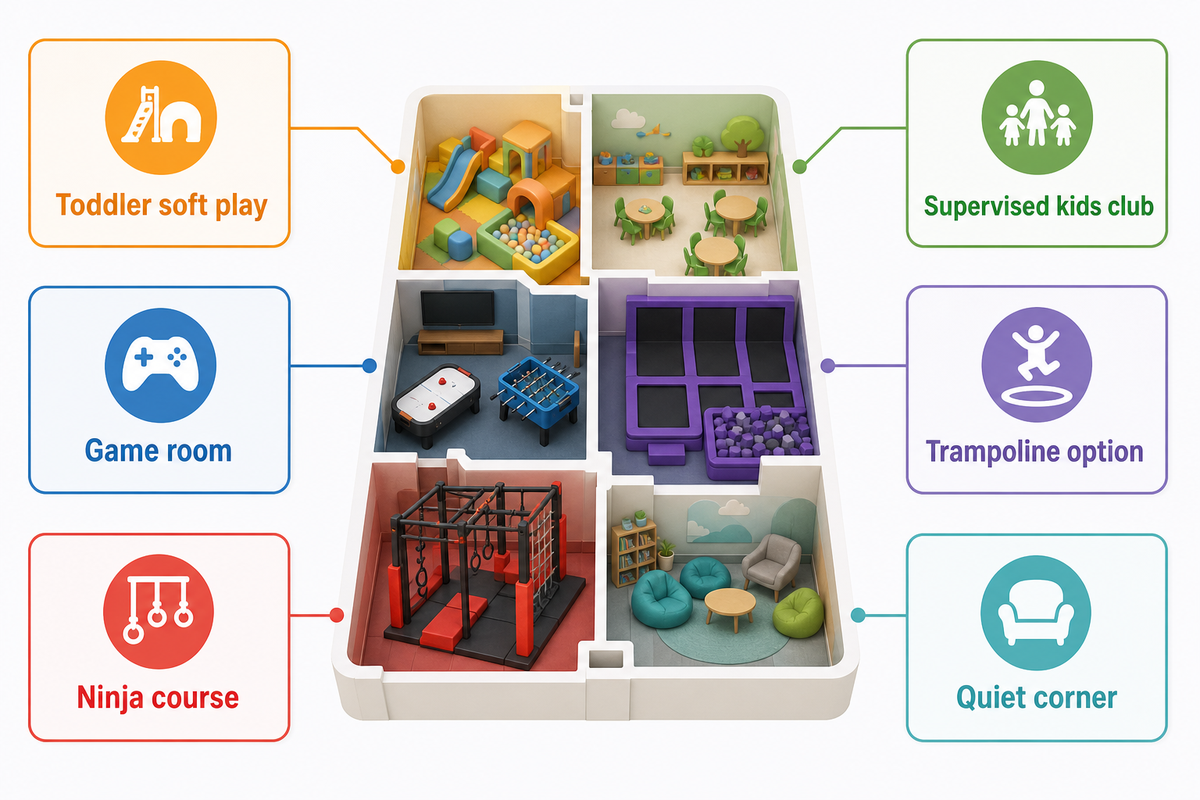
Once the wider amenity base is clear, the hotel can decide what the entertainment room should be. The main options are toddler soft play, supervised kids club, game room, trampoline option, ninja course, and quiet corner. A staffed kids club supports scheduled programming and parent downtime. An unstaffed play area supports parent-accompanied downtime. They may share equipment, but they are different operating promises.
Dreamland’s dedicated hotel kids club setup page explains why ceiling height, floor area, and equipment budget decide the play-space package. A compact city business hotel may choose a toddler corner or single-level structure. A beach resort may specify a separate toddler soft play zone plus a multi-level play structure. A ski resort with long indoor dwell time may need older-kid climbing or ninja elements, while a boutique hotel may prefer a small, high-finish room that matches its brand.
The under-four group needs special attention. Many guest-facing kids club programs begin around age four, which means families traveling with toddlers need a parent-accompanied soft play zone instead of being told the club is “family friendly” but unavailable to them. A better brief says who can use each zone, when, and with what supervision.
Planning note: if the entertainment room is part of a future hotel kids club setup, send Dreamland the room dimensions, lowest obstruction, target age group, theme, budget, and operating model. The team can prepare floor plan design, 3D design, production scope, shipping plan, installation support, and after-sales service around those inputs.
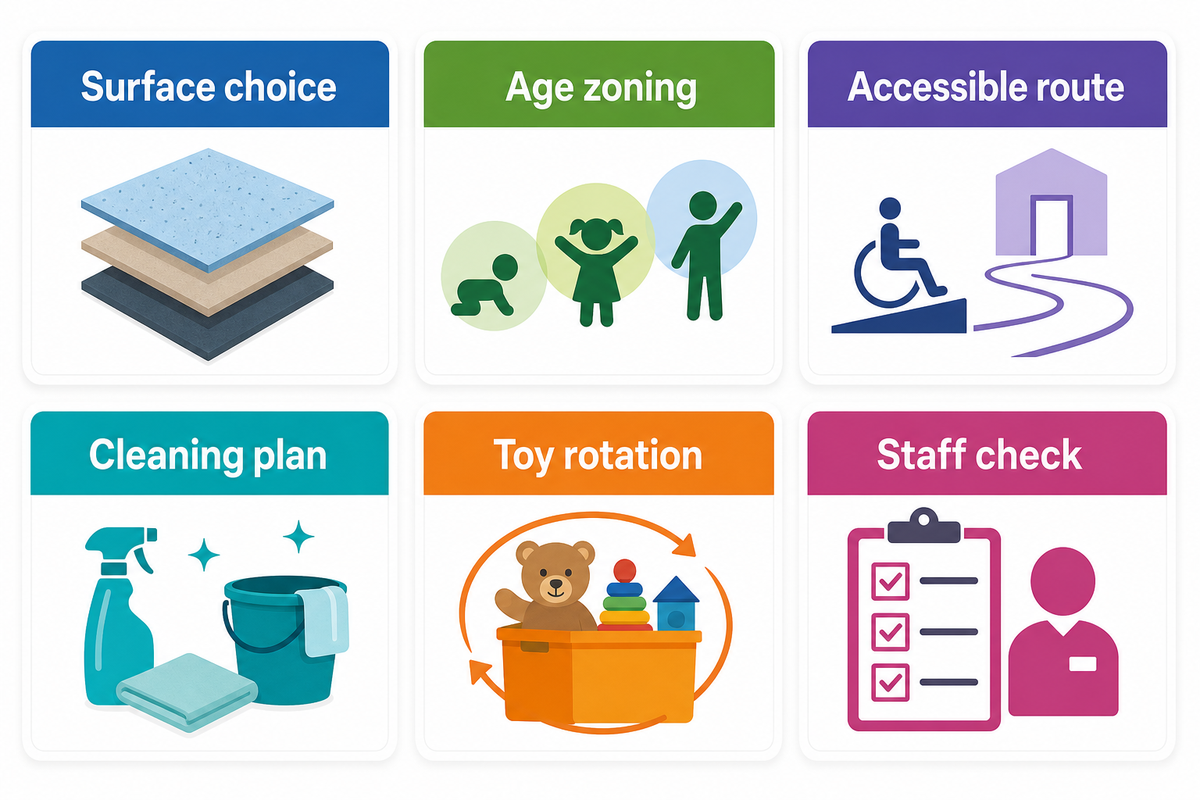
Family-friendly hotel amenities are not credible without operational checks. The practical list is surface choice, age zoning, accessible route, cleaning plan, toy rotation, and staff check. The U.S. Consumer Product Safety Commission’s Public Playground Safety Handbook is not a hotel rulebook, but it is a useful reference for age separation, supervision, surfacing, and inspection thinking. The U.S. Access Board’s play-area guide is useful when a property is planning accessible routes, ground-level play components, transfer systems, and elevated play components. The CDC cleaning guidance for early care settings explains why high-touch surfaces, toys, and play surfaces need defined cleaning, sanitizing, and disinfecting routines.
Use those sources with the right caveat: they do not replace local code review, insurance review, hotel operating procedures, or market-specific standards. They help the buyer ask better questions before purchasing equipment or advertising a family amenity. For example, a buyer can ask whether a soft play surface can be cleaned with the housekeeping product already used on site, whether removable covers are washable, whether the toddler zone is separated from older kids, and whether an accessible route reaches the family amenity rather than stopping at the door.
Accessibility is also a guest experience issue. A stroller-friendly route helps parents, grandparents, and staff. Clear space near seating helps caregivers. A quiet corner helps a child who needs a sensory reset. The best family hotel amenity plan treats access, cleaning, sightlines, and supervision as design inputs before the quotation is approved.
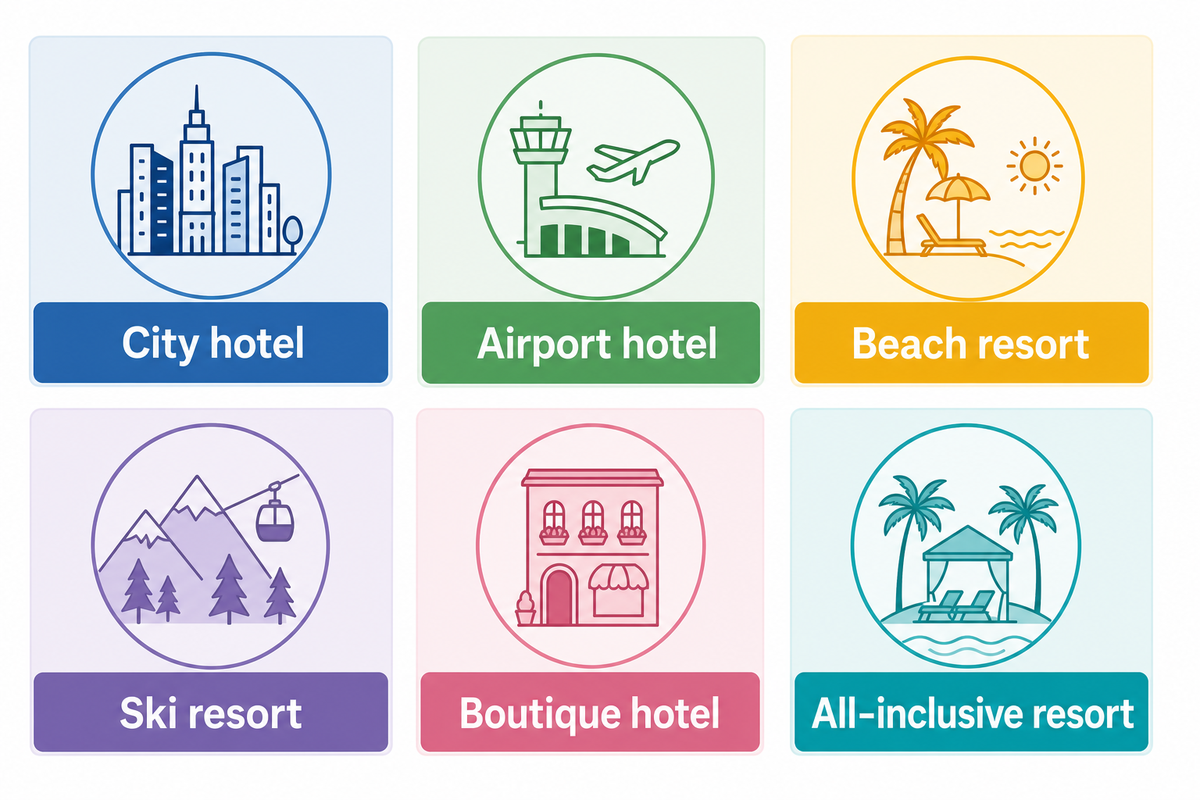
Amenity Mix by Hotel Type
There is no single best family amenity package. The right mix changes by property type, guest length of stay, weather, room configuration, and food and beverage model. Family hotels need a different package from airport hotels, and a resort needs a different package from boutique hotels.
Hotel type
Family amenity priority
Entertainment fit
Risk to avoid
City hotel
Connecting rooms, breakfast speed, stroller route
Small play corner or game shelf
Overpromising resort-style family fun
Airport hotel
Fast check-in, quiet rooms, early breakfast
Short-stay play wall or single-level play
Activities that require long dwell time
Beach resort
Pool, shade, laundry, indoor rain plan
Kids club plus toddler soft play
Leaving under-fours with no option
Ski resort
Indoor activities, drying space, warm dining
Climbing, ninja, craft, teen game room
Only planning outdoor family activities
Boutique hotel
Family suites, quiet service, design fit
Compact room with premium finish
Adding loud equipment that clashes with brand
All-inclusive resort
Daily program, dining windows, multi-age zones
Staffed kids club and large indoor playground
Confusing childcare with unstaffed play
This matrix also explains why family-friendly amenities should be planned with revenue reality. A kids club may support adult downtime and food and beverage capture in a resort, while a city hotel may gain more from better family rooms, clear front desk handoff, and a compact play area near the lobby. The amenity should fit the family trip the property actually serves.
Build the Family Amenity Brief with Dreamland
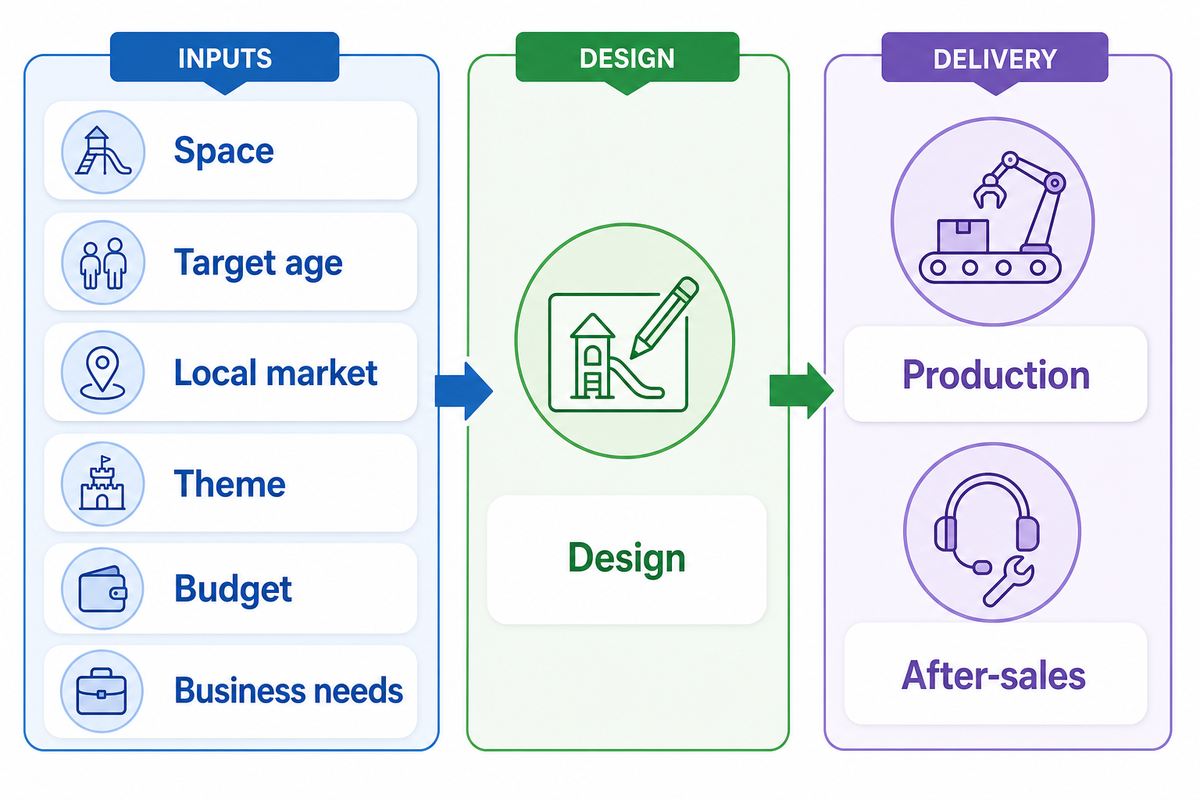
Dreamland Playground uses a practical project brief: space, target age, local market, theme, budget, business needs, design, production, and after-sales. That brief is broader than a product list because every family-friendly hotel amenity interacts with operations. A play structure affects seating, cleaning, staff checks, access route, noise, and the way families use dining and pool time.
For hotels and resorts, Dreamland can support space planning, floor plan design, 3D design, equipment production, shipping, installation support, and after-sales service. The company has its own production team and quality control process for materials, structures, parts, surfaces, packaging, and other production details. Products can be designed according to relevant EN and ASTM requirements depending on product type and target market, with the applicable standard set reviewed for the project.
If your property is planning a family-friendly hotel, start with the whole stay rather than a single room. Decide the room promise, pool promise, dining promise, activity promise, cleaning routine, access route, and entertainment model. Then send the room dimensions and target age group to Dreamland so the play-space portion can be drawn around the hotel amenity plan instead of bolted on after the budget is set.
A family-friendly hotel usually needs flexible rooms, connecting rooms or family suites, child-aware dining, a planned pool area, activities for different ages, laundry or kitchenette support, and a clean entertainment space. A kids club helps most when these basics already work.
Are kids club amenities enough for families?
No. A kids club helps with supervised play and parent downtime, but families also judge sleep, meals, pool access, stroller movement, front desk support, cleaning, and nearby attractions. Plan family amenities beyond the kids club so the whole stay feels prepared.
What family-friendly amenities matter for resorts?
Resorts often need a stronger mix: pool and water play, indoor rain plan, kids club, toddler soft play, daily activities, early dining, laundry, family rooms, and a clear supervision model. Longer stays create more demand for variety.
How should hotels plan amenities for younger kids?
Younger kids need parent-accompanied soft play, quiet rest areas, safe routes, small toilets or step support where practical, simple dining, washable surfaces, and a clear boundary from older-kid play. Do not assume a staffed club serves toddlers unless its age policy says so.
Can Dreamland help with family hotel entertainment spaces?
Yes. Dreamland Playground can design and manufacture indoor playgrounds, hotel kids clubs, resort play areas, trampoline parks, ninja courses, and other family entertainment spaces. The project starts from your room dimensions, target age group, market, theme, budget, and business needs.
Dreamland Playground publishes practical planning guides for commercial indoor-play projects, including family entertainment centers, shopping malls, hotels, restaurants, churches, and other venue types.
Use these guides to frame the questions that should be resolved before concept selection: venue size, intended age groups, project location, attraction mix, operating priorities, timeline, and delivery constraints. Final recommendations should be based on the real site and applicable local requirements.
Start With The VenueFloor area, clear height, site location, intended audience, and target opening date create the working brief.
Clarify The ScopeConcept, equipment, production, shipping, installation, and operating inputs can vary from one project to another.
PROJECT / VENUE / TIMELINE
Prepare Your Project Brief
Venue TypesFEC · Mall · Hotel · Restaurant · Church
Start WithFloor area · Clear height · Age groups · Country