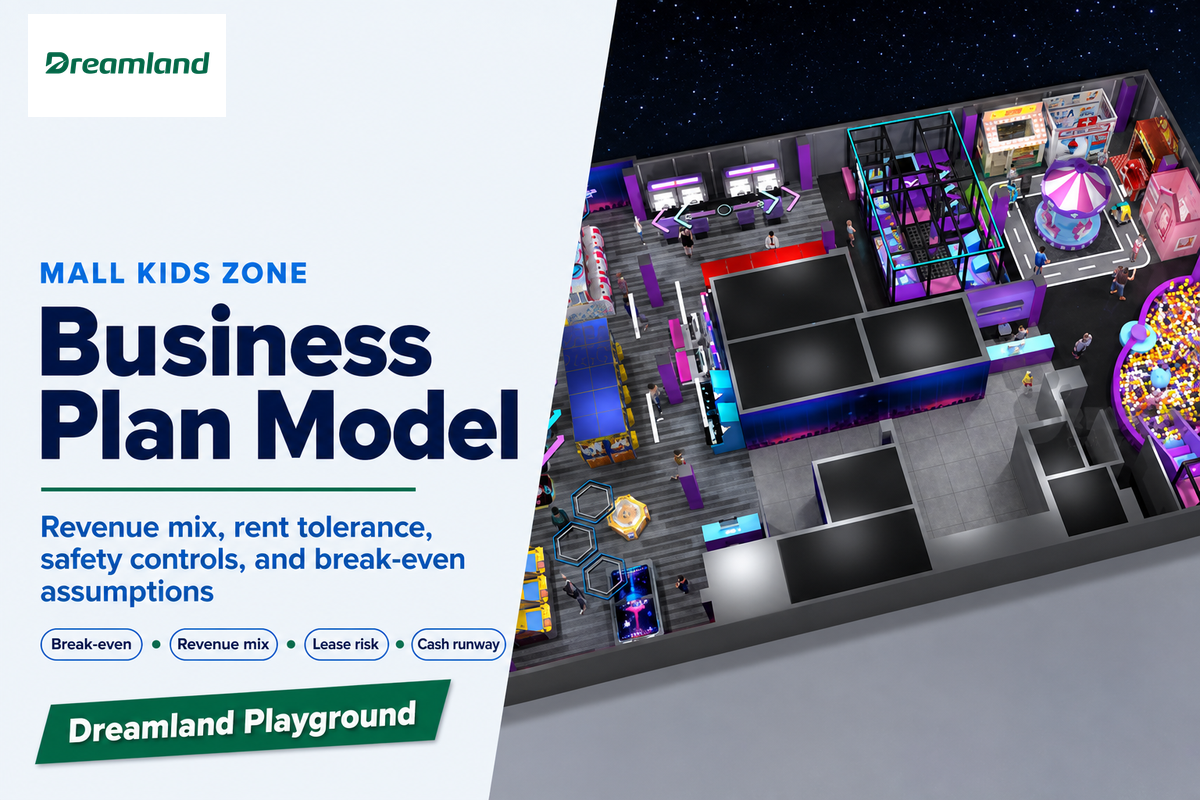
A Mall Playground Business Plan is a practical investment framework for a shopping mall kids zone: it proves demand, rent tolerance, safety controls, revenue mix, working-capital runway, and break-even assumptions before you commit to equipment, lease terms, or construction.
For mall operators, project developers, investors, and indoor playground business owners, this guide turns a shopping mall kids zone idea into a first-pass investment model. It is not a complete lender-ready business plan. Banks, landlords, or equity partners may still require ownership structure, management biographies, funding requirements, five-year financial statements, local tax review, insurance certificates, architectural drawings, and code approvals.
Dreamland Playground supports indoor playgrounds, family entertainment centers, shopping mall play areas, trampoline parks, ninja courses, schools, hotels, resorts, and outdoor play spaces from idea to installation support. For a broader mall concept, review Dreamland’s mall entertainment zone planning page, then use the framework below to pressure-test the numbers for your own site.
Planning rule: if the site cannot explain risk, evidence, scenario, and supplier scope in one page, the numbers are not ready for lease negotiation.
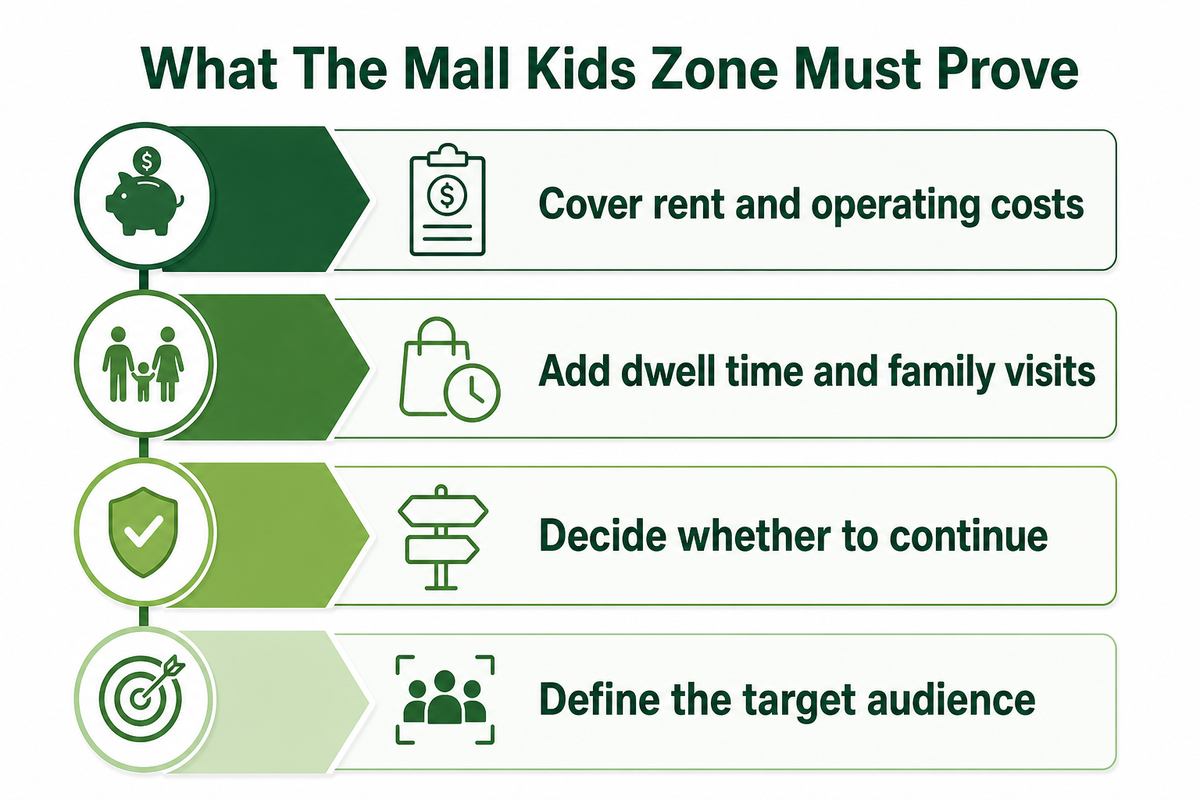
Executive Summary: What The Mall Kids Zone Must Prove
A shopping mall play area only makes business sense if the operating model can cover rent, labor, maintenance, insurance, cleaning, taxes, and reinvestment without relying on perfect weekend traffic.
This business plan has to show the mall owner how the attraction will add dwell time, support nearby tenants, draw family visits, protect the mall’s public image, and remain controlled enough for a public retail environment. Operators also need a separate owner case: what capital is at risk, how quickly cash is used, and which revenue lines can carry weak weekdays.
Indoor Playground Business Plan Template
Use the document as an indoor playground business plan template, not as a decoration file. The working version should include market analysis, SWOT analysis, target audience, business licensing, a financial plan, funding requirements, essential financial documents, marketing strategies, customer feedback, and a clear plan to attract children and parents.
SBA guidance says a traditional business plan can include organization and management, marketing and sales, funding requirements, and financial projections. For this article, the goal is narrower and more practical: create a first-pass mall playground investment model that can decide whether to continue to a full business plan, lease negotiation, drawings, and local approvals.
Market research should define the target audience before opening an indoor playground: toddlers, preschool children, mixed-age siblings, party guests, school groups, or tourists. Strong marketing strategies also decide how to attract local communities through mall events, school partnerships, weekday playgroups, birthday previews, and carefully limited discount campaigns. When the same indoor playground business plan connects that demand work to indoor play equipment, climbing structures, party rooms, and parent seating, the layout starts to support the business model instead of only looking attractive.
Planning boundary: all example numbers below are placeholders. Replace them with your mall’s lease offer, expected visitor counts, local tax rules, insurance quote, payroll plan, equipment quote, and authority-having-jurisdiction feedback before making an investment decision.
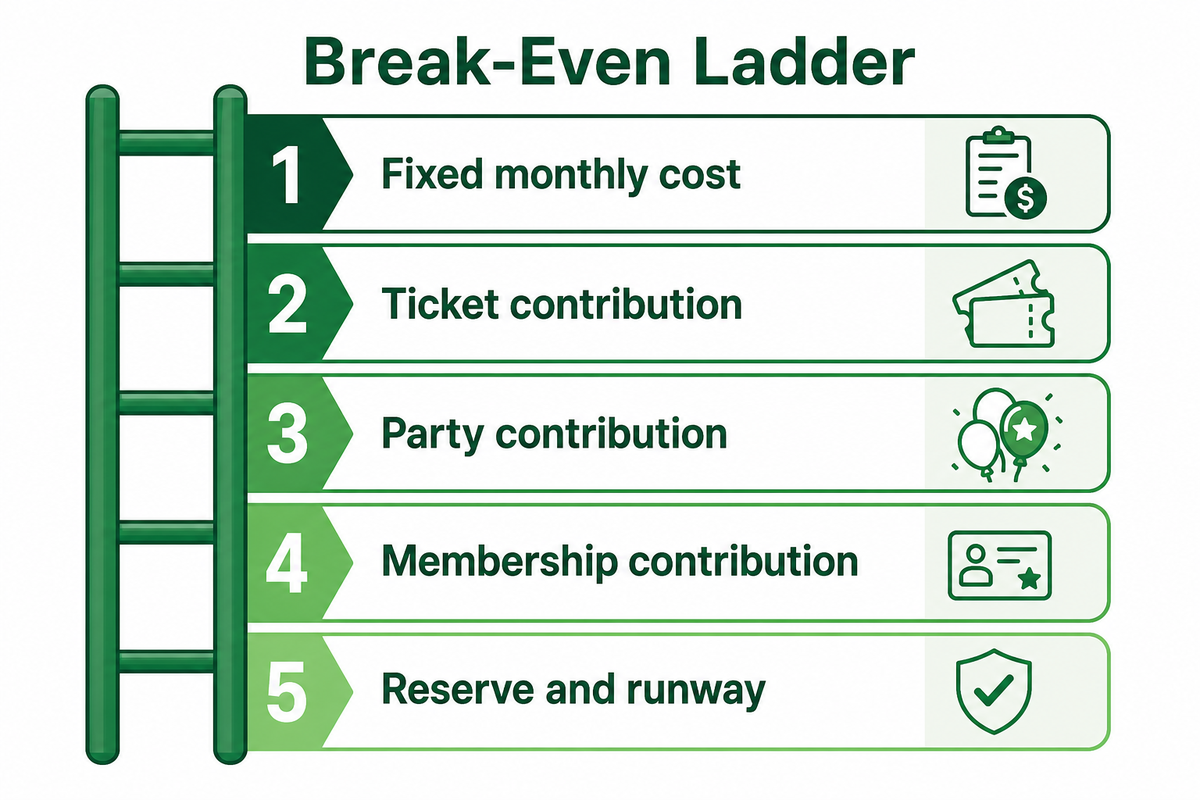
The Mall Playground Break-Even Ladder
The Mall Playground Break-Even Ladder starts with fixed monthly costs, then tests each revenue line by contribution margin and realistic capacity. A mall unit can look attractive on foot traffic alone, yet still miss break-even if rent, base payroll, cleaning, insurance, and repair reserves are too high.
A simple break-even formula is useful because it keeps assumptions visible. SBA break-even guidance treats the output as an estimate, and it notes that businesses with varied products or services may need separate calculations. That is exactly the mall kids zone problem: walk-in tickets, memberships, birthday parties, school groups, vending, food and beverage, socks, lockers, and add-ons do not have the same gross margin, staffing pattern, tax treatment, or capacity limit.
Real risk sits in the assumption stack behind the formula. For example, a $28,000 fixed-cost base and a $12 contribution per visit require 2,334 visit equivalents before reserves, because each operator-landlord scenario changes labor, tax, cleaning, and lease obligations. Dreamland’s equipment scope helps define one part of the model, but the operator still has to verify rent, payroll, local approvals, and working capital.
Break-even visits per month = fixed monthly costs /weighted average contribution margin per visit equivalent
A safer option is to build a ladder, not a single “magic” number. Start with rent, add fixed operating costs. Add ticket sales. Add parties. Add memberships. Add weekday groups. Add add-ons. Now subtract variable costs for payment processing fees, party supplies, socks, janitorial supplies, extra labor, sales or admissions tax where applicable, and maintenance reserve.
Start An Indoor Playground: Financial Plan Inputs
Break-even rung
Question to answer
Modeling rule
1. Fixed monthly cost
What must be paid even in a weak month?
Rent, CAM, utilities, base payroll, insurance, software, cleaning contract, lease deposits amortized for planning.
2. Ticket contribution
What does one paid child visit actually contribute?
Net ticket price after tax, platform fees, socks or consumables, and labor tied to peak sessions.
3. Party contribution
How many birthday parties can the room schedule support?
Model each party tier after host labor, cleaning turnover, supplies, food rules, and booking fees.
4. Membership contribution
Do memberships smooth weekdays or crowd out paid visits?
Use expected visits per member, not membership revenue alone.
5. Reserve and runway
Can cash survive launch seasonality?
Add working capital for slow weekdays, refund spikes, repairs, marketing tests, and delayed mall traffic ramp-up.
For operators who want to start an indoor playground or compare a compact indoor play area with a larger commercial indoor playground, the planning file should also record how each assumption was sourced. This keeps the indoor playground market review, business plan template, customer feedback, and indoor playground cost work connected to the financial plan.
A family-friendly mall concept also needs cleaning and maintenance budgets, parent communication rules, and partnerships with local schools or community groups before launch marketing begins.
Planning input
Evidence source to collect
Cash impact
Market analysis
Mall family traffic by entrance and daypart
Tests whether the play center has enough weekday demand.
Target audience
Parent interviews and competitor customer feedback
Guides age-zone size and service promise.
Equipment scope
Indoor playground equipment quote and layout notes
Separates supplier scope from civil work and approvals.
Industry demand
Indoor playground industry and indoor playground market notes
Supports the opening thesis without promising profit.
Lease economics
Base rent, CAM, utilities, deposit, and landlord rules
Sets the monthly fixed-cost floor.
Revenue proof
Ticket, party, membership, group, and add-on assumptions
Shows whether profitability depends on one line.
Business licensing
Local legal, tax, insurance, and fire-authority feedback
Prevents late changes to staffing, pricing, or room use.
Opening path
Starting an indoor playground business checklist
Connects launch timing with cash runway.
Guest experience
Children and parents flow, complaint logs, and safe and fun design notes
Turns feedback into layout and training priorities.
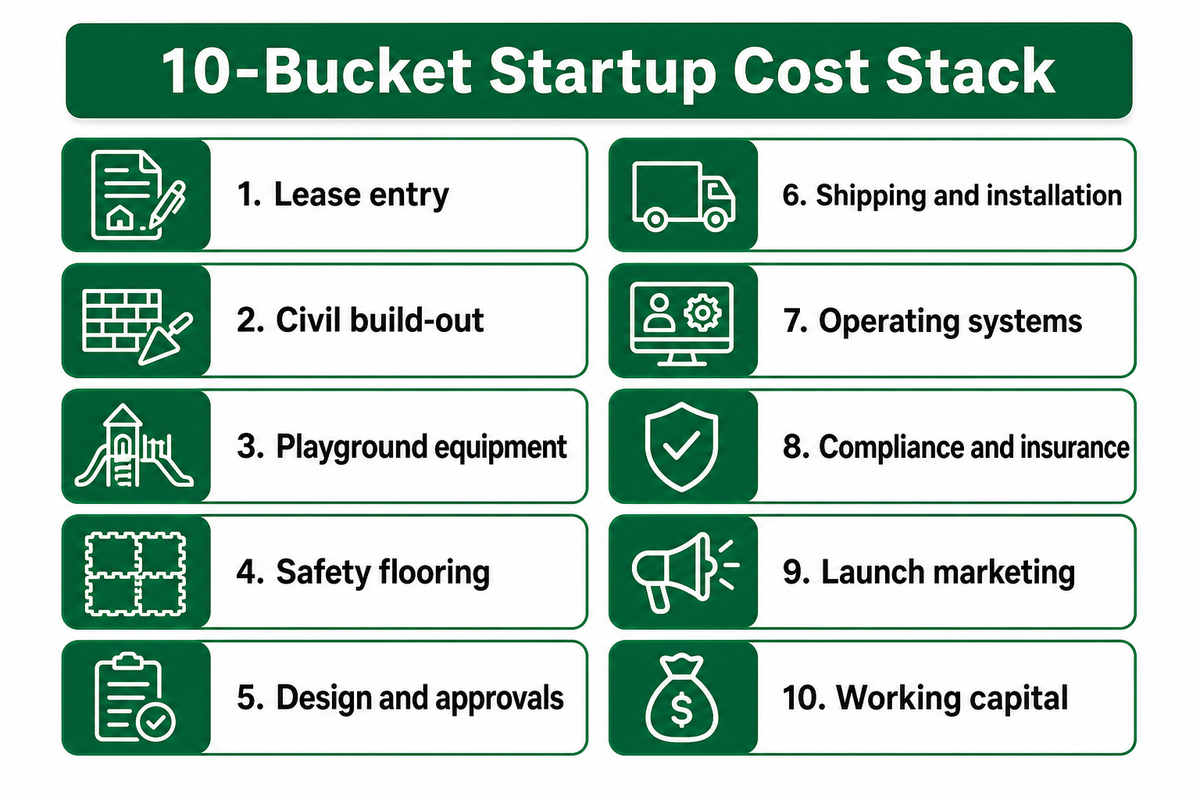
The 10-Bucket Mall Kids Zone Startup Cost Stack
This 10-bucket stack shows build-out, equipment, compliance, launch, and cash reserves so investors do not confuse the equipment estimate with the total project budget.
SBA startup-cost and break-even guidance is useful here because indoor playground start-up costs depend on location country, city, mall grade, area size, ceiling height, fire code requirements, theme complexity, shipping route, installation method, and scope of operator. Small soft-play areas are not the same as large mall family entertainment centers. Do not copy a competitor’s figure. Instead, segment buckets and solicit quotes for each.
Startup Costs And Indoor Playground Equipment
Bucket
What to include
Why it changes the model
1. Lease entry
Deposit, first rent, CAM, legal review, design review fees
High upfront cash can hurt runway even before opening.
Break-even on paper does not prevent a cash squeeze.
The 5-Line Revenue Mix Table
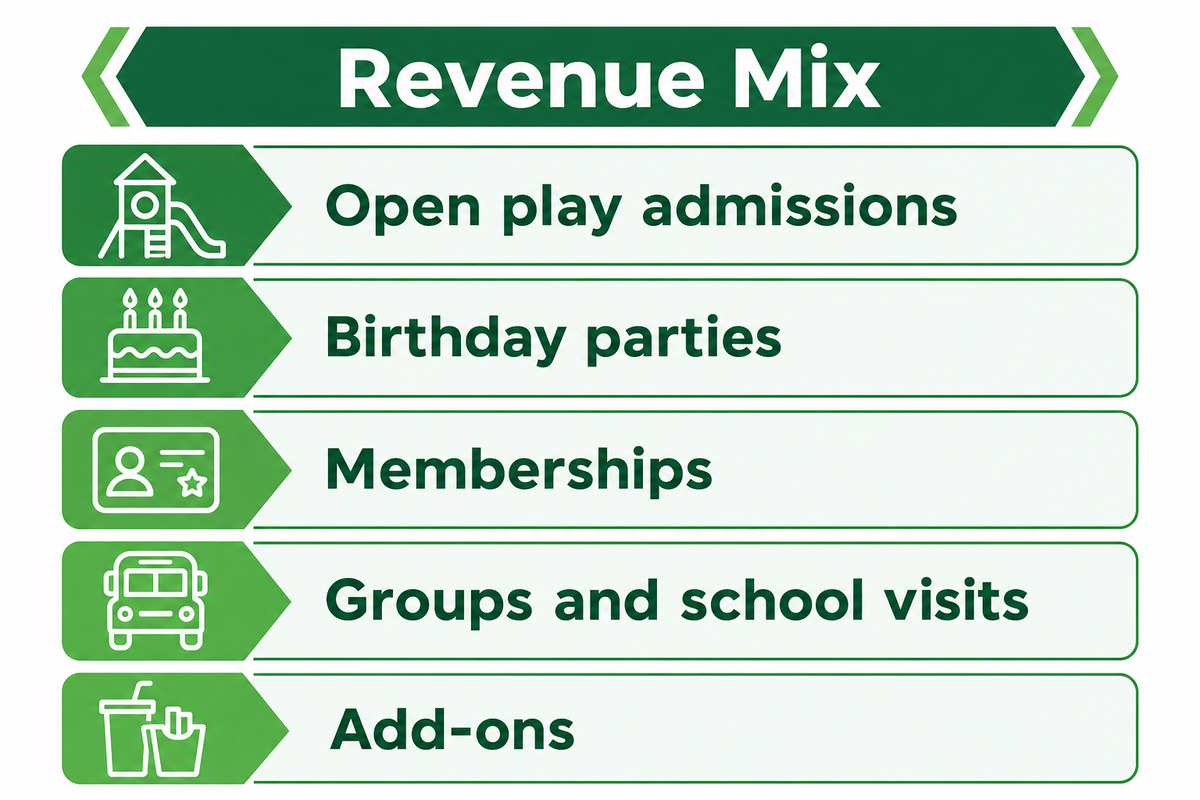
This 5-line revenue table keeps the business plan from depending on admissions alone. Every line needs its own targeted price, capacity, tax treatment review, variable costs, and staffing assumption.
Margin mismatch is the risk: a $18 admission and a $260 birthday package can fail for different reasons because tax, host labor, supplies, cleaning, and booking fees hit each line differently. Ask the operator, accountant, landlord, and Dreamland supplier team to verify the assumptions before pricing.
Successful mall playgrounds do not depend on one revenue source. Walk-in play exposes visitors to the mall, but birthday parties, memberships, weekday groups, and add-ons determine whether the business can sustain rent and payroll. Profitability still has to be proven line by line, with each line optimized and measured separately.
Birthday Parties, Memberships, And Customer Feedback
Revenue line
Core metric
Contribution margin watchpoint
Capacity limit
Open play admissions
Paid child visits per day
Ticket price minus tax, fees, cleaning, and incremental supervision
Safe occupancy, age separation, time slots
Birthday parties
Parties per weekend and weekday
Package price minus host labor, supplies, cleaning, food policy costs
Party rooms, turnover time, parking
Memberships
Active members and visits per member
Monthly fee minus crowding cost and lost full-price visits
Peak-hour crowding and guest satisfaction
Groups and school visits
Booked children per off-peak slot
Group price minus extra staff and cleaning
Weekday staffing, transport drop-off, supervision rules
Add-ons
Attach rate per visit or party
Socks, lockers, vending, cafe, photos, toys after product cost and tax
An important finding in the P0-1 literature is that tax treatment varies from place to place. Under some taxing rules, single tickets, multi-occasion tickets, single-visit passes, and membership fees that include admission can be taxed for the same level of admission. That does not mean every jurisdiction applies the same rule. It means your shopping mall kids zone business plan needs a tax line before contribution margin.
The Foot-Traffic-to-Revenue Sensitivity Grid
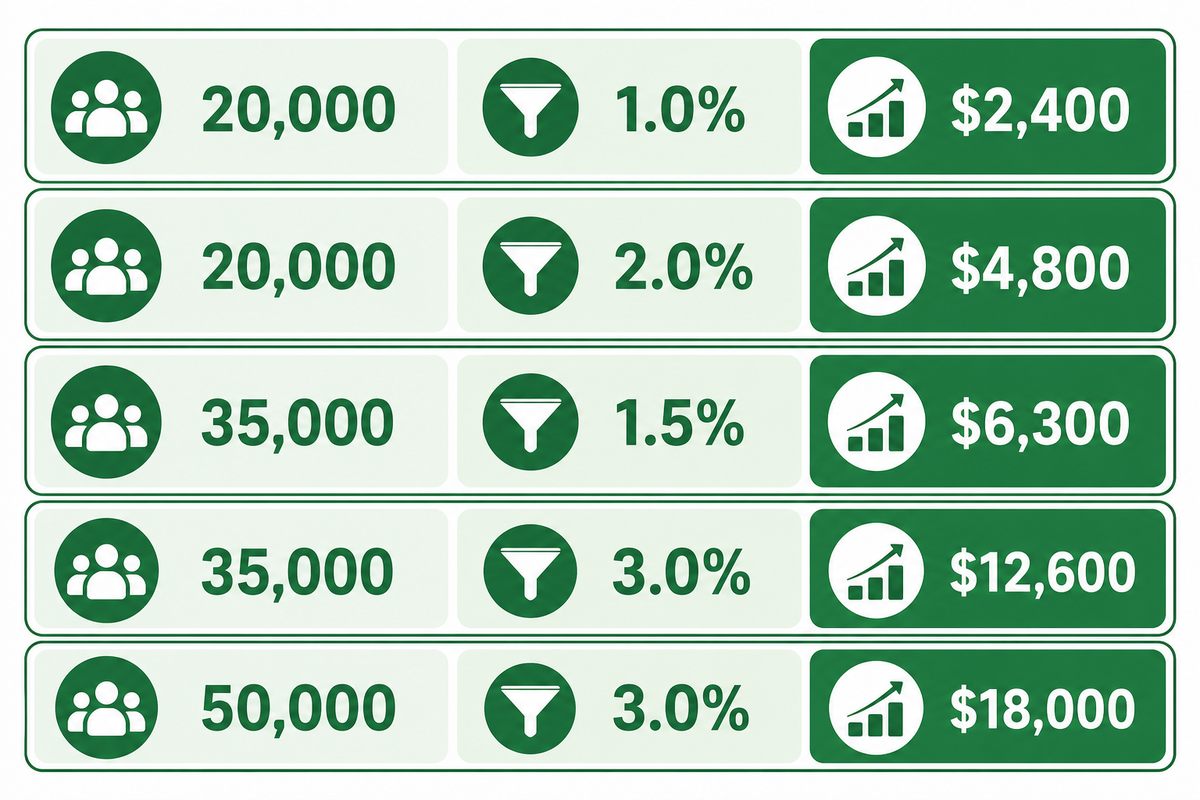
This Foot-Traffic-to-Revenue Sensitivity Grid converts mall foot traffic into a stress test within the SBA business-planning discipline of market research and financial projections. How many mall visitors become paying guests? How often do they come back? Does that level of contribution cover rent?
One trap is assuming traffic equals sales. In a 35,000-family-passerby month, a 1.5% capture rate and $12 contribution may still miss rent because weekday flow, safe capacity, and landlord rules limit usable demand. Use this as an operator-landlord scenario, then ask Dreamland to fit the attraction mix to the proven capacity.
Market context is relevant, but it is not evidence of profitability. JLL’s 2026 U.S. retail market reporting is useful as directional background on vacancy, rent, absorption, and transaction activity, not as primary proof that a single mall location will work. ICSC’s retailtainment coverage supports the strategic logic that experiential concepts can help tenant mix and shopper engagement, but each mall still needs its own traffic, family demographic, and lease economics.
Monthly mall family passersby
Capture rate
Paid child visits
Example contribution per visit
Example monthly contribution
20,000
1.0%
200
$12
$2,400
20,000
2.0%
400
$12
$4,800
35,000
1.5%
525
$12
$6,300
35,000
3.0%
1,050
$12
$12,600
50,000
3.0%
1,500
$12
$18,000
Treat this table as a sensitivity analysis, not a market average. Even at $22,000 per month of rent plus fixed payroll, open play alone probably will not be enough—even with strong capture. From there, you will need parties, memberships, group bookings, add-ons, or a smaller footprint. If the mall asks for a high base rent and percentage rent, recalculate the grid prior to execution of lease.
Foot Traffic, Rent, And Lease Terms
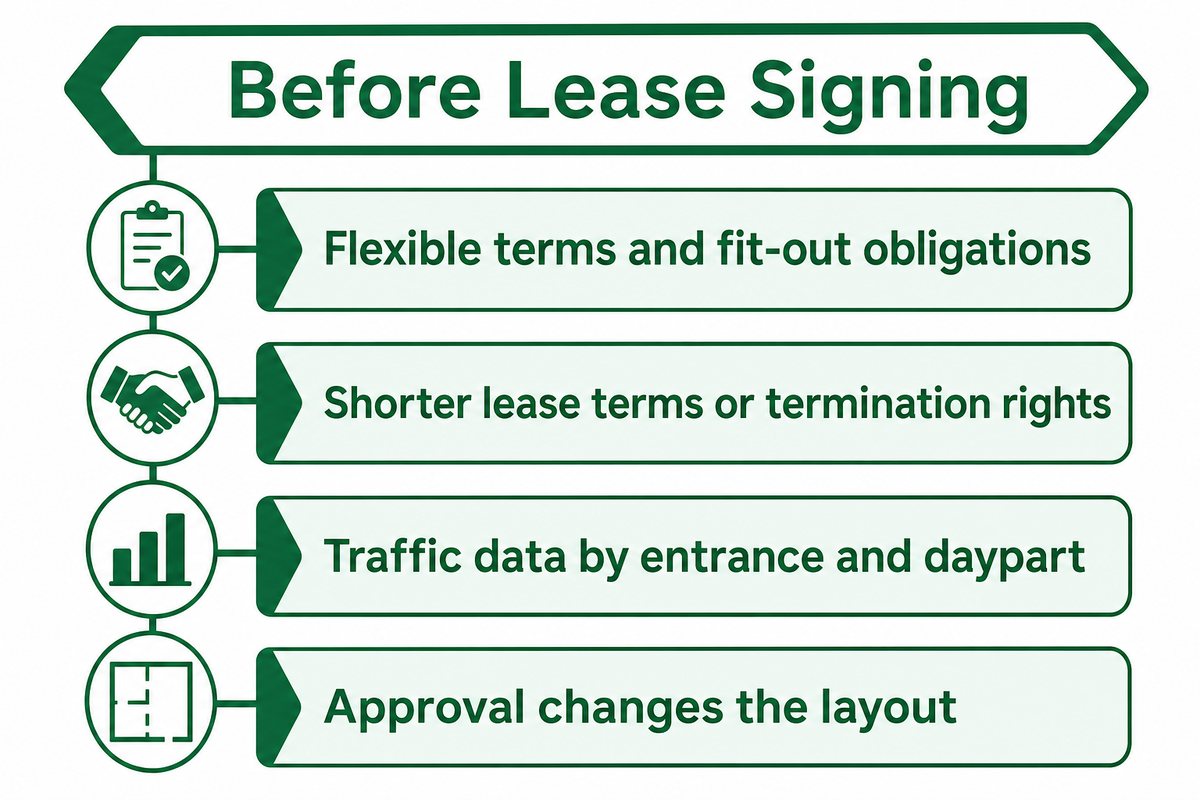
A mall kids zone lease should be tested as carefully as the play equipment. Flexible terms, termination rights, common-area rules, signage, utilities, and fit-out obligations can change the whole business case.
According to ICSC, specialty leasing may be defined by shorter lease terms or by landlord termination rights. For a mall playground, that matters because the operator may prefer a pilot term, but the landlord may require design standards, hours of operation, staff uniforms, insurance limits, odor and noise rules, cleaning duties, stroller management, and event coordination. Short lease duration is not automatically safer if the upfront build-out cannot be recovered.
Before agreeing to space, request the mall’s traffic data by entrance and daypart, not just total annual footfall. Request family tenant adjacency, stroller access, toilet distance, parking patterns, elevator and escalator routes, trash pickup path, ceiling height, sprinkler requirements, HVAC capacity, power, signage rights, and after-hours access for installation. Include a lease break clause, landlord construction approval timeline, and a plan for what happens if permits or authority approvals change the layout. Then run the terms through the SBA break-even point logic before treating the space as affordable.
Licensing, Tax, And Cash-Flow Branches
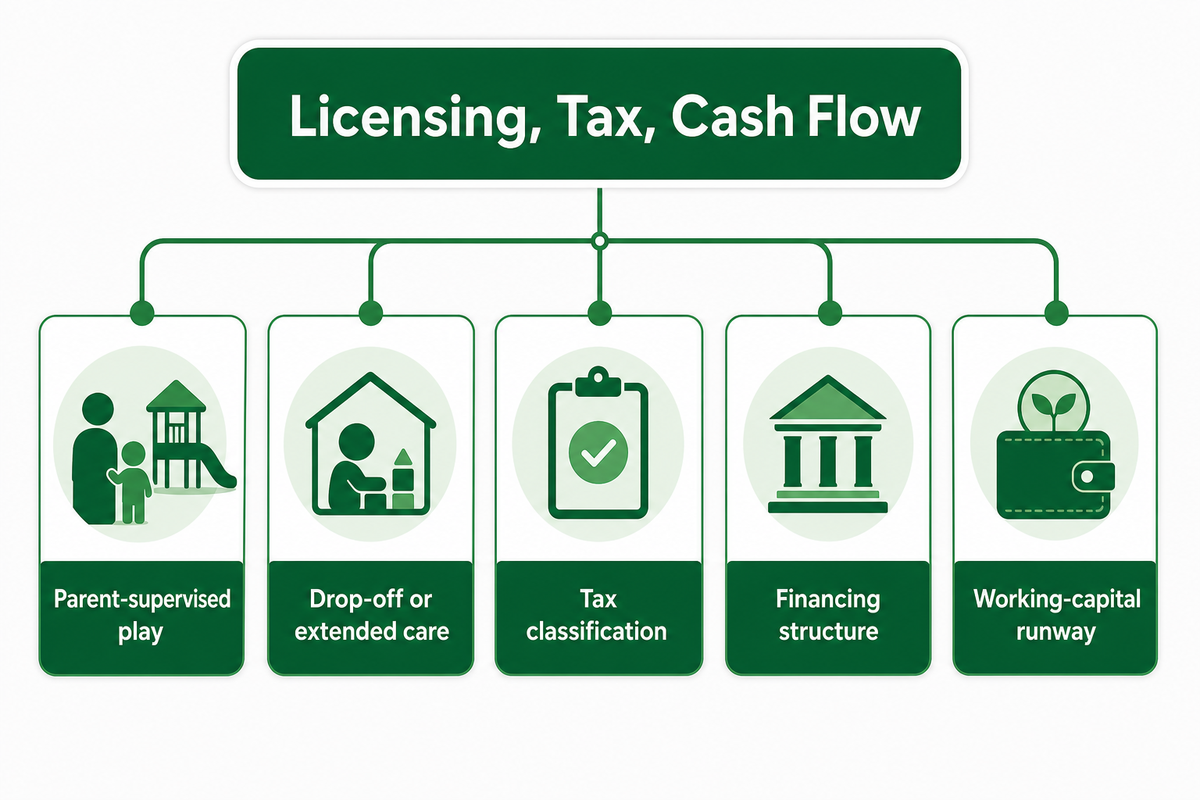
A mall playground may be treated as entertainment, supervised recreation, childcare, learning, retail, or event hosting depending on local law and the operating model. Test those branches before you finalize the concept.
Parent-supervised play and drop-off care are different risk branches. One official example from Ohio law uses parent accessibility and a 2.5-hour-per-child daily limit in its exemption structure. Different jurisdictions use different factors, but the planning lesson is stable: if parents can leave, children stay longer, staff run structured programs, or weekday care becomes a profit center, local rules may change your model.
Sales, admission, amusement, and local taxes can also change margin. North Carolina’s admission charges guidance is one jurisdiction-specific example of why party packages, admission, room rental, food, staff time, signage, socks, prizes, and add-ons need classification before prices go live. Otherwise, the revenue model may overstate contribution margin by treating tax as an afterthought.
Branch
Ask before lease signing
Model impact
Parent-supervised play
Must guardians stay on site and remain reachable?
Staffing, waivers, signage, incident response
Drop-off or extended care
Does the service trigger childcare or camp rules?
Licensing, ratios, background checks, room use
Tax classification
How are tickets, passes, memberships, parties, and add-ons taxed?
Net price, margin, POS setup, reporting
Financing structure
Debt, equity, supplier terms, or owner cash?
Monthly cash flow, interest, repayment, runway
Working-capital runway
How many slow months can the business survive?
Opening budget, marketing spend, hiring pace
Layout And Age-Zone Decisions
Optimal planning does not mean choosing the largest layout. It means finding the safest and most repeatable mixture for your particular target age group, available space, ceiling height, operating expenses, and mall visitor pool.
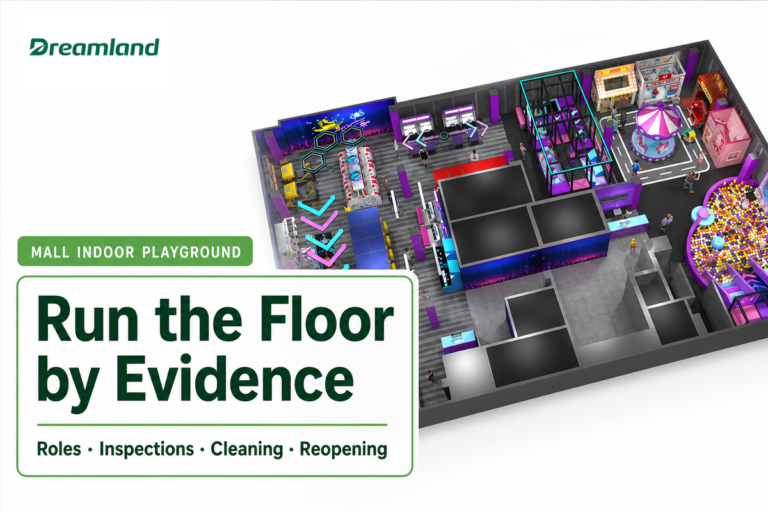
A common mistake is choosing the tallest structure before pricing the use case. A 600 m2 unit, a 3-year lease, and a $22,000 rent ceiling create different risk than a 120 m2 supervised toddler corner because the operator must balance sight lines, cleaning, staff, and insurer review. Dreamland can translate that scenario into zones, climbing structures, party flow, and accessible routes.
Dreamland customizes each project to your space, target age group, audience, concept, investment budget, and enterprise objectives. For a small mall kids zone, that might be a small toddler soft play, a play house, and a party zone. For a larger mall unit, it may involve multi-level soft play, ball pools, obstacle courses, interactive features, ninja elements, and a cafe or lounge.
First set the business model over the theme. If birthdays drive the profits, party rooms and smooth turnover pathways warrant as much planning as the slides. If weekday groups are the focus, a toddler-secure play zone and clear stroller flow might rank higher than the towering adventure structures. If the mall desires dwell time around food and beverages, parent seating, visibility, and your re-entry policy become elements of the business model.
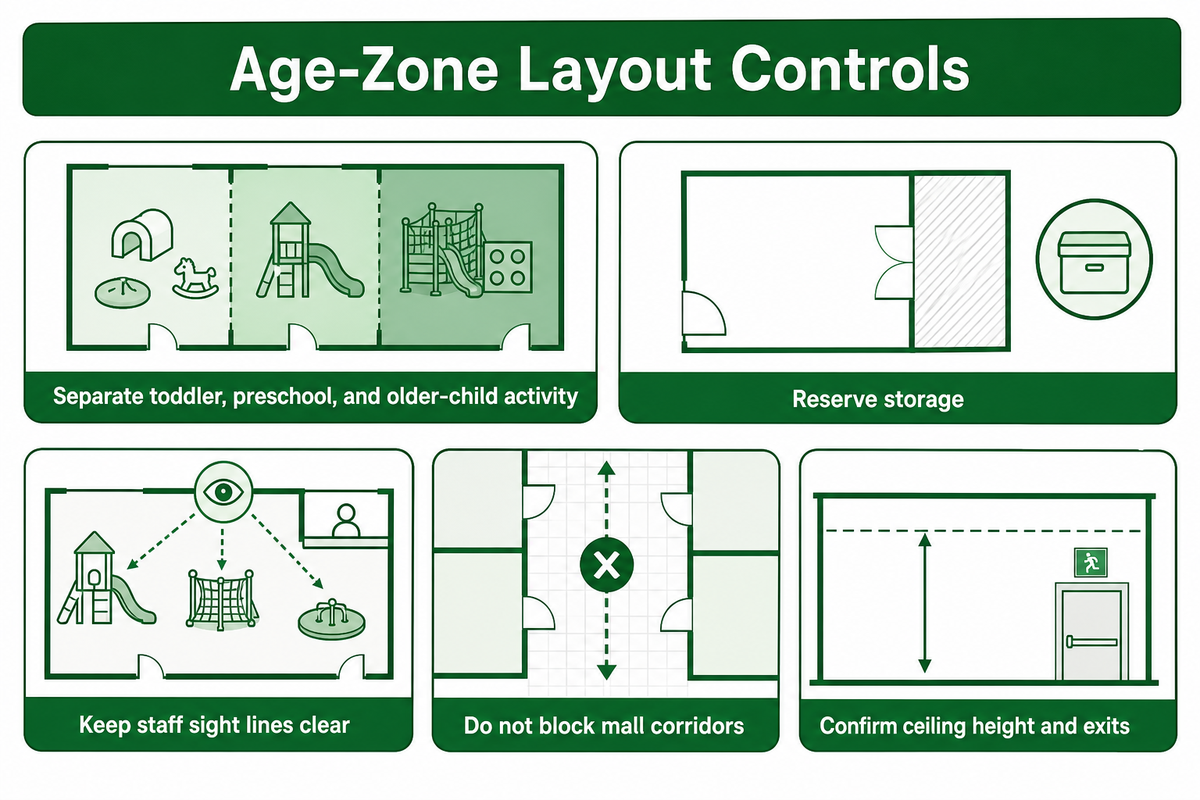
Separate toddler, preschool, and older-child activity where possible.
Reserve storage for shoes, socks, cleaning tools, party items, and replacement parts.
Keep staff sight lines across entrance/exits, climbing areas, and ball pits clear.
Design queues, waiver check-in, stroller corrals, and re-entry that don’t block mall corridors.
Confirm ceiling height, sprinklers, emergency exits, and accessible routes prior to final designs.
Safety, Accessibility, And Operating Controls
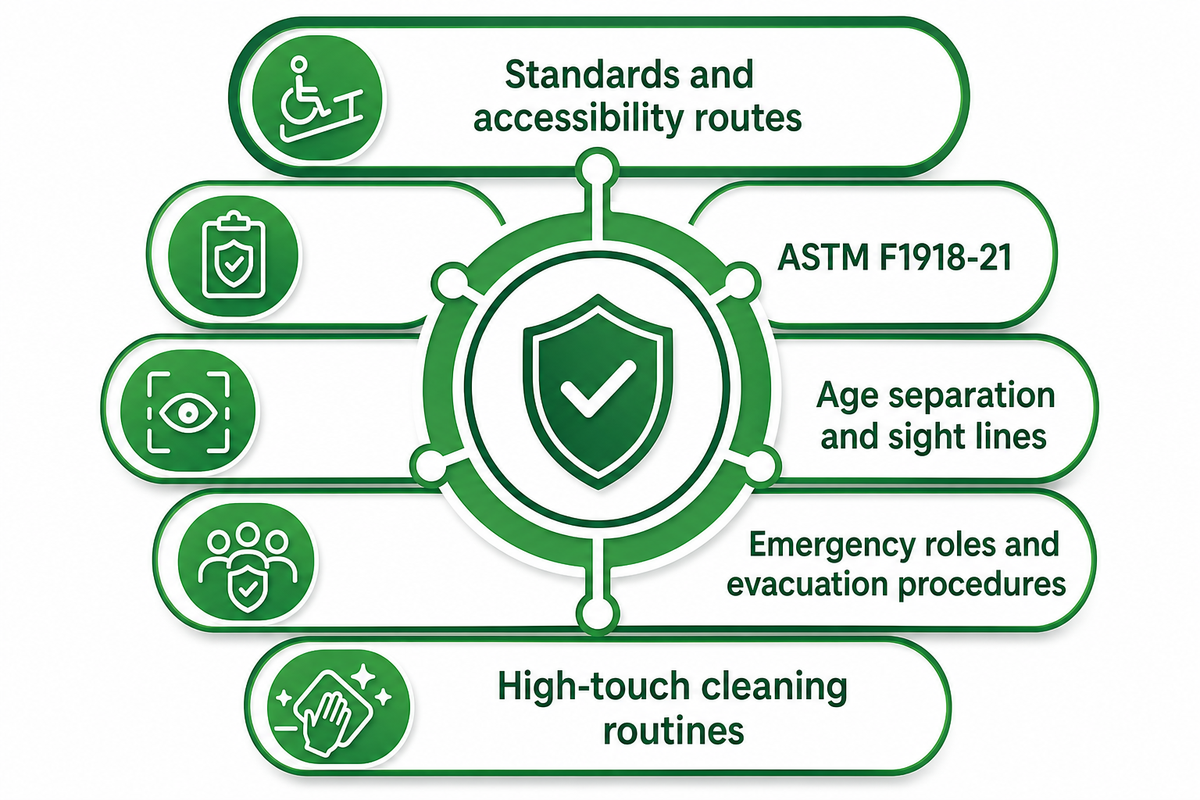
Safety planning is the operating system; it is more than the certificate. It needs rules covering standards, accessibility routes, staffing/supervision, cleaning, inspections, emergencies and maintenance reserves.
For soft-contained play equipment, ASTM F1918-21 is an important standard reference, while ADA and Access Board guidance can affect accessible routes and soft-contained entry points. CPSC playground guidance supports planning around age separation, sight lines, surfacing, signage, supervision, and maintenance. CPSC also emphasizes adult supervision for appropriate use of soft-contained playgrounds. Even with parent presence, operators still need rules, monitoring, and incident response.
Do not leave emergency planning to the last week. Mall operators may require fire review, occupant-load limits, means-of-egress coordination, staff emergency roles, alarm procedures, and after-hours access plans. OSHA emergency-planning guidance is useful for thinking through evacuation procedures and employee roles, while the final requirements will come from the landlord, local fire authority, building department, and insurer.
High-touch cleaning is another real cost. Busy kids zones need spot cleaning, scheduled deep cleaning, high-touch-point routines, disinfectant contact-time discipline, restroom cleanup, and incident cleanup. CDC cleaning and disinfecting guidance should be translated into labor forecasts and supply budgets, not treated as a vague instruction to clean only when something looks dirty.
Business Licensing, Cleaning, And Maintenance Controls
Before opening an indoor playground, assign owners for business licensing, insurance review, cleaning and maintenance routines, incident logs, staff training, and customer service recovery. The same controls should be visible in the business goals, because a safe and fun play space depends on daily operating discipline as much as design.
Dreamland Project Path
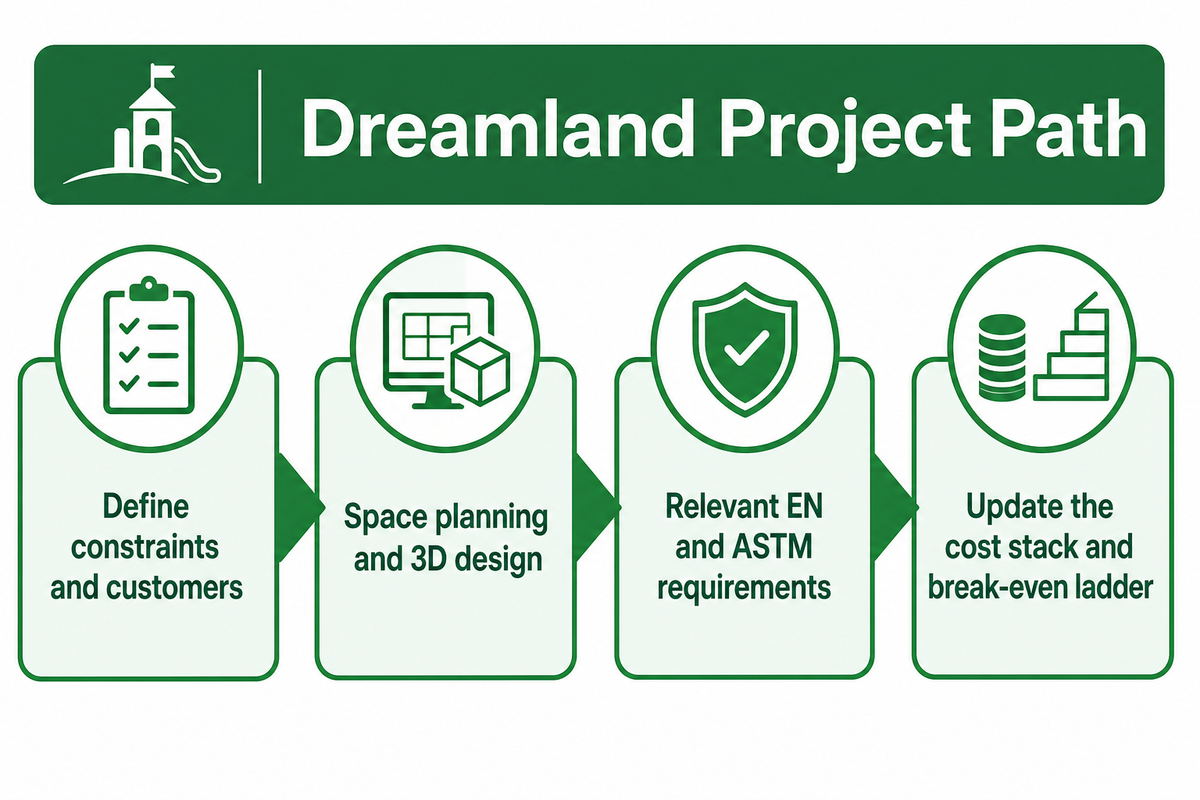
Dreamland Playground fits into the process after the investor defines site constraints, target customers, revenue model, and risk branches. The SBA business-plan framework is the useful boundary here: equipment design should follow the business case, not replace it.
Dreamland Playground is a playground equipment manufacturer and project solution provider in China. Its team supports clients from first idea to final installation with space planning, floor plan design, 3D design, equipment production, shipping, installation support, after-sales service, and related project services. Products can be designed according to relevant EN and ASTM safety requirements depending on product type and target market.
A practical cooperation sequence is simple: share the mall floor plan, ceiling height, entrance points, column locations, fire and egress constraints, target age group, budget range, theme preference, and business goals. Dreamland can then help convert the site into a floor plan and 3D concept. After you have equipment scope, shipping, installation, and local compliance inputs, update the startup cost stack and break-even ladder before signing final contracts.
Commercial Indoor Playground Scope And Business Goals
For a compact indoor play area, Dreamland may focus on soft play, toddler flow, parent visibility, and fast installation. For a larger commercial indoor playground or family entertainment center, the scope may add multi-level structures, party rooms, themed play, ninja or adventure elements, and stronger capacity planning.
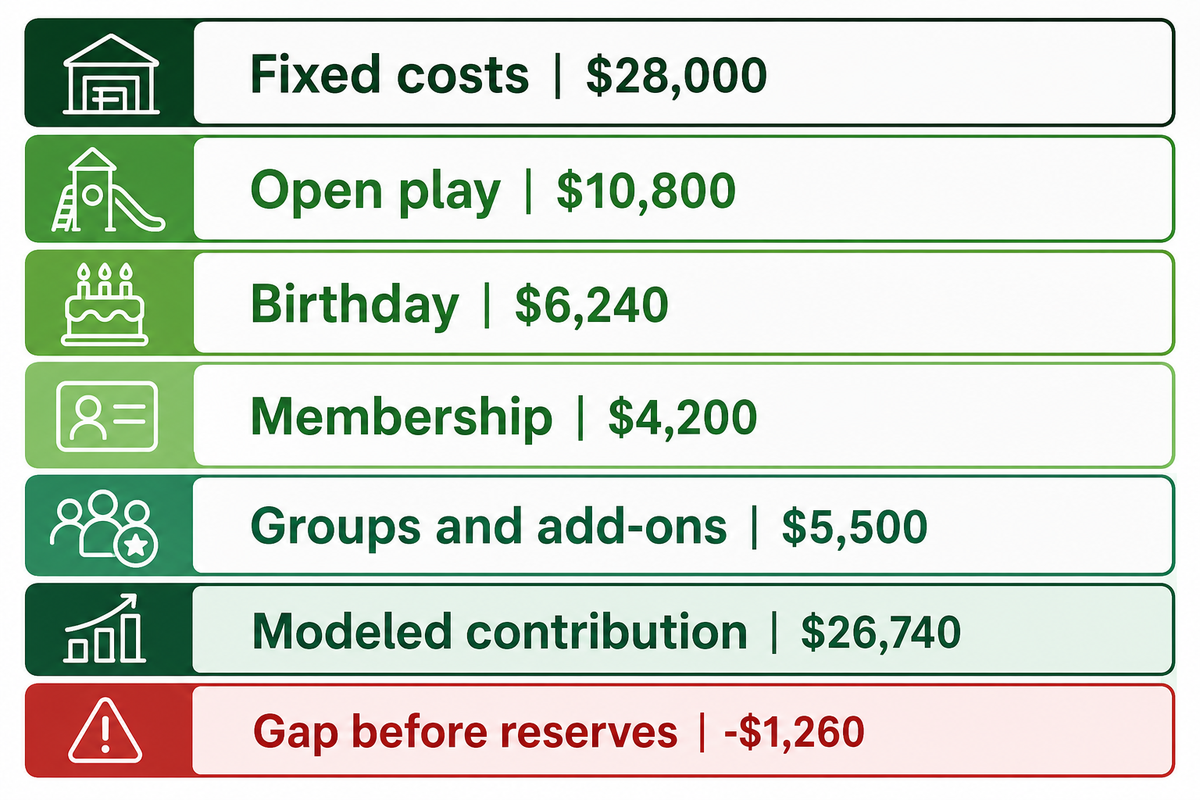
This model illustrates how business metrics inform site development and follows the same estimate-first caution used in SBA break-even planning. Note: it is not a revenue proposal, actual market quote, accounting statement or finance model projection.
Monthly item
Example assumption
Planning note
Fixed costs
$28,000
Rent, CAM, base payroll, insurance, utilities, software, cleaning contract
Open play contribution
900 visits x $12 = $10,800
After tax and variable costs, not gross ticket sales
Birthday contribution
24 parties x $260 = $6,240
After host labor, supplies, cleaning, fees
Membership contribution
120 members x $35 = $4,200
After expected use and crowding cost
Groups and add-ons
$5,500
Weekday groups, socks, vending, retail, lockers
Modeled contribution
$26,740
Below fixed cost, so assumptions need repair
Gap before reserves
-$1,260
Do not proceed without higher margin, lower rent, more parties, or smaller scope
Use this model as a stress test, not as protection against every risk. Even a strong play concept can fail the numbers. Lower rent with strong party demand may be better than high foot traffic with an expensive build-out. Memberships may help weekdays but hurt weekends if they crowd out full-price guests. A full business plan extends this table into month-to-month cash flow, debt service, depreciation, tax reserve, ramp-up period, balance sheets, and sensitivity cases.
FAQ
How much does it cost to start a shopping mall kids zone?
Cost depends on space size, mall handover condition, equipment mix, flooring, fire and egress requirements, design scope, shipping, installation, insurance, staffing, and working capital. Do not use one online number as a decision. Build a 10-bucket budget, collect supplier and contractor quotes, and add a cash reserve for launch delays, slow weekdays, repairs, cleaning, taxes, payroll, refunds, and replacement parts before opening. In practice, investors should run at least three versions of the plan: compact play area, standard indoor playground, and larger family entertainment center.
Are mall playgrounds profitable?
Mall playgrounds can be profitable, but profit is not automatic. Usually, the profit model depends on more than walk-in admissions. Birthday parties, memberships, weekday groups, add-ons, good location, safe capacity, labor control, and repeat visits all matter. A safer question is whether the mall playground can cover fixed costs and still leave enough cash for maintenance, marketing, taxes, replacement parts, and debt or investor returns.
What should be in a mall playground business plan?
At minimum, include market demand, target age group, site plan, lease terms, startup cost stack, revenue mix, price assumptions, staffing model, safety and accessibility plan, licensing and tax review, cleaning system, emergency procedure, marketing plan, working-capital runway, and break-even sensitivity. For a lender or outside investor, add ownership structure, management profile, funding requirements, monthly cash flow, balance sheet, and multi-year projections. That extra material changes the document from a feasibility framework into a complete business plan.
Should the play zone be parent-supervised or drop-off?
This decision changes risk. Parent-supervised play may reduce staffing intensity, but staff still need to monitor rules, age separation, unsafe behavior, and incidents. Drop-off or extended-care services can trigger different licensing, background-check, ratio, and inspection rules depending on local law.
How does Dreamland help with the plan?
Dreamland can turn site constraints into a practical layout, 3D concept, equipment scope, production plan, shipping approach, and installation support path. Owners still need local legal, tax, insurance, fire, building, and accounting review before investment.
Dreamland Playground publishes practical planning guides for commercial indoor-play projects, including family entertainment centers, shopping malls, hotels, restaurants, churches, and other venue types.
Use these guides to frame the questions that should be resolved before concept selection: venue size, intended age groups, project location, attraction mix, operating priorities, timeline, and delivery constraints. Final recommendations should be based on the real site and applicable local requirements.
Start With The VenueFloor area, clear height, site location, intended audience, and target opening date create the working brief.
Clarify The ScopeConcept, equipment, production, shipping, installation, and operating inputs can vary from one project to another.
PROJECT / VENUE / TIMELINE
Prepare Your Project Brief
Venue TypesFEC · Mall · Hotel · Restaurant · Church
Start WithFloor area · Clear height · Age groups · Country