Get in touch with Dreamland Playground Company

How to Start a Family Entertainment Center
How to start a family entertainment center comes down to six linked decisions: market fit, concept fit, capital fit, site fit, delivery fit, and launch fit. Dreamland Playground turns those decisions into a project brief, floor plan, 3D design, equipment scope, shipping plan, installation-support scope, and after-sales handoff built around your space, target age group, local market, theme, budget, and business needs.
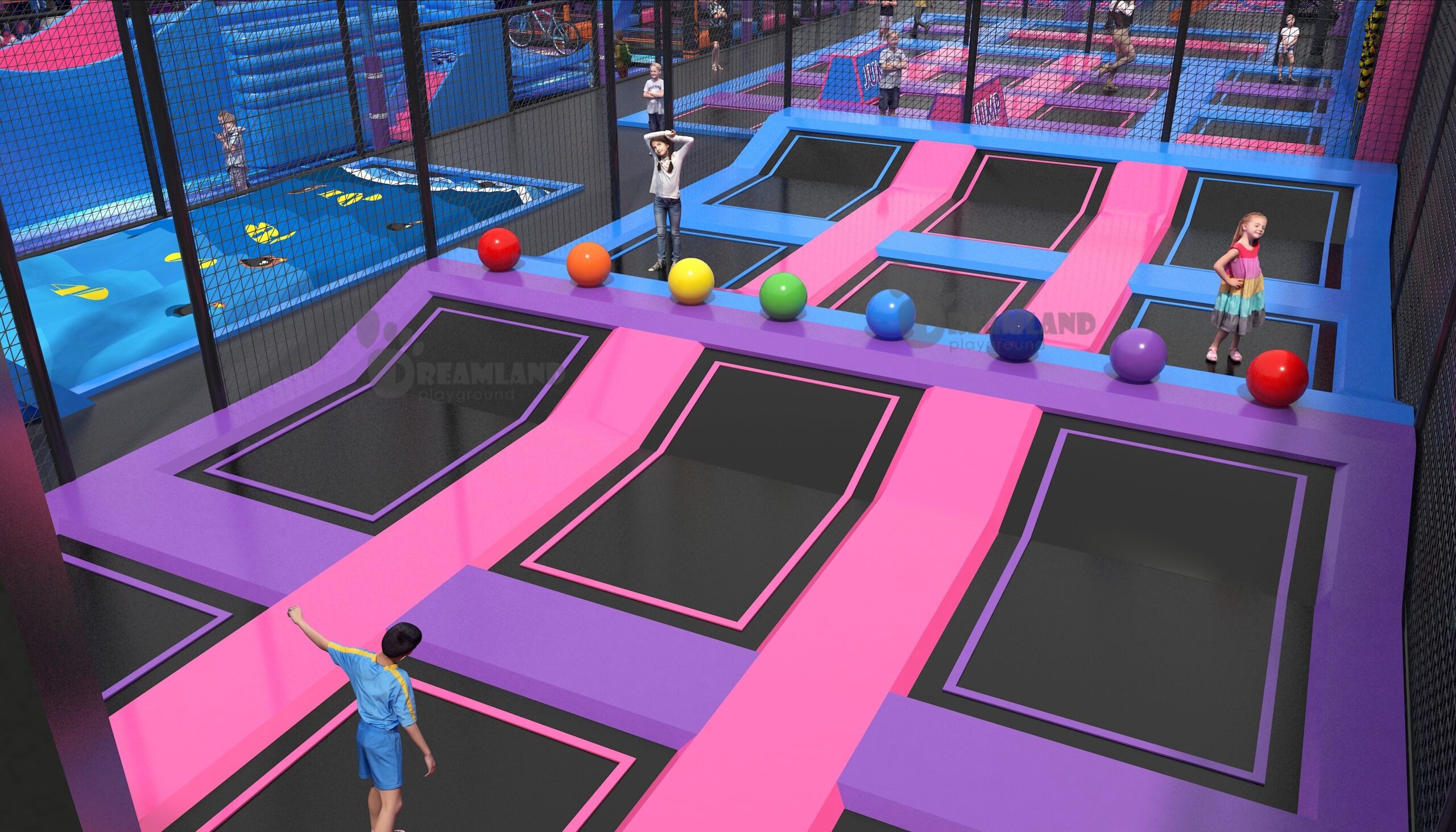
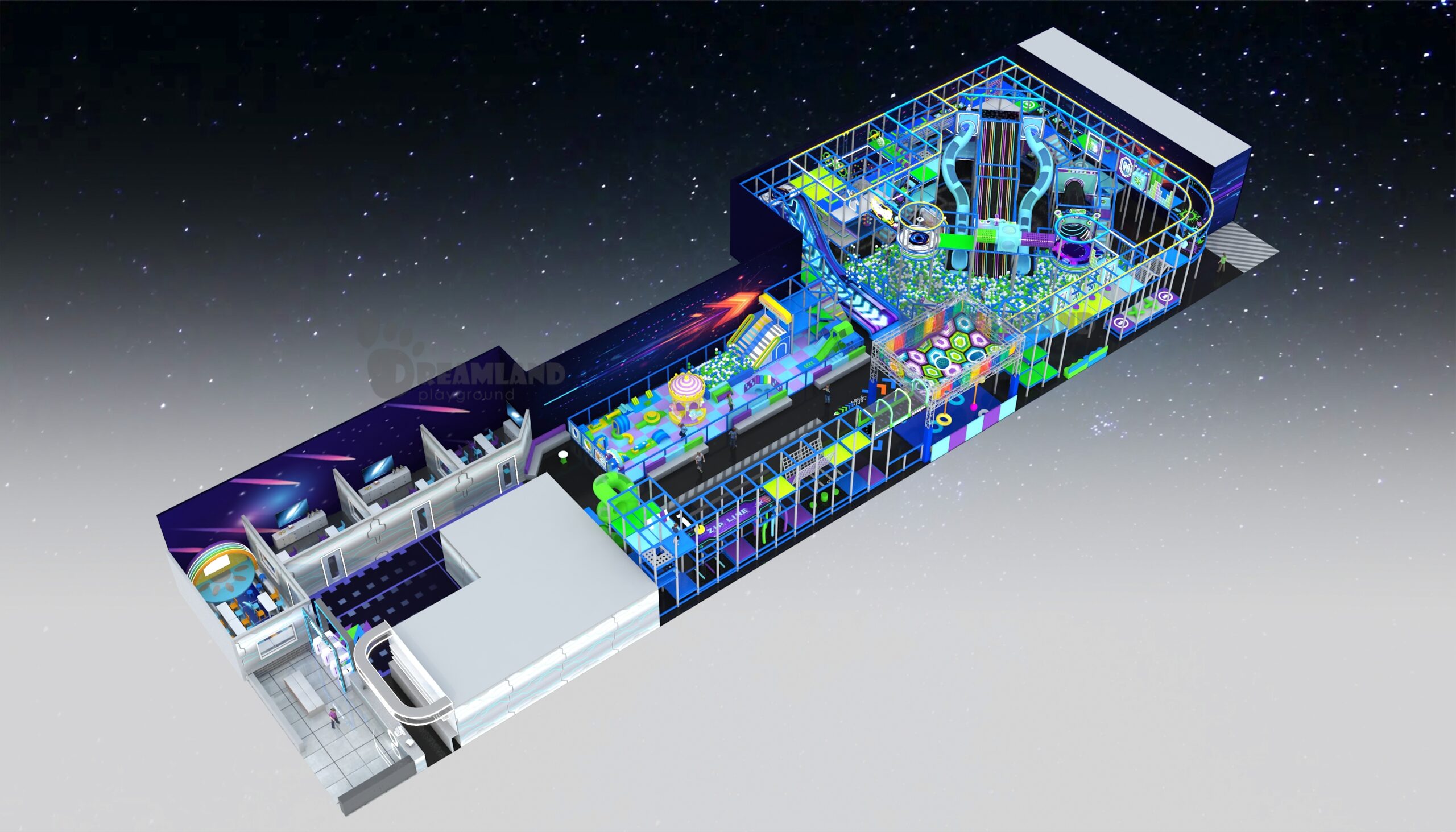
Dreamland 3D planning illustration. Final attraction mix, dimensions, access, finishes, and equipment scope are developed from the approved project inputs.
Summary: FEC Planning Scope at a Glance
Early decisions become obsolete if your equipment list, site plan, budget, and operating model are developed in silos with different teams. Our assessment keeps them coordinated as every output has both a designated owner and a pending approval.
Project formats
Dreamland supports indoor playgrounds, family entertainment centers, trampoline parks, ninja courses, adventure parks, mall play areas, schools, hotels, resorts, and outdoor play spaces.
Design inputs
Each concept is developed by our team around space, target age group, local market, theme, budget, and business needs.
Delivery support
Our services include space planning, floor plan design, 3D design, equipment production, shipping, installation support, and after-sales service.
Safety-design scope
Our products can be designed according to relevant EN and ASTM safety requirements, depending on product type and target market.
FEC Feasibility and Project Scope
A busy competitor, an underserved market, or an appealing lease may justify further investigation, but none guarantees that a family entertainment center business will succeed. A useful first deliverable is a decision package connecting demand, target audience, guest experience, revenue streams, operating capacity, and project constraints.
PROJECT SUPPORT
Feasibility before equipment
A market with few competitors may still fail when local families will not support the required price. That risk grows because a visible gap says nothing about repeat visits, party demand, operating skill, or the capital needed to reach opening; Dreamland provides a structured brief that keeps those unknowns visible.
Run the detailed feasibility screen →Market and Audience Brief
- Primary and secondary catchment assumptions
- Target age bands, household profiles, school and group demand
- Existing indoor playground, arcade, bowling, laser tag, and family fun alternatives
- Visit occasions such as open play, parties, memberships, school visits, and corporate events
Business Model Brief
- Admission, attraction, arcade games, food and beverage, party, membership, and event lanes
- Operating hours, staffing roles, cleaning cycles, maintenance access, and pre-launch needs
- Low, base, and upside cases driven by buyer inputs rather than a universal revenue benchmark
- Break-even logic kept separate from revenue-per-square-foot comparisons
Project Scope Brief
- Usable floor area, clear height, columns, exits, utilities, loading, and landlord constraints
- Attraction mix, guest circulation, queueing, party rooms, seating, storage, and back of house
- Owner, Dreamland, local designer, contractor, insurer, and authority responsibilities
- Design approvals, production release, freight, installation support, testing, training, and opening dependencies
Business venture test
Starting a family entertainment center as a business venture requires operating evidence as well as design intent. A successful family entertainment center ties its attraction mix to demand, staffing, repeat visits, and the capital plan before equipment release.
The first go/no-go rule
More equipment does not create a stronger concept when the audience, site, or operating model cannot support it. Our team reduces or phases the attraction mix when that protects circulation, supervision, capital flexibility, or future expansion.
Planning modules for the next decision
Planning module
FEC Business Plan Template
Turn market research, operating assumptions, management roles, marketing, funding needs, and risk controls into a structure that investors and lenders can review.
- Business model and target audience
- Revenue streams and operating assumptions
- Funding request and use of funds
- Risk, milestone, and sensitivity sections
Planning module
FEC Startup Cost Calculator
Organize buyer-entered project costs without turning unknown local construction, freight, labor, or operating values into zero.
- One-time project costs
- Recurring operating expenses
- Working-capital input
- Quote-required and locally determined values
PLAY MATRIX
FEC Concepts and Attraction Mix
A strong attraction mix gives each guest a reason to visit while preserving circulation, sightlines, supervision, maintenance access, and spend opportunities. Our team reviews every attraction lane against the same project inputs before it enters the layout.
The attraction-count trap
Floor area creates the trade-off: every added attraction costs you circulation, queue space, supervision, or support capacity. Treating popularity as fit is the mistake; the wrong choice raises operating risk because an idea can still mismatch the audience or site, while Dreamland provides comparison outputs built around the confirmed project inputs and the reasons each zone should attract its intended guests.
NODE 01
Soft Play
- Record minimum and maximum target ages
- Count elevated components and planned entries
- Map guardian sightlines, toddler separation, and accessible routes
- Review the defined scope of ASTM F1918 where relevant
NODE 02
Trampoline Courts
- Measure court area and clear height
- Separate activity zones and traffic paths
- Plan staff positions, participant flow, and maintenance isolation
- Review ASTM F2970-25 within its trampoline-court scope
NODE 03
Ninja and Adventure Courses
- Define participant age, reach, height, and progression
- Count obstacles and bypass routes
- Reserve fall zones, briefing areas, and staff access
- Match the actual equipment type to the applicable evidence set
NODE 04
Climbing Walls
- Record wall height, landing-zone dimensions, and operating mode
- Plan belay, auto-belay, bouldering, or supervised-use interfaces separately
- Separate participant briefing from general guest circulation
- Confirm local inspection and operator responsibilities
NODE 05
Arcade and Redemption
- Count cabinets, prize points, change paths, and service access
- Plan electrical, network, storage, and redemption interfaces
- Connect arcade games to the wider guest journey
- Model revenue with your machine mix and operating assumptions
NODE 06
Laser Tag & Interactive
- Define player count per session and reset time
- Separate briefing, vesting, arena, exit, and equipment storage
- Map emergency egress and staff supervision
- Review technology, data, and maintenance dependencies
NODE 07
Bowling Lanes
- Set lane count and approach space
- Protect machine, service, seating, and circulation areas
- Coordinate ceiling, acoustics, utilities, and food service
- Keep specialist lane-system scope visible in the responsibility matrix
NODE 08
Role Play & Themed Zones
- Define activities, dwell time, and reset tasks
- Plan signage, props, storage, and staff sightlines
- Use theme to connect zones without hiding wayfinding
- Separate decorative elements from safety-critical equipment
NODE 09
Toddler Play
- Set the age boundary and guardian policy
- Separate faster and taller attractions
- Plan seating, stroller parking, hygiene, and controlled entry
- Check surfacing and accessible-route interfaces
NODE 10
Party Rooms
- Model rooms, seats, turns per day, reset time, and storage
- Connect reception, food service, attractions, and restrooms
- Prevent party traffic from blocking general admission
- Include hosting labor and consumables in the operating model
NODE 11
Food and Beverage
- Define seats, service periods, menu complexity, and dwell time
- Coordinate utilities, extraction, waste, storage, and deliveries
- Protect guest flow between dining and active attractions
- Keep local health and licensing work with the responsible parties
NODE 12
Flexible & Future Zones
- Reserve event, seasonal, or expansion space
- Document temporary power, storage, barriers, and supervision
- Use phased capital releases when demand is not yet proven
- Keep future construction from disrupting the live guest route
Site, Floor Plan and Revenue Design
Floor area alone does not define a workable FEC. Clear height, column grid, exits, loading, tenancy conditions, parking, restrooms, sightlines, acoustics, queues, back-of-house space, and permitting determine which attractions can actually fit.
Build-out before attraction release
An investor may source equipment before understanding the harder arena build-out. Delay risk appears because columns, exits, services, loading, and landlord conditions change the usable envelope; Dreamland provides a floor-plan review while the local designer, contractor, and authority control their project approvals.
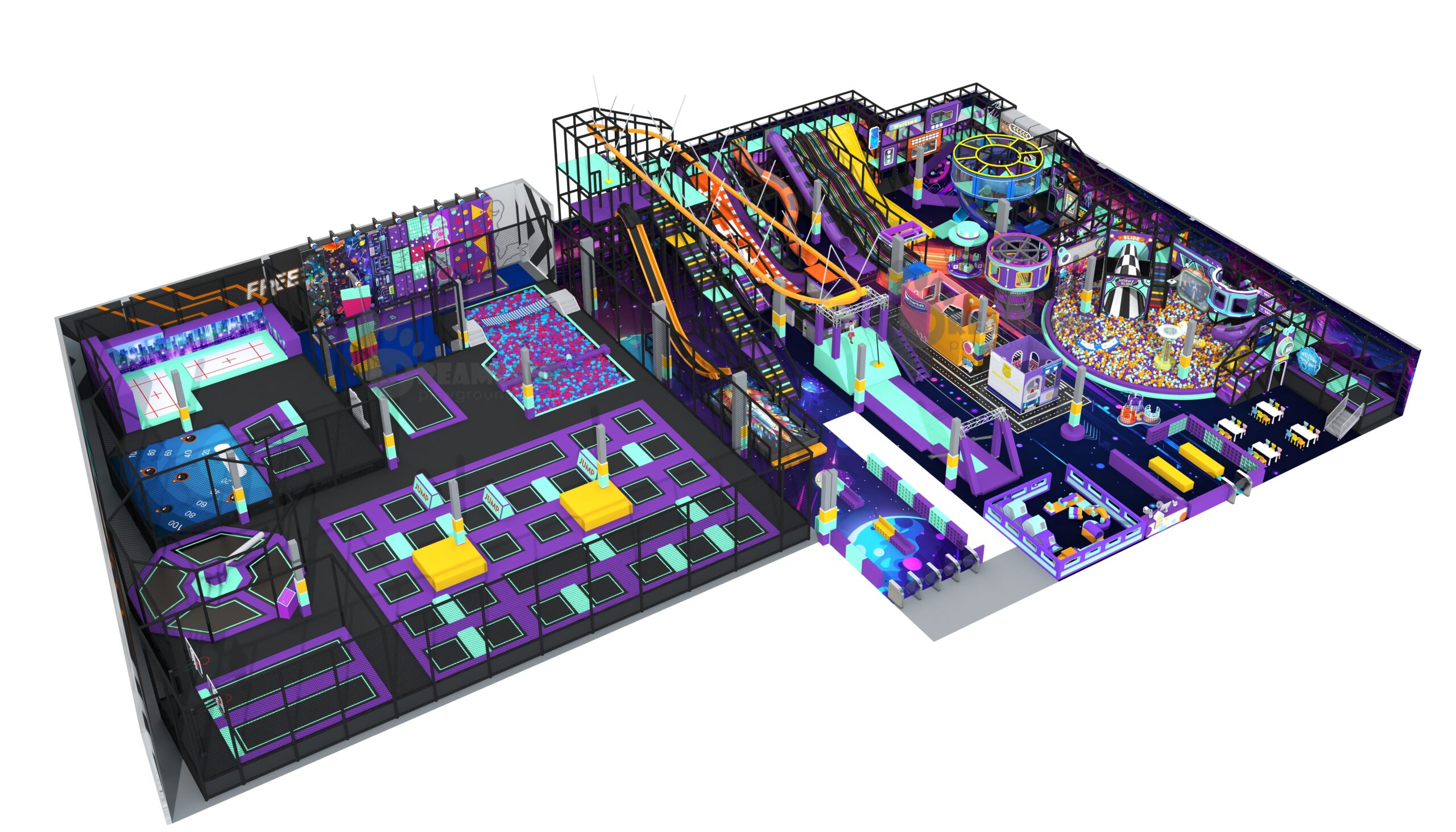
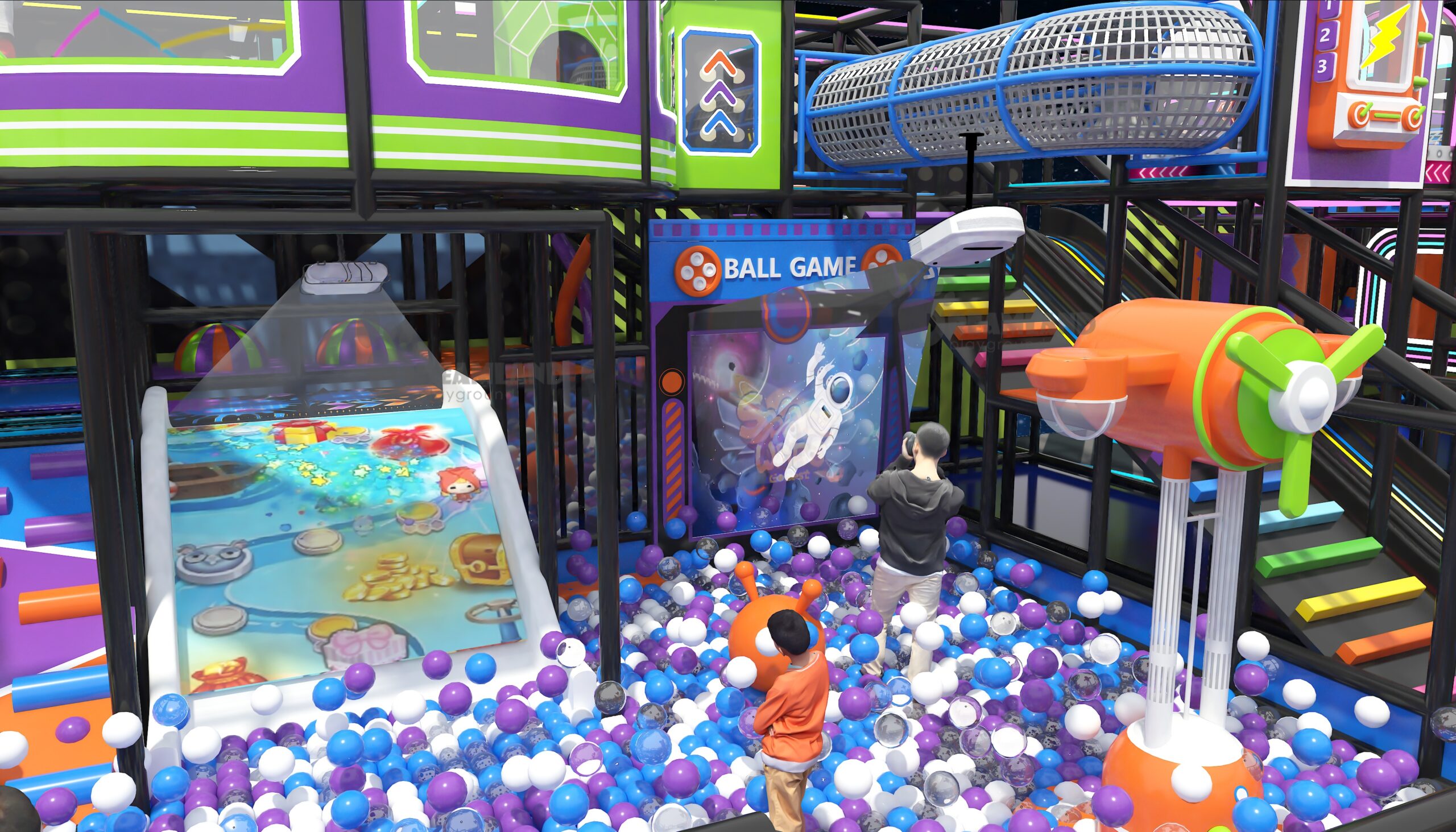
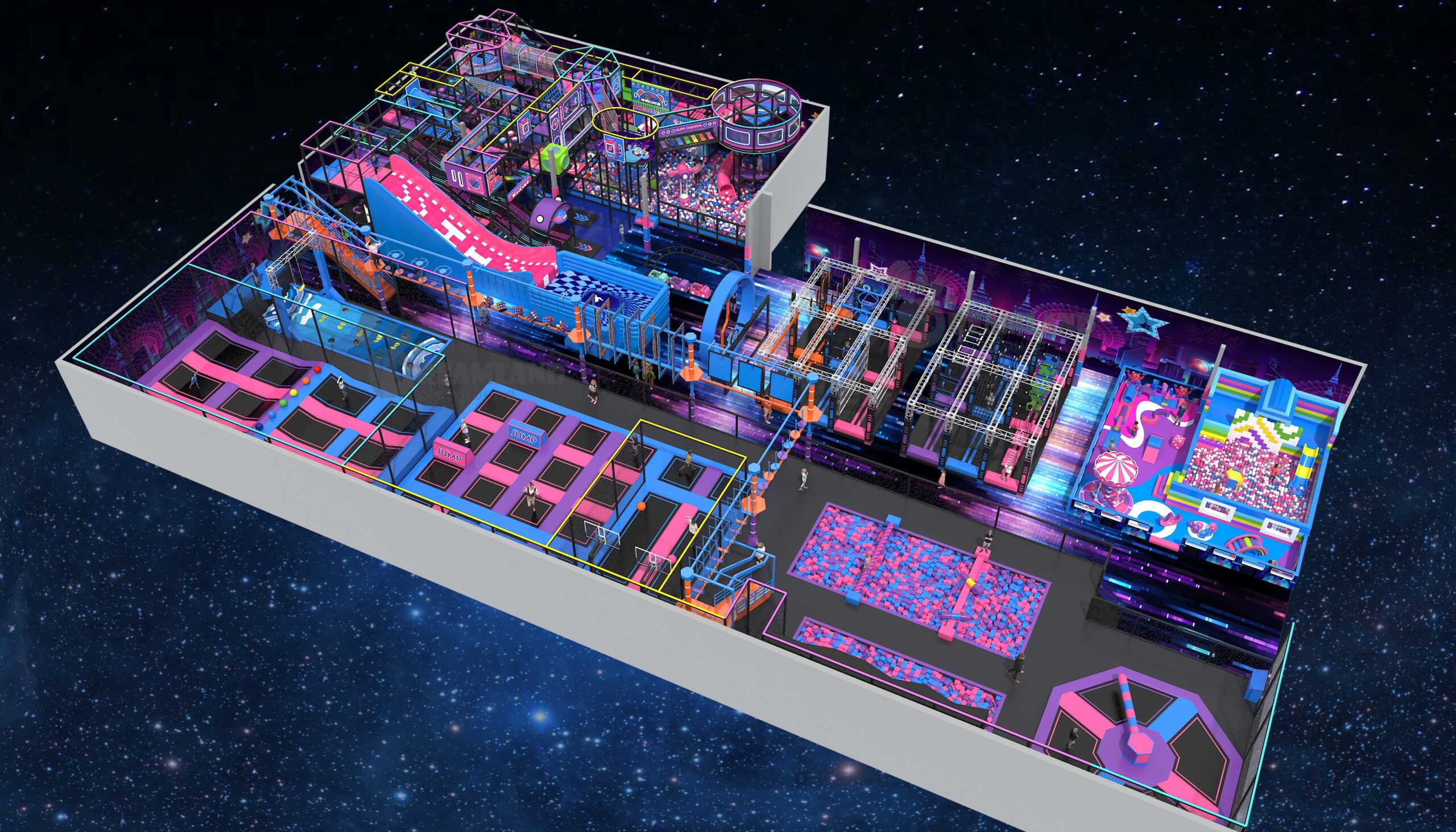
Dreamland 3D planning illustration used to discuss zoning and interfaces. Equipment and dimensions are project-specific.
MODULE // 01
Flow & Operations Protocol
01
Arrival & Conversion
- Exterior approach, entrance, ticketing, waiver or registration, and waiting
- Membership, party, group, and walk-in paths
- Visible first attraction without blocking admission
- Wayfinding for guardians, children, staff, and emergency movement
02
Guest Flow & Dwell
- Primary circulation loop and controlled attraction entries
- Queue footprints, stroller parking, seating, and rest points
- Party-room handoffs and food-and-beverage movement
- Exit flow that does not cross incoming queues
03
Operations & Back of House
- Staff bases, storage, cleaning, maintenance, and spare-parts access
- Deliveries, waste, office, break, and first-aid interfaces
- Isolation paths for an attraction that is out of service
- Security, cash, ticket, network, and equipment-control points
Six-layer floor-plan review
LAYER 1
Site envelope
InputsNet usable area, clear height, columns, exits, utilities, loading
DecisionAvailable equipment zones and fixed exclusions
Commercial EffectPrevents unusable floor area from entering the attraction budget
LAYER 2
Audience
InputsAge bands, visit occasions, guardian needs, accessibility
DecisionZone separation, challenge progression, seating, and routes
Commercial EffectAligns the guest experience with the target audience
LAYER 3
Attraction flow
InputsEntry, queue, activity, exit, reset, and supervision points
DecisionCapacity inputs and conflict-free circulation
Commercial EffectConnects operations to the revenue model without promising revenue
LAYER 4
Revenue support
InputsAdmission, party, food, membership, arcade, and event lanes
DecisionLocations for conversion and service
Commercial EffectKeeps each revenue stream visible in the business plan
LAYER 5
Operations
InputsStaffing, cleaning, maintenance, storage, deliveries, waste
DecisionBack-of-house access and operating boundaries
Commercial EffectExposes recurring work before launch
LAYER 6
Local interfaces
InputsArchitect, contractor, authority, insurer, landlord, utility inputs
DecisionOpen items, responsible party, evidence, and approval date
Commercial EffectReduces hidden dependencies between design and opening
Accessibility stays active across the project
Under the 2010 ADA Standards, accessible routes connect to play components and specific entry thresholds apply to soft-contained play structures. Accessibility inputs therefore stay active through concept, floor plan, attraction review, local design coordination, installation planning, and operating handoff instead of becoming a final checklist.
See the circulation, queue, party, and back-of-house questions that shape a workable plan.
FEC Project Input and Design Output Matrix
A design is reviewable when every output traces back to a controlled input. That prevents a persuasive project render from being mistaken for an issued-for-construction plan, a permit submission, an operating approval, or an acceptance record.
01
Site information
MINIMUM RECORDED VALUE
1 controlled dimensioned plan with usable area in ft² and m², plus clear height in ft and m
DREAMLAND DESIGN OUTPUT
Space plan, fixed constraints, equipment envelope, and open-site questions
ACCEPTANCE OWNER
Owner and local design team confirm source dimensions
02
Audience definition
MINIMUM RECORDED VALUE
1 primary target-age brief with minimum and maximum ages in years
DREAMLAND DESIGN OUTPUT
Age zoning, challenge progression, guardian interfaces, and attraction shortlist
ACCEPTANCE OWNER
Owner approves the commercial audience
03
Commercial scenarios
MINIMUM RECORDED VALUE
3 buyer-entered cases: low, base, and upside
DREAMLAND DESIGN OUTPUT
Attraction and support-space options that can be compared without a revenue promise
ACCEPTANCE OWNER
Owner and finance adviser approve assumptions
04
Operating forecast
MINIMUM RECORDED VALUE
12 months of recurring-expense inputs, separate from buyer-entered working capital
DREAMLAND DESIGN OUTPUT
Budget checklist and quote-required flags
ACCEPTANCE OWNER
Owner, accountant, and lender determine funding needs
05
Soft-play (up to 3 entries)
MINIMUM RECORDED VALUE
At least 1 entry on an accessible route under the cited ADA rule2
DREAMLAND DESIGN OUTPUT
Entry and accessible-route coordination item
ACCEPTANCE OWNER
Local design professional and authority confirm applicability
06
Soft-play (4+ entries)
MINIMUM RECORDED VALUE
At least 2 entries on an accessible route under the cited ADA rule2
DREAMLAND DESIGN OUTPUT
Entry distribution and accessible-route coordination item
ACCEPTANCE OWNER
Local design professional and authority confirm applicability
07
Child-data flow
MINIMUM RECORDED VALUE
Under-13 data checkpoint when a digital service collects personal information
DREAMLAND DESIGN OUTPUT
Data-flow question set for registration, waivers, apps, loyalty, or connected play
ACCEPTANCE OWNER
Operator and qualified privacy counsel determine obligations
08
Project release
MINIMUM RECORDED VALUE
6 gates with a named decision, open-item list, and owner
DREAMLAND DESIGN OUTPUT
Feasibility-to-opening control map and release record
ACCEPTANCE OWNER
Project owner authorizes each commercial release
Design-output rule
A floor plan supports coordination; a 3D design communicates the approved concept; production drawings release an agreed equipment scope. Local construction documents, permits, insurance acceptance, and operating approvals remain with the qualified parties named for the project.
Test whether your current information is strong enough to release the next design stage.
Run the FEC Feasibility Gate
FEC Budget, Capital and Delivery Timeline
Equipment quotations cover only one part of startup capital; they are not the complete financial plan. SBA guidance separates one-time startup costs from monthly expenses and recommends counting at least one year of monthly expenses when calculating startup capital.1
Funding risk stays visible
Operators describe location, insurance provider, landlord and continuing operating costs as major research items. This gap causes funding risk when a buyer treats the equipment quote as the total; Dreamland provides project-scope inputs while the owner builds a 1-year forecast with financial and lender advisers.
One-Time Project Costs
- Lease, deposit, due diligence, and professional services
- Permits, local design, construction, utilities, and fit-out
- Attraction equipment, arcade, technology, food service, furniture, and signage
- Freight, customs, unloading, installation, testing, training, and pre-opening
- Opening inventory, launch marketing, and contingency
12-Month Operating Forecast
- Rent, payroll, utilities, insurance, software, and professional services
- Cleaning, maintenance, consumables, prizes, food, and replacement items
- Marketing, merchant fees, licenses, taxes, and debt service inputs
- Month-by-month seasonality and ramp assumptions
- Unknown values remain visibly quote-required or locally determined
Working Capital and Funding
- Working capital is entered separately from the 12-month forecast
- Sources and uses reconcile owner equity, loans, investor funds, and other financing
- Draw timing follows deposits, construction progress, production, freight, and opening
- Lender eligibility and approval stay outside the equipment-supplier scope
- Funding capacity is tested against downside assumptions, not headline revenue
CAPITAL MODEL
Leasing belongs in the capital model
Leasing decisions can add deposits, professional work, landlord conditions, fit-out obligations, rent commencement dates, and restoration terms. Record those items before treating the available unit as a viable site.
Planning route comparison
MOD-EVAL
| Control point | Feasibility-to-opening route | Equipment-only route | Decision consequence |
|---|---|---|---|
| Capital lanes | 3 lanes: one-time, recurring, and working capital | 1 equipment price lane | The wider route exposes costs outside the equipment order |
| Operating horizon | 12 monthly periods entered by the buyer | 0 operating months included | Seasonality and ramp assumptions remain visible |
| Scenario cases | 3 cases: low, base, and upside | 1 point estimate | The owner can test assumption changes without calling a range guaranteed |
| Release gates | 6 documented decisions | 1 purchase decision | Capital is connected to market, site, delivery, and launch evidence |
NOTE
Bronze performance case
A controlled capital stack does not prove profitability or payback. Its value is operational: it keeps missing local quotes, recurring expenses, financing timing, and working-capital assumptions visible before a commercial release.
Safety, Compliance and Project Responsibilities
One standard cannot cover every attraction, the building, accessibility, employee safety, data practices, and local approvals. ASTM F1918 addresses soft-contained play, ASTM F2970-25 addresses trampoline courts, and ASTM F2291-26 addresses amusement rides and devices within different scopes.345
Layered control
A waiver is not a substitute for attraction-specific procedures, inspections, maintenance, staff training, insurance coordination, and local legal review. Patron safety and employee safety also need separate operating controls because the tasks and exposure paths differ.
Soft-contained play layer
Evidence or review path
Product and market review that may include ASTM F1918
Dreamland contribution
Equipment design inputs, documentation scope, production, and quality checks
Other responsible parties
Owner, local designer, authority, installer, inspector, and operator
Trampoline courts layer
Evidence or review path
Product and market review that may include ASTM F2970-25
Dreamland contribution
Court concept, equipment scope, production, shipping, and installation support
Other responsible parties
Owner, local designer, authority, insurer, installer, inspector, and operator
Amusement devices layer
Evidence or review path
Device classification and applicable ASTM or local requirements
Dreamland contribution
Equipment-specific design and production evidence within the agreed scope
Other responsible parties
Authority, engineer, inspector, insurer, contractor, and operator
Impact surfacing layer
Evidence or review path
Applicable surfacing requirements and test evidence, including BS EN 1177 where selected6
Dreamland contribution
Coordinate the selected equipment and specified surfacing interfaces
Other responsible parties
Local designer, supplier, installer, tester, and authority
Building and accessibility layer
Evidence or review path
Local building, fire, egress, accessibility, electrical, mechanical, and health review
Dreamland contribution
Provide equipment and floor-plan information needed for coordination
Other responsible parties
Architect, engineers, contractor, landlord, authority, and operator
Employee safety layer
Evidence or review path
Workplace procedures for inspection, maintenance, cleaning, lifting, food service, and incidents
Dreamland contribution
Provide equipment information and after-sales support within scope
Other responsible parties
Employer, operator, trainers, insurer, and local workplace authority
Child data layer
Evidence or review path
Conditional privacy review when child-directed services or known under-13 users provide personal information8
Dreamland contribution
Identify connected-equipment or registration interfaces in the project brief
Other responsible parties
Operator, platform vendors, privacy counsel, and regulators
Jurisdiction begins with classification
U.S. federal law distinguishes some operator-controlled amusement devices from products that are permanently fixed, which is one reason the exact attraction and installation matter.7 The project team should confirm the governing authority and evidence path instead of assigning one blanket label to the whole venue.
“
A safe, practical plan starts with the real site and the real attraction mix. Before production, the project team maps the product scope and open local interfaces so the owner knows which decisions still need a qualified local party.— Dreamland Playground Project Team
Use the responsibility matrix as the basis for supplier, contractor, and authority coordination.
Read the FEC Equipment Sourcing Guide →Industries We Support and Dreamland Project Delivery Capability
Dreamland Playground is a professional playground equipment manufacturer and project solution provider in China. Our team has provided playground solutions to clients in more than 50 countries, including playground operators, shopping malls, schools, hotels, resorts, investors, franchise brands, and project developers.
Confirmed company scope
Dreamland provides custom solutions for indoor playgrounds, family entertainment centers, trampoline parks, ninja courses, adventure parks, shopping mall play areas, schools, hotels, resorts, and outdoor play spaces. Projects range from a small children’s play area to a large family entertainment center.
Venue naming
A market may use fun center, family fun center, or FEC for related venue formats. Fun centers still need a defined audience, attraction role, site envelope, and operating model rather than a name-led equipment list.
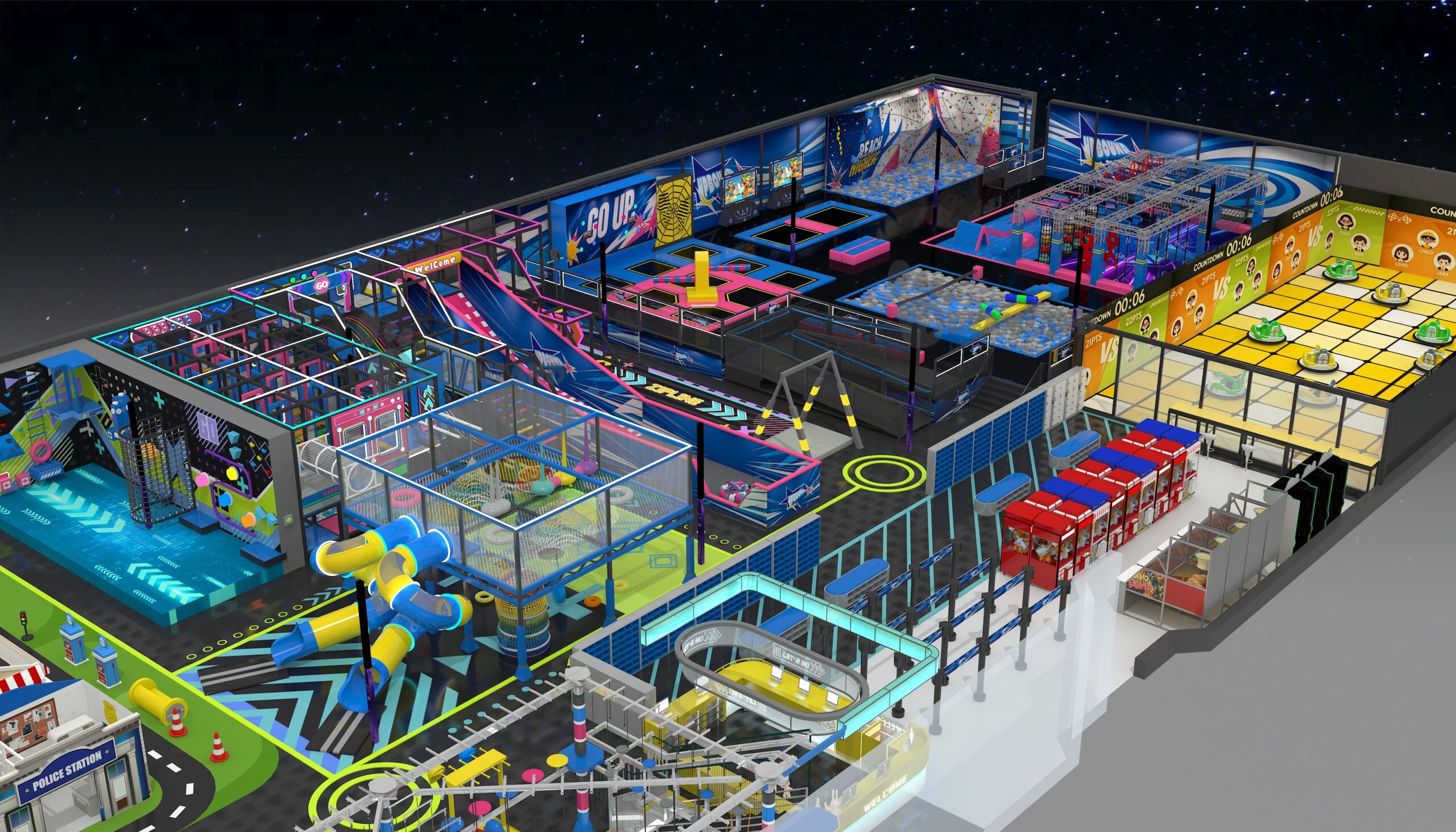
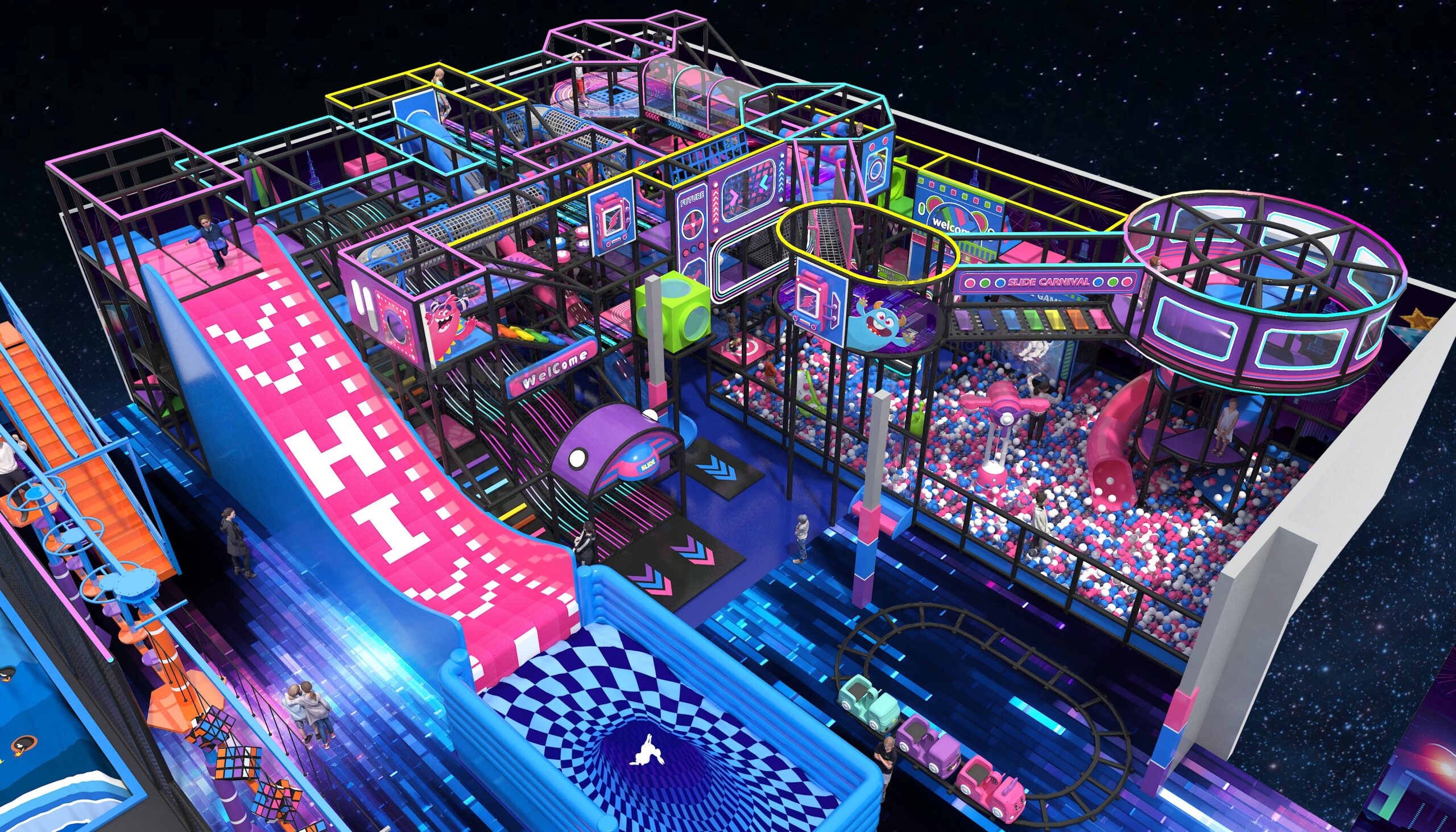
Dreamland 3D design illustration for planning discussion. The image demonstrates design capability and does not state a client identity, installed location, financial result, or final approved specification.
Design Around the Business
- Our plan starts with the actual space instead of a stock layout.
- Concept alignment follows the target age group and local market.
- Theme development supports wayfinding and zone identity.
- Equipment scope connects to the approved budget and business needs.
Control the Equipment Scope
- Our production team follows our quality control process.
- Our checks cover materials, structures, parts, surfaces, packaging, and other production details.
- Our products can be designed according to relevant EN and ASTM safety requirements, depending on product type and target market.
- Applicable product and documentation scope is confirmed for each project.
Support the Project Handoff
- Our services provide space planning, floor plan design, and 3D design.
- Equipment production and shipping are coordinated for the agreed scope.
- Installation support follows the project arrangement.
- After-sales service covers the equipment scope supplied by Dreamland.
Design evidence at the right stage
Space plan
Shows the available envelope, fixed constraints, proposed zones, and questions requiring site confirmation.
Floor plan
Shows circulation, equipment footprints, support spaces, and cross-party interfaces for review.
3D design
Communicates theme, zone relationships, and guest-facing appearance before production release.
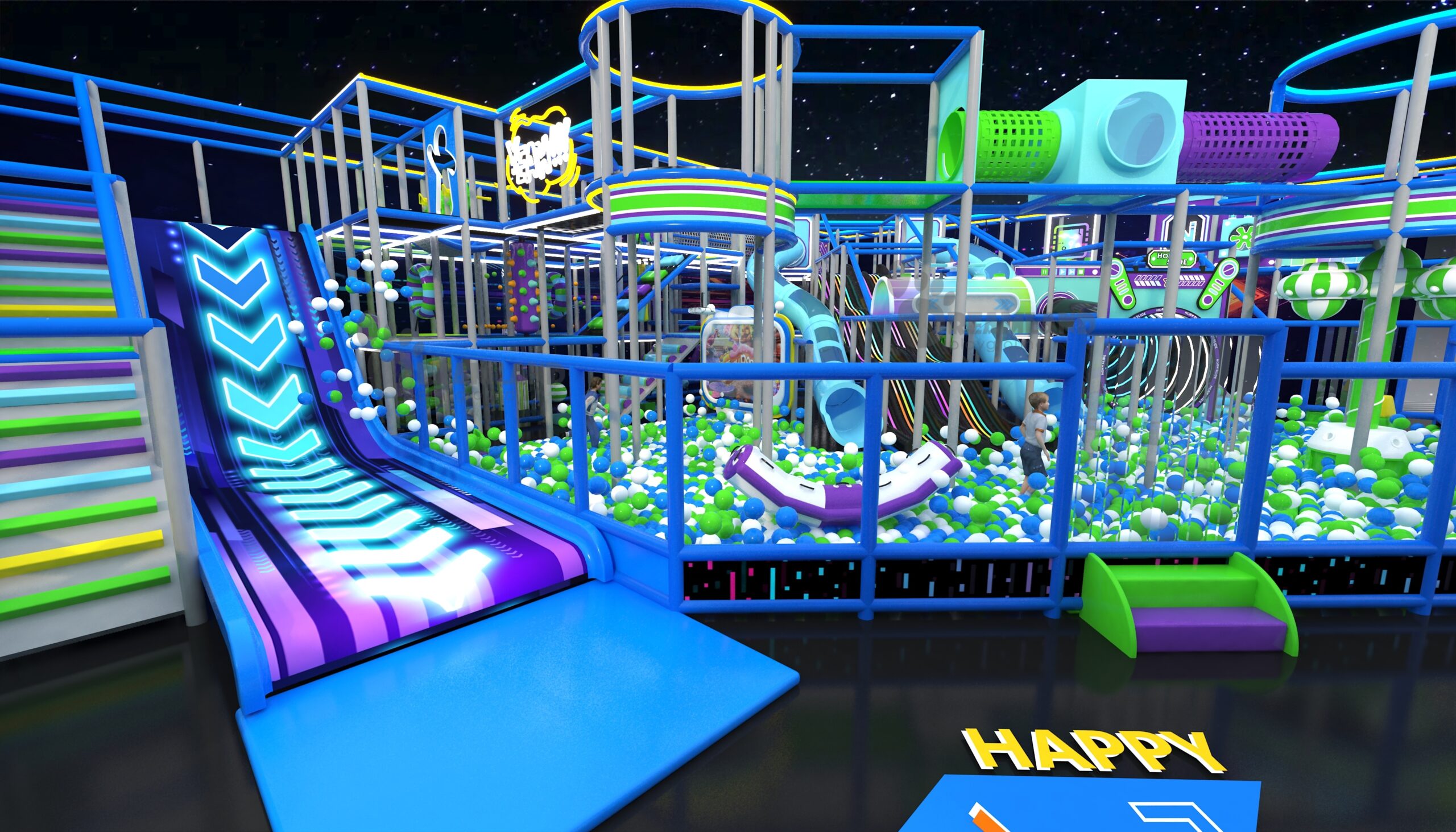
Concept illustration of a themed soft-play zone. Final product details depend on the confirmed space, audience, market, and safety-design scope.
FEC Concept Fit and Go/No-Go Conditions
A responsible project route includes hold and rework decisions. A concept should not advance solely because a location is available or an attraction is popular.
DECISION MATRIX
CONDITION
No defined target audience or visit occasion
REASON
The attraction list has no commercial audience anchor
NEXT EVIDENCE
Catchment, competitor, age-band, and demand work
CONDITION
Lease terms or site measurements remain uncontrolled
REASON
Usable area, height, utilities, loading, or approvals may change the equipment envelope
NEXT EVIDENCE
Controlled plan, landlord conditions, and local due diligence
CONDITION
Funding covers equipment but not fit-out or operations
REASON
The sources-and-uses model is incomplete
NEXT EVIDENCE
One-time costs, 12-month forecast, working capital, and downside case
CONDITION
Too many anchor attractions compete for circulation or supervision
REASON
Equipment count is displacing guest flow and operating control
NEXT EVIDENCE
Prioritized attraction roles and an expansion plan
CONDITION
Local responsibilities are described only as turnkey
REASON
Architect, contractor, authority, insurer, and operator work is not assigned
NEXT EVIDENCE
Responsibility matrix with outputs and approval owners
CONDITION
Opening marketing is planned before operating readiness
REASON
Training, maintenance, staffing, inspections, and incident procedures are not complete
NEXT EVIDENCE
Pre-launch checklist, rehearsal, and authorization record
Alternative paths
A smaller indoor play area, phased FEC, single-anchor venue, restaurant play area cost and scope plan, hotel or resort amenity, school play space, or outdoor play project may fit when a full multi-attraction FEC does not. Unlike destination amusement parks, these formats can be scoped around a narrower visit occasion; our team can redesign the equipment and planning scope around the viable format.
FEC Planning Guide Toolkits
FEC Feasibility Gate
Access ToolFEC Capital Stack Builder
Access ToolFEC Attraction Mix Planner
Access ToolFEC Project Readiness Checklist
Access ToolFAQ: Family Entertainment Center Planning
Total capital depends on the site, construction, attraction mix, equipment, technology, food and beverage, professional services, freight, installation, pre-opening work, recurring expenses, and working capital. Build the estimate from buyer-entered local quotes and keep unknown values visible rather than applying a universal headline range.
No. The equipment quote should sit inside a wider sources-and-uses model that also includes the site, fit-out, local professional work, delivery, installation arrangements, opening tasks, a 12-month operating forecast, and working capital.
Start with the target audience, visit occasions, usable space, height, operating model, supervision, maintenance access, local evidence path, and capital limit. Then assign each attraction a commercial and guest-experience role before it earns floor area.
No. A phased concept can protect circulation, supervision, funding flexibility, and future expansion when demand or operating assumptions still need validation.
Use catchment data, competitor visits, price and review analysis, school and group interviews, party demand, household profiles, and direct concept testing. A perceived market gap is a research lead, not proof of willingness to pay.
Provide a controlled dimensioned plan, usable area, clear height, column grid, entrances, exits, utilities, loading route, landlord constraints, and known local requirements. Photos and videos help explain the site but do not replace dimensions.
The owner should appoint the qualified local architect, engineers, contractor, and other parties required by the jurisdiction and lease. Dreamland provides equipment and planning information within the agreed scope so those parties can coordinate their work.
No. Soft-contained play, trampoline courts, amusement devices, accessibility, the building, employee safety, and operations have different scopes, so the evidence map must follow the actual attraction type and jurisdiction.
No. The operator still needs attraction-specific procedures, staffing, inspection, maintenance, cleaning, incident response, training, insurance coordination, and the controls required by local authorities.
The checkpoint becomes relevant when a child-directed digital service, or a service with actual knowledge of under-13 users, collects personal information. Map registration, online waivers, apps, loyalty systems, connected attractions, and vendor data flows with qualified privacy counsel.
Compare only cohorts with a clear venue type, geography, period, revenue definition, and floor-area basis. Keep a benchmark separate from your own attendance, pricing, average spend, capacity, and break-even assumptions.
Our services support space planning, floor plan design, 3D design, and equipment-scope development based on the approved project inputs. Production release follows the agreed design and commercial scope.
Compare the written scope for design, materials, documentation, quality checks, packaging, shipping responsibilities, installation support, spare parts, after-sales service, exclusions, and change control. Match each claim to the product, target market, and project rather than relying on the word turnkey.
Bring the site plan, target audience, city and country, attraction priorities, theme direction, budget status, desired opening window, and known local constraints. Unknown items are acceptable when they are labeled and assigned for follow-up.