Prepared with Dreamland Playground project context
Indoor playground franchise cost is rarely one clean number. Buyers have to price the franchise fee, the site, playground equipment, safety flooring, shipping, installation, opening cash, and recurring fees before a sales-page range becomes a usable budget.
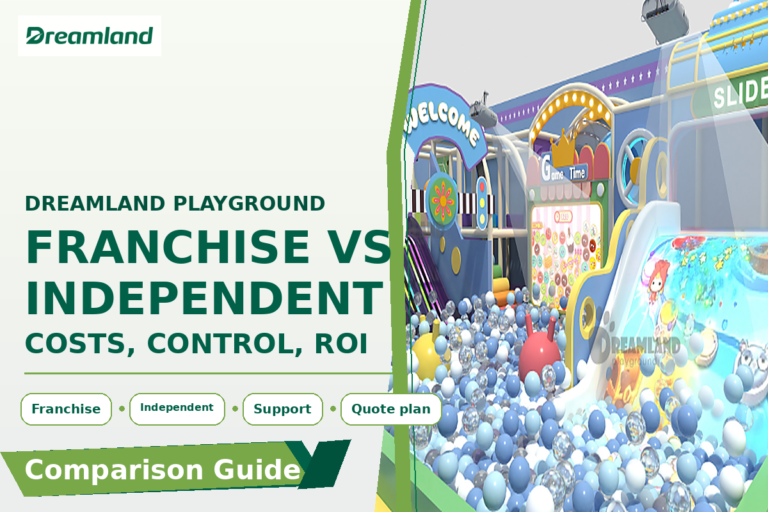
This DreamlandPlus guide is published for Dreamland Playground, a playground equipment manufacturer and project solution provider. Dreamland Playground is not presented here as an indoor playground franchisor; its role is to help buyers compare franchise proposals with a site-specific equipment and layout benchmark.
$304,650-$761,140Play Street Museum public investment-range envelope
$600,000-$2,500,000Luv 2 Play official overall investment range
14 daysminimum FDD review window before signing or payment
ASTM F1918-21soft-contained play equipment standard page checked
What Does Indoor Playground Franchise Cost Include?
Indoor playground franchise cost includes the brand entry payment plus the money needed to open and operate the venue. Cost review should separate the franchise fee, lease work, playground equipment, safety flooring, shipping, installation, permits, insurance, payroll, launch marketing, and working capital before judging whether a published range fits the project.
SBA startup-cost guidance is useful because it forces the budget into plain categories: equipment and supplies, licenses and permits, insurance, employee salaries, advertising and marketing, market research, a website, and professional help. Indoor playground buyers can adapt that same logic to a physical play venue.
Budget planning starts by separating one-time cash from monthly cash. One-time cash includes the brand entry fee, design, buildout, equipment, freight, installation, opening inventory, signs, and pre-opening permits. Monthly cash includes rent, utilities, insurance, payroll, cleaning, software, local marketing, maintenance, and any royalty, advertising fund, or fixed technology fee owed to the franchisor.
Owners should also treat the indoor playground business as a business plan exercise, not just a quote request. The business plan should test birthday parties, membership revenue, open play, private events, and cafe sales beside a site readiness check. That check helps decide whether the building can support the planned indoor playground equipment cost before rent deposits and equipment deposits are paid.
Indoor playground franchise cost stack to price before signing
Cost line
What to ask for
Why it changes the number
Initial franchise fee
Amount, refund rules, what the fee buys
The fee may not include equipment, rent, construction, or opening cash
Site and buildout
Lease terms, landlord work, exits, bathrooms, HVAC, fire review
The same play concept can cost more in a difficult shell
Play equipment
Age zones, soft play, slides, climbing, interactive units, spare parts
Capacity, height, theming, and add-ons change factory price
Contract cost matters if revenue is slower than expected
For the broader hub that connects franchise due diligence, calculators, and independent-build planning, use Dreamland’s indoor playground franchise guide before narrowing a quote.
A useful budget uses the sales-page range only as the first checkpoint. Better budget discipline asks whether the same floor plan, capacity target, equipment scope, and opening-cash reserve still fit after the buyer reads the current disclosure document and gets local buildout quotes.
Official Franchise Cost Examples: What Two Brands Publish
Official franchise pages show how far the range can move between concepts. Play Street Museum’s franchise FAQ lists an initial investment of $482,741 to $759,920, and the same page also exposed an alternate estimated initial investment range of $304,650 to $761,140 during this review. Luv 2 Play’s franchise opportunity page states an overall investment between $600,000 and $2,500,000, depending on location and concept.
Published franchise cost examples checked for this article
Brand
Official page wording checked
Stated range
Scope caveat
Play Street Museum
Franchise FAQ initial investment
Public page envelope: $304,650 to $761,140; one FAQ line also lists $482,741 to $759,920
FAQ also mentions liquid capital and net worth requirements; current FDD still controls final review
Luv 2 Play
Franchise opportunity overall investment
$600,000 to $2,500,000
Page says cost varies by location and concept, including FEC and Indoor Playground & Cafe formats
Published examples are not final budgets. Brand systems update disclosures, landlords price work differently, and city requirements can change the buildout. Every public range should be treated as a lead, then checked against the current Franchise Disclosure Document, territory details, supplier rules, and a site-specific opening budget.
Cost ranges also describe different business models. Compact play cafes, indoor playgrounds with party rooms, and large family entertainment centers do not carry the same attraction mix, staffing pattern, food-service burden, or lease risk. Cost comparison only works when the concept and square footage are named.
Across the official pages checked here, Play Street Museum shows a public investment envelope from $304,650 to $761,140, while Luv 2 Play publishes $600,000 to $2,500,000. Those numbers are helpful because they set a public reference band, but the buyer’s current FDD, site quote, and equipment schedule decide the actual check size.
Entry Fee vs Total Initial Investment
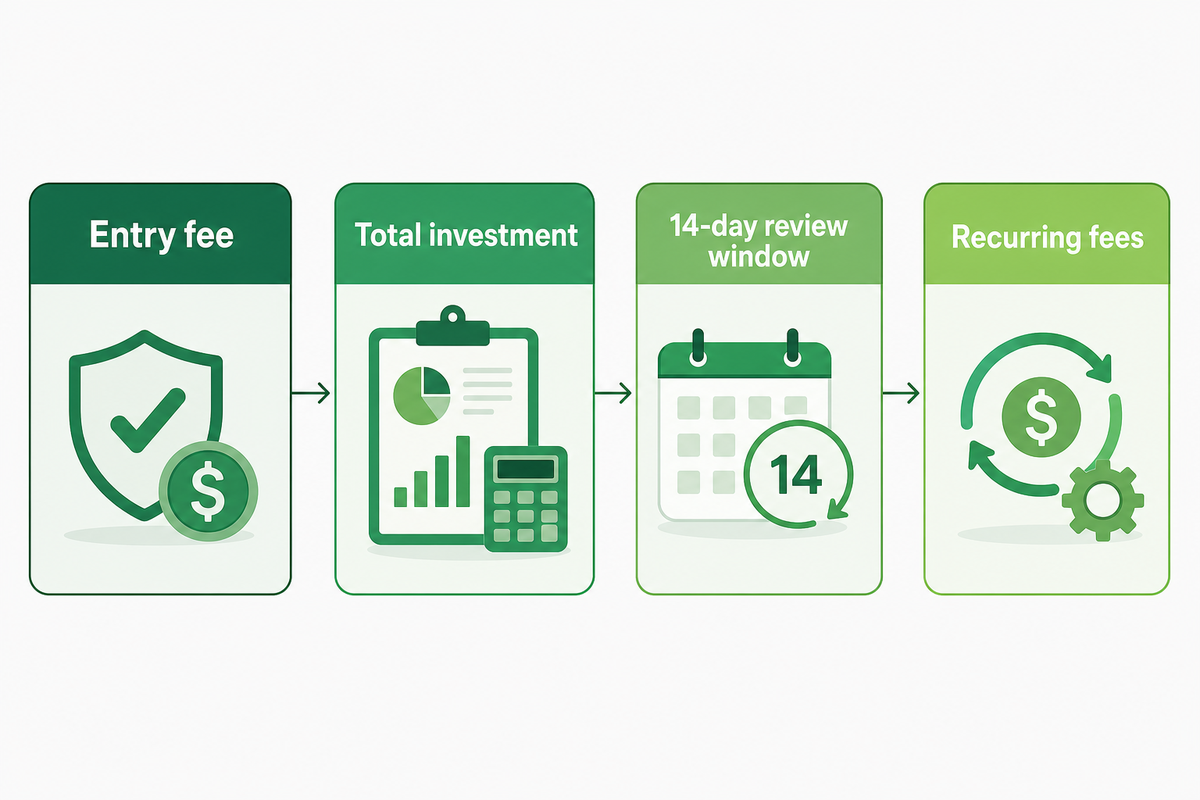
A franchise fee is the price of entering the brand system; total initial investment is the money required to open the location. Indoor playground buyers need both numbers because the entry payment does not prove that equipment, safety flooring, buildout, insurance, staff, or working capital are already funded.
U.S. franchise review starts with 16 CFR Part 436, the Federal Trade Commission disclosure rule. It requires a franchisor to provide disclosures at least 14 calendar days before a prospect signs a binding agreement or pays the franchisor or its affiliate. That timing matters because it gives the buyer a review window before money moves.
Cost review should start with the FDD table of initial fees, other fees, and estimated initial investment, then move to the contract terms that control sourcing, territory, transfer, and termination.
FDD items that matter most for indoor playground cost include initial fees, other fees, estimated initial investment, restrictions on sources of products and services, franchisor assistance, territory, financial performance representations, outlet history, financial statements, and contracts. Low entry fees can still be paired with strict sourcing, fixed charges, or high recurring fees.
Searchers ask about $10,000 because mobile soft play, small birthday-party rentals, and full indoor playgrounds often appear in one conversation. Brick-and-mortar indoor playground franchise ownership means a leased commercial venue with code review, staff, insurance, and installed equipment. Mobile soft-play rental is a different business and should not be priced as the same asset.
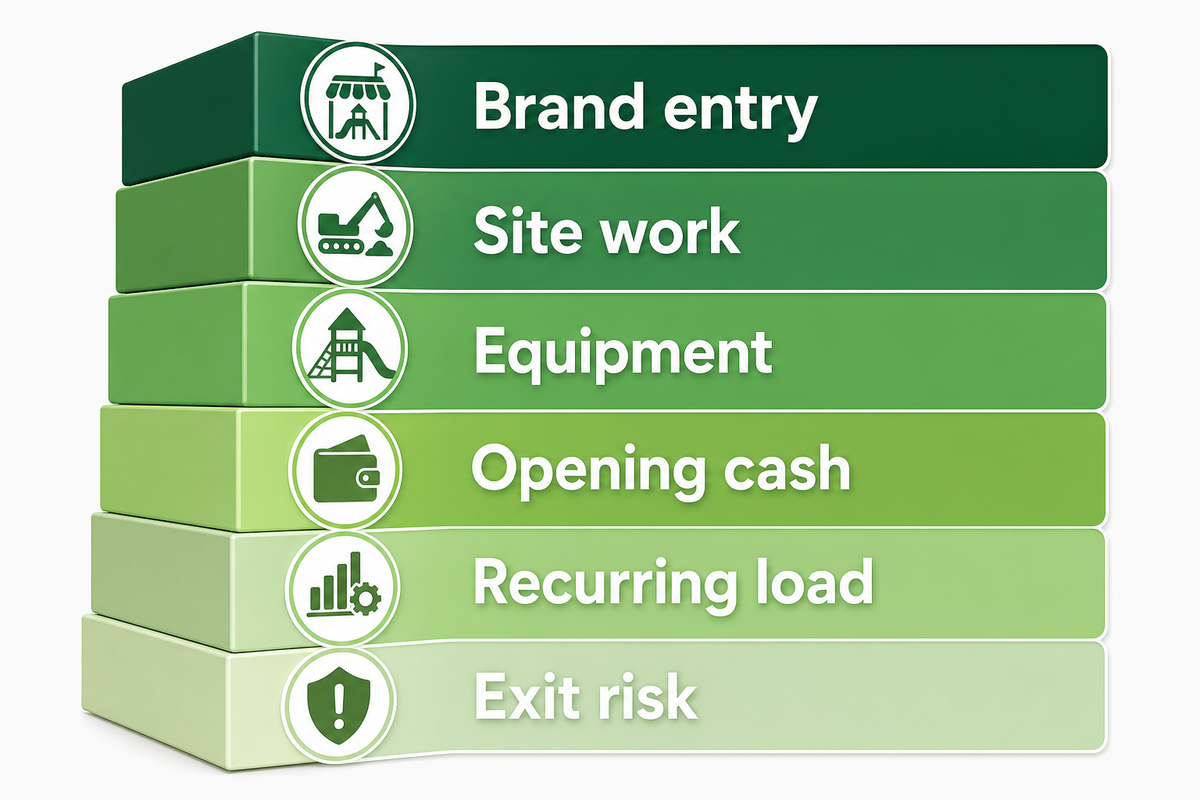
6-Layer Cost Reality Stack for Indoor Playgrounds
6-Layer Cost Reality Stack is a way to test a proposal before the brand presentation shapes the budget. Layer-by-layer review starts with the entry fee, then adds site work, equipment, opening cash, recurring fees, and exit risk so the buyer can see which line creates the largest exposure.
Cost Reality Stack for Indoor Playgrounds
Layer
What to verify
Buyer question
Evidence to request
Brand entry
Initial franchise fee and refund rules
What exactly does the fee buy?
FDD fee table and signed agreement
Site
Lease, exits, restrooms, HVAC, fire review, landlord scope
Does the building fit the play concept?
Landlord work letter, local plan comments, contractor quote
Equipment
Play structure, toddler area, flooring, spare parts, installation
Which equipment is mandatory and which is flexible?
The stack also prevents the common supplier mistake: treating equipment price as the whole business cost. Playground equipment can be the most visible purchase, but the lease, construction, fire review, bathrooms, food-service plan, staff model, and opening cash can decide whether the project can open on time.
Document-backed stack review works best when every line is tied to a document. Sales calls, layout sketches, and FDD tables each answer different questions, so the safest budget connects all three instead of relying on one presentation deck.
FDD Red Flags That Affect Real Cost
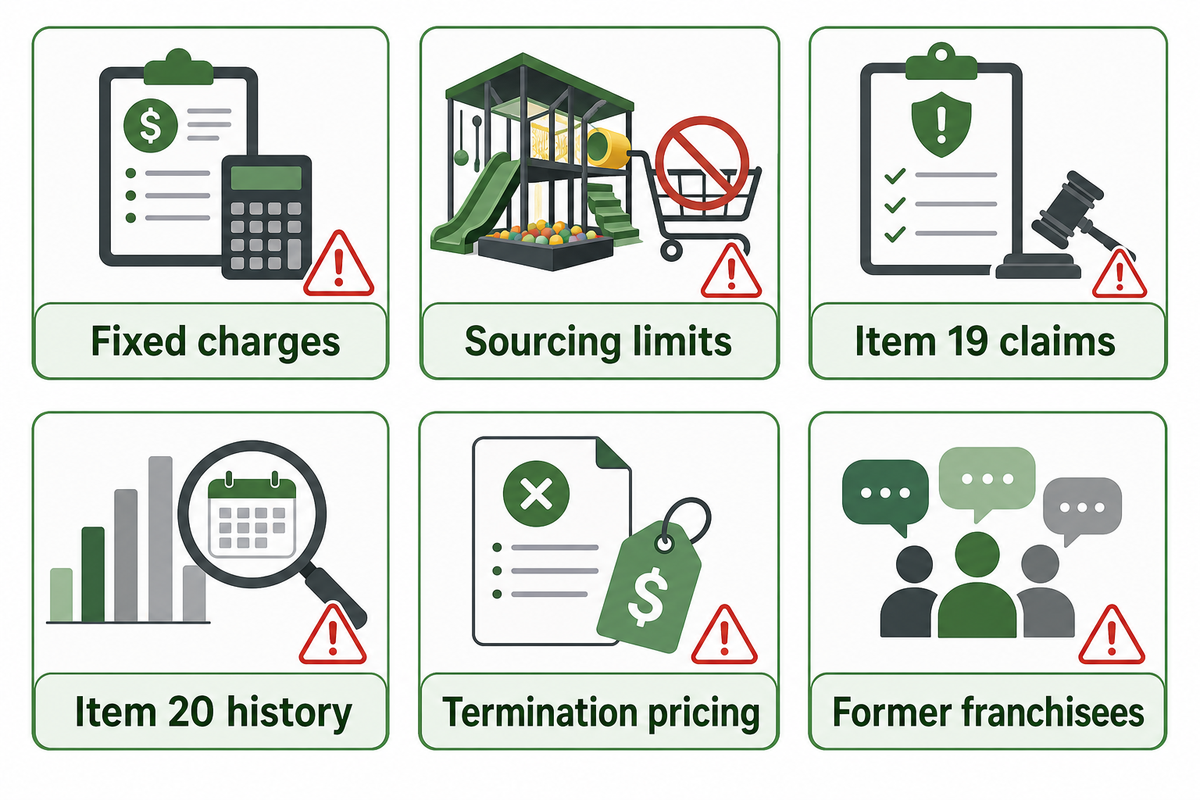
FDD red flags are cost signals hidden inside legal, supplier, territory, and exit terms. Indoor playground buyers should read the document for fee totals, fixed charges, sourcing limits, Item 19 claims, Item 20 outlet history, former franchisee contacts, and termination pricing before comparing a franchise to an independent build.
Dreamland’s FDD red flag checklist turns that review into 12 checks: franchise fees, recurring fees, fixed charges, investment range, restricted sourcing, equipment, advertising fund, territory, financial representation, closures versus openings, termination pricing, and former franchisee contact. Dreamland states that the checklist is a preparation aid, not legal advice.
Do
Ask for the current FDD before paying any fee.
Total every recurring fee, including fixed monthly charges.
Map approved suppliers by category, including equipment and consumables.
Call former franchisees listed in the disclosure document.
Don’t
Treat the franchise fee as the full launch budget.
Ignore Item 20 outlet closures and transfers.
Assume territory language blocks all future competition.
Accept an earnings claim without reading what the sample excludes.
Restricted sourcing deserves special attention for play centers. If the franchisor requires specific construction vendors, equipment suppliers, consumables, software, furniture, or signage, the buyer should compare those requirements with independent quotes. Supplier rules can be worth paying for, but only after the owner knows the markups, rebates, support terms, and replacement-part path.
Buyers should separate risk review from trust in the brand. Good franchisors can still use strict brand rules, and weak franchisors can still publish attractive ranges. FDD review tests whether the system’s cost, control, and exit rules match the buyer’s cash, site, and operating skill.
Royalty Load and Break-Even: The Number Buyers Often Miss
Royalty load is the portion of revenue paid back to the franchise system through royalty, brand fund, technology, and other fixed fees. Royalty load matters because it is paid after opening, when rent, payroll, insurance, maintenance, and local marketing are already competing for the same cash.
Dreamland’s franchise royalty load calculator uses year-one revenue, annual growth, royalty percentage, brand fund percentage, fixed monthly fees, agreement term, and operating margin before fees. Calculator output shows total revenue across the term, royalty, brand fund, fixed fees, total paid to the franchisor, and share of operating profit.
Dreamland’s indoor playground break-even model uses total initial investment, annual revenue, operating margin before franchise fees, royalty, and brand or advertising fund. Dreamland states clear limits: the model holds revenue and margin flat and excludes debt service, owner salary, and tax.
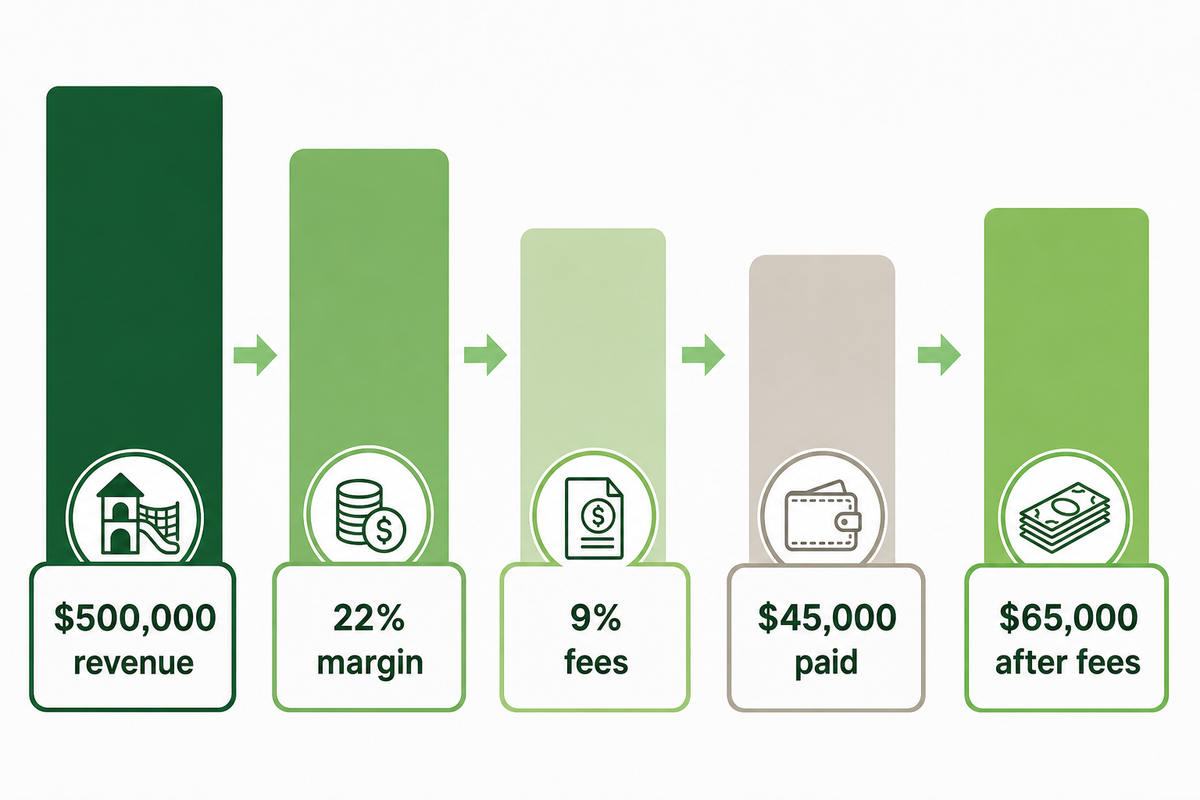
Sample royalty-load arithmetic:
Cost item
Example franchise model
Independent benchmark
Year-one revenue assumption
$500,000
$500,000
Operating margin before brand fees
22%
22%
Royalty plus brand fund
9% of revenue
$0 to franchisor
Cash before brand fees
$110,000
$110,000
Cash after brand fees
$65,000
$110,000 before owner-chosen marketing
Calculation: $500,000 x 22% equals $110,000 before brand fees. Combined royalty and brand fund at 9% equals $45,000. In this simplified case, the example franchise model leaves $65,000 before debt service, tax, and owner salary, so the recurring fee load absorbs 40.9% of the pre-fee operating cash.
Payback period should be calculated after the buyer subtracts total paid to franchisor from operating cash, not before. Owners who skip that step can mistake revenue for recoverable cash.
Example math is not a profit promise. Worked math shows how the denominator changes. Revenue-based fees can represent a far larger share of operating cash after rent, payroll, insurance, and maintenance. Before signing, the buyer should run conservative, base, and strong cases.
Royalty load becomes easier to judge when it is translated into years, not just percentages. Ten-year agreements with fixed fees and a revenue-based brand fund can move more money than the initial franchise fee, so the long-term fee schedule belongs beside the construction and equipment budget.
Buying a Franchise vs Building an Independent Indoor Playground
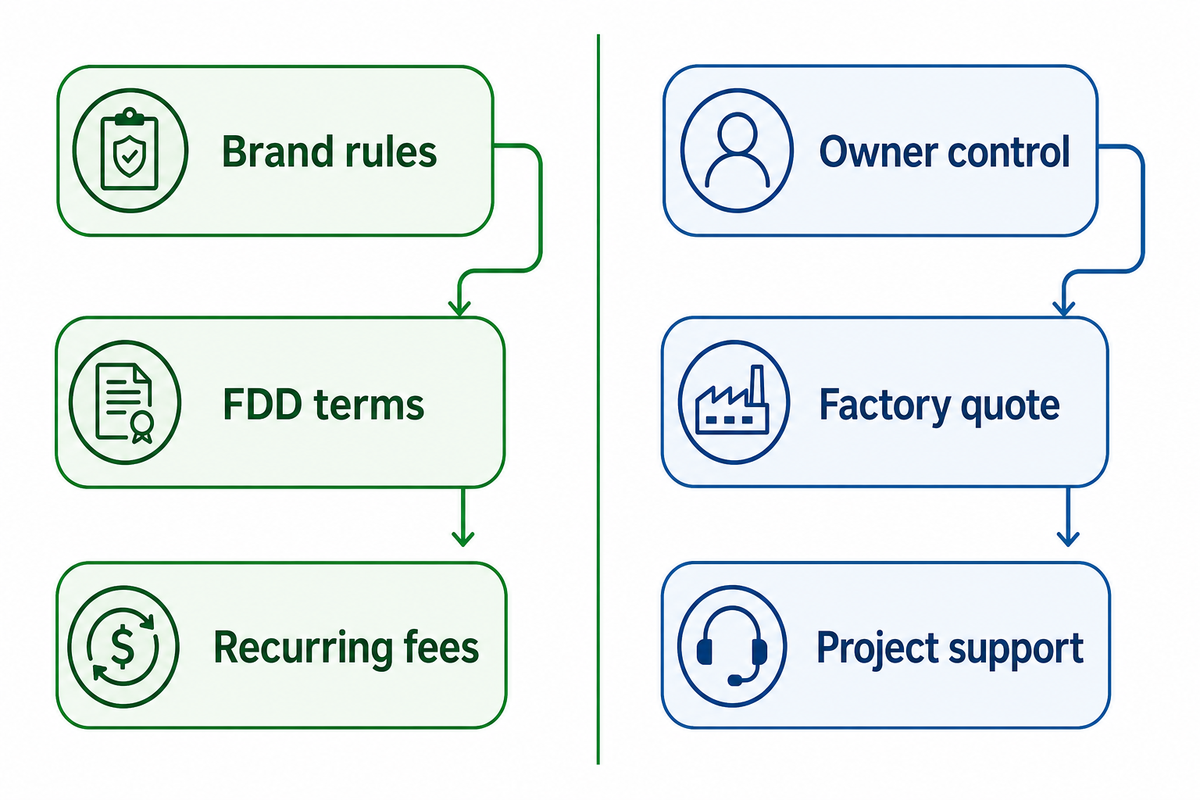
Brand-system and independent indoor playground projects solve different problems. Brand systems can offer operating rules, opening guidance, and launch templates. An independent build keeps control over layout, supplier choice, theme, pricing, and local programming, but the owner must manage more decisions without a franchisor’s operating system.
Brand-system route
Brand rules and operating playbook shape the venue.
FDD controls fee disclosure, sourcing limits, territory, and exit terms.
Recurring royalty and brand-fund fees reduce cash after opening.
Equipment choices may be tied to approved vendors.
Independent route
Owner controls theme, layout, supplier choice, and local pricing.
Factory quote can be matched to the exact floor plan and age range.
No franchisor royalty, but marketing and operations remain owner duties.
Project support must be chosen and managed by the buyer.
Dreamland Playground fits the independent benchmark side. Dreamland is a playground equipment manufacturer and project solution provider in China, with support for space planning, floor plan design, 3D design, production, shipping, installation support, and after-sales service. That does not replace a franchise playbook, but it gives the buyer a concrete equipment and layout baseline.
Independent does not mean improvised. Buyers can still request a project plan, 3D drawings, production checks, packing details, shipping support, and installation guidance. Under this route, the owner keeps the brand, pricing, and operating system rather than buying them from a franchisor.
An independent benchmark is useful even if the buyer eventually chooses a franchise. Factory-direct quotes, drawn from the same floor plan and age-zone target, help show which part of the franchise proposal is brand system value and which part is physical equipment and buildout cost.
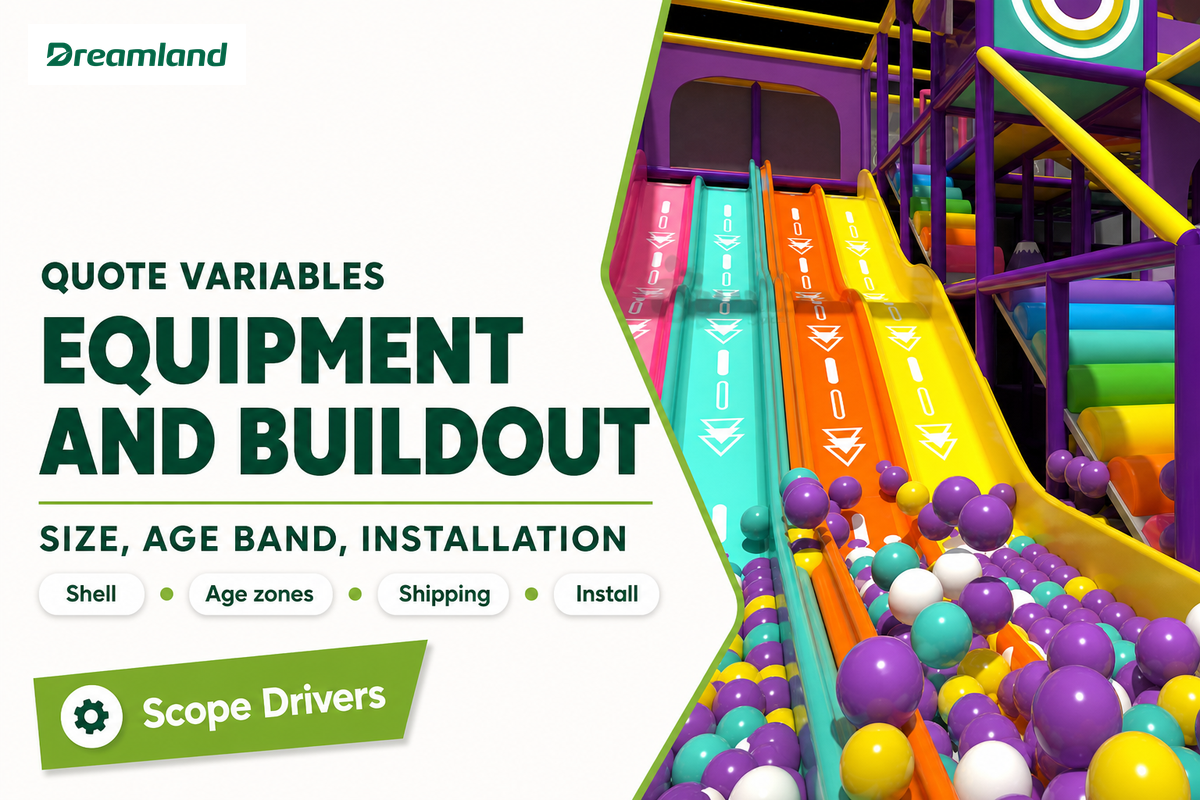
Equipment and Buildout Variables That Move the Quote
Equipment and buildout cost move with the building, age band, attraction mix, safety flooring, and installation plan. Project scale matters: a 2,000 sq ft play cafe, a 6,000 sq ft indoor playground, and a 15,000 sq ft family entertainment center cannot be priced from the same square-foot shortcut.
Building shell comes first. Ceiling height, columns, emergency exits, bathrooms, delivery doors, HVAC, electrical service, sprinklers, parent seating, party rooms, and food-service plans all affect layout and local review. Sales proposals that assume a clean retail shell can look cheaper than a real leased space.
Age segmentation comes next. Toddler soft play, preschool climbing, older-child obstacle zones, ball pits, trampolines, ninja elements, slides, interactive projection, and arcade or redemption areas each carry different supervision, maintenance, and safety needs. More attraction types can raise revenue potential, but they also raise operating complexity.
Shipping and installation form the third variable. Indoor playground structures are bulky, custom-packed, and tied to site measurements. Buyers should ask how equipment is packed, which party handles unloading, whether installers are supplied or remote-supported, which drawings guide assembly, and how spare parts are ordered.
Dreamland’s target guide gives a simple process: send a floor plan or rough sketch, receive a layout concept and quote, approve 3D design, enter production, confirm shipping, and build with support. That sequence is a practical way to turn a vague franchise comparison into a site-specific equipment baseline.
Safety, Accessibility, and Commercial-Use Proof
Safety proof is part of indoor playground franchise cost because commercial play equipment is not judged like home furniture. Buyers should ask which standards apply, how the supplier documents materials and structures, how accessibility is handled, and which local inspection or insurance file must be ready before opening.
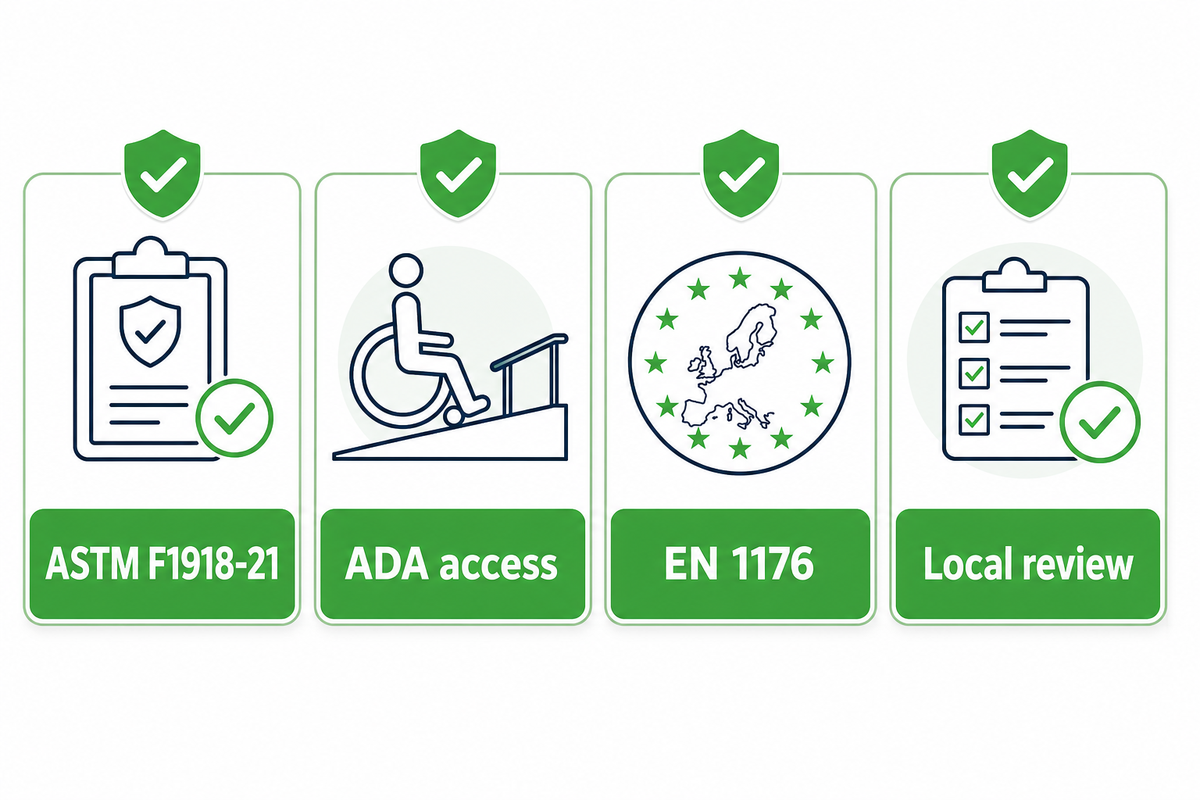
The ASTM F1918-21 page identifies the standard as a safety performance specification for commercial soft contained play equipment. Its public scope summary covers users from the 5th percentile 2-year-old to the 95th percentile 12-year-old and excludes several other categories, including public playgrounds and home playground equipment.
ADA.gov accessible recreation guidance states that children with disabilities must be able to participate in play without barriers and notes that play structures, including soft play environments, should be accessible. Project budgets should therefore allow for access routes, entries, circulation, supervision sightlines, and local code review.
Dreamland says products can be designed according to relevant EN and ASTM safety requirements, depending on product type and target market. For a U.S. soft-contained play project, ASTM F1918 should be discussed. For European projects, EN 1176 may matter. Local building, fire, health, and insurance requirements still need separate review.
ASTM F1918-21 and ADA recreation guidance do not make a project safe by being named in a proposal. Before opening the play area to families, the buyer still needs drawings, material records, installation instructions, maintenance steps, inspection records, and local approval.
How to Ask for a Better Quote Before You Choose a Franchise
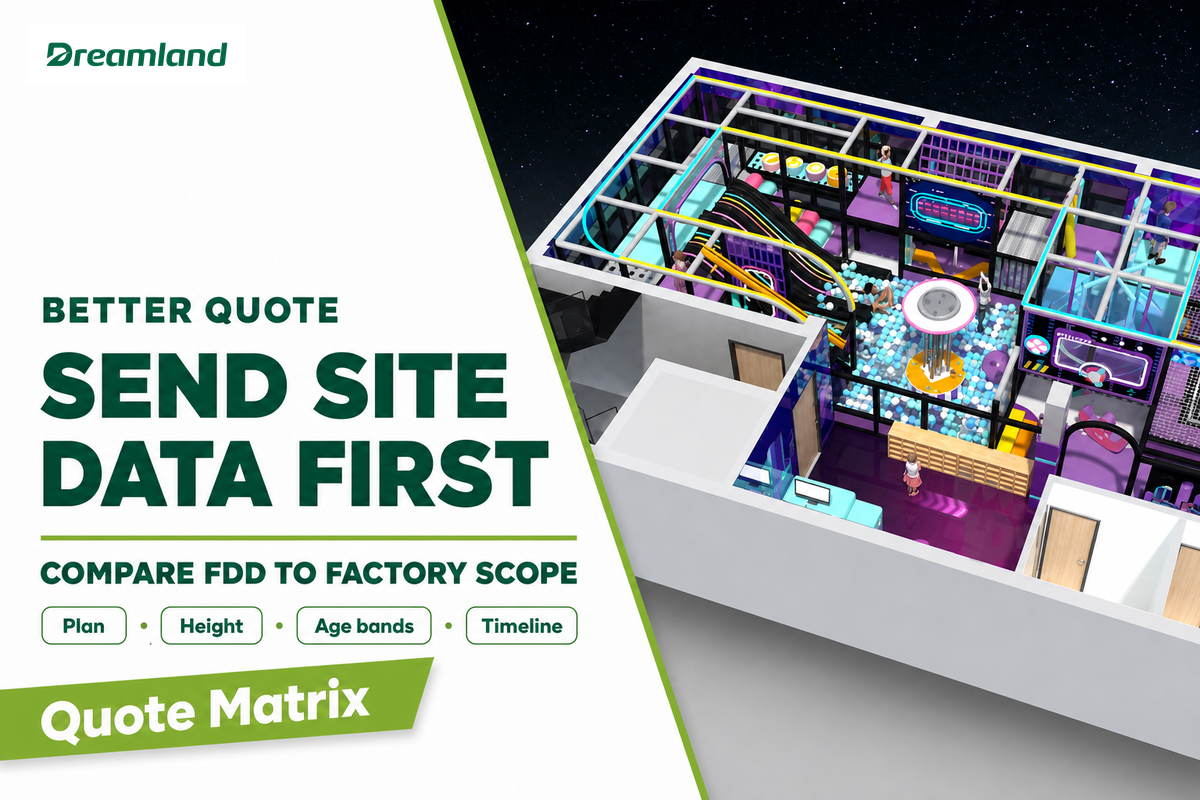
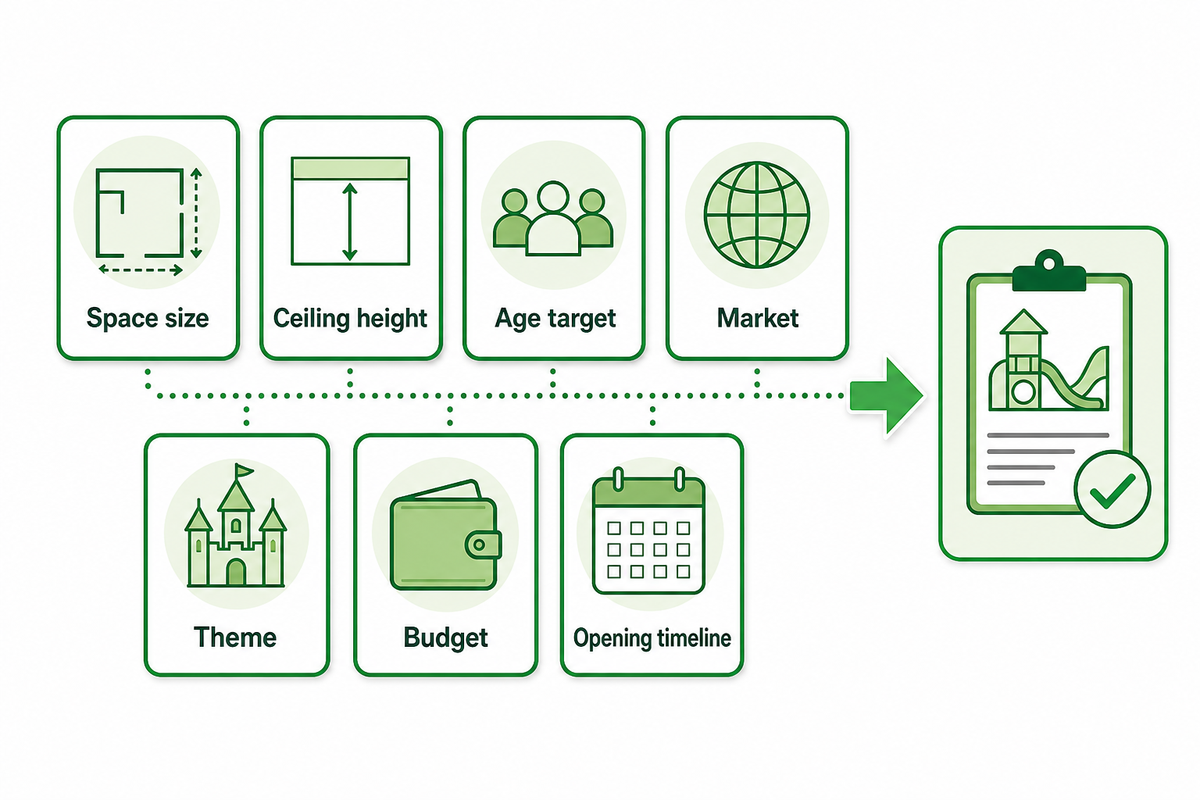
A better quote begins with site data, not a broad request for indoor playground cost. Buyers should send floor dimensions, ceiling height, columns, photos or video, country, target age groups, desired attractions, theme, budget range, capacity target, timeline, and any standard or inspection requirement.
FDD-to-Factory Quote Matrix compares the franchise proposal with an independent equipment benchmark. Matrix work is not meant to prove one route always wins. Its purpose is to show which cost lines are brand value, which lines are physical construction, and which lines are operating risk.
Quote checklist – copy these into your request:
Parameter
Recommended detail
Why it matters
How to verify
Floor plan
Wall-to-wall dimensions, columns, doors, exits
Controls layout, capacity, and installation path
Architect drawing or measured sketch
Ceiling height
Clear height in feet or meters
Limits play levels, slides, and overhead clearance
Site measurement and photos
Age bands
Toddler, 3-6, 6-12, or mixed zones
Changes equipment, supervision, and flooring
Market plan and customer profile
Attraction scope
Soft play, slides, ball pit, trampoline, ninja, party rooms
Separates play cafe from full FEC cost
Equipment schedule and 3D design
Target market
Country, city, mall/school/hotel/FEC use
Guides standards, language, shipping, and theme
Local code and buyer brief
Budget range
Equipment budget and full opening budget stated separately
Prevents equipment quote from hiding lease and payroll cash
Cost stack table and finance review
Required proof
ASTM, EN, accessibility, material, installation, maintenance records
Supports insurer, inspector, and parent trust review
Supplier documents and local authority feedback
Dreamland can support this comparison through layout planning, floor plan design, 3D design, production, shipping, installation support, and after-sales service. Buyers who already have a franchise proposal can use the same building data to request an independent equipment benchmark and see the true cost difference.
Cost decisions become clearer when the buyer prices the same project twice. One version uses the franchisor’s current FDD, required suppliers, and fee model. Version two uses a site-specific equipment and layout quote. Cost gap between the two is the real price of brand system, control, and ongoing support.
Frequently Asked Questions
How much money do I need to open an indoor playground franchise?
Opening an indoor playground franchise usually requires enough capital for the full investment stack, not only the franchise fee.
Official pages checked for this guide show wide ranges: Play Street Museum’s public page shows an investment envelope from $304,650 to $761,140, while Luv 2 Play states $600,000 to $2,500,000 depending on concept and location. Your actual budget should also include buildout, equipment, flooring, shipping, installation, deposits, permits, insurance, payroll, marketing, working capital, royalties, and brand-fund fees.
What is the difference between franchise fee and total investment?
Entry fee is the brand-system payment; total investment is the larger opening budget.
Entry fee may give access to the brand system, training, opening process, or territory rights, depending on the agreement. Total investment includes the site, construction, equipment, safety flooring, freight, installation, signs, licenses, insurance, staff, marketing, opening inventory, cash reserve, and any required systems. Current FDD should show initial fees, other fees, estimated initial investment, supplier restrictions, obligations, and contracts.
Is an independent indoor playground cheaper than a franchise?
An independent indoor playground can be cheaper in recurring fees, but the owner carries more setup responsibility.
An independent build avoids franchisor royalty and brand-fund payments and gives the owner more control over theme, layout, equipment, suppliers, prices, and local programming. Owner-side tradeoff is that the owner must handle site selection, project planning, local approvals, marketing, staffing, and operating systems. Fair testing prices both models using the same floor plan, age target, capacity, and cash reserve.
What FDD items should I check before paying a franchise fee?
Prospective owners should check fee tables, investment range, sourcing rules, territory, financial claims, outlet history, and exit terms.
Useful FDD sections include initial fees, other fees, estimated initial investment, restrictions on sources of products and services, franchisor assistance, territory, financial performance representations, outlet and franchisee information, financial statements, contracts, renewal, termination, transfer, and dispute terms. Qualified franchise counsel or another advisor should review the document before signing or paying.
Does indoor playground franchise cost include equipment?
Equipment may or may not be included, so buyers should ask for a line-by-line schedule.
Ask whether the quoted range includes the play structure, toddler zone, safety flooring, spare parts, freight, unloading, installation, party-room equipment, cafe equipment, signs, software, and furniture. Also ask who owns the equipment list if the lease changes, who approves substitutions, and whether replacement parts must come through the franchisor. If the franchisor requires approved suppliers, ask whether those purchases are mandatory, whether rebates exist, how warranty claims are filed, and how long replacement parts usually take after opening. Useful answers separate brand-required items from buyer-selected items. For example, a franchisor may require signs, software, finishes, or fixtures, while the play structure and safety flooring may still need a separate quote, drawing set, freight plan, and installer scope. That distinction helps the buyer compare the franchise package with a factory-direct equipment plan without counting the same line twice.
What standards matter for indoor playground equipment?
Soft-contained play projects should discuss ASTM F1918-21, accessibility, and market-specific rules.
ASTM F1918-21 is a public standard page for soft contained play equipment. ADA.gov guidance says children with disabilities must be able to participate in play without barriers and notes that soft play environments should be accessible. EN 1176 may matter for European projects. Local fire, building, health, and insurance requirements still need project-specific review.
How can Dreamland Playground help compare franchise and independent options?
Dreamland Playground can create a site-specific equipment and layout benchmark for comparison.
Buyers can send a floor plan or rough sketch, target age group, country, theme, budget, and business goal. Dreamland can support space planning, floor plan design, 3D design, equipment production, shipping, installation support, and after-sales service. That benchmark helps compare a franchise proposal with an independent project built around the same site.
Key takeaway
Indoor playground franchise cost should be tested against the same floor plan twice: once with the franchisor’s FDD and fee model, and once with a factory equipment, layout, shipping, and installation-support quote for that exact site.
Send Your Floor Plan Before You Compare Franchise Offers
A floor plan gives the cost conversation a stable base. Share your space size, ceiling height, age target, market, theme, budget, and preferred opening timeline, and Dreamland Playground can prepare a layout concept and equipment quote for the project you are actually considering.
Dreamland Playground publishes practical planning guides for commercial indoor-play projects, including family entertainment centers, shopping malls, hotels, restaurants, churches, and other venue types.
Use these guides to frame the questions that should be resolved before concept selection: venue size, intended age groups, project location, attraction mix, operating priorities, timeline, and delivery constraints. Final recommendations should be based on the real site and applicable local requirements.
Start With The VenueFloor area, clear height, site location, intended audience, and target opening date create the working brief.
Clarify The ScopeConcept, equipment, production, shipping, installation, and operating inputs can vary from one project to another.
PROJECT / VENUE / TIMELINE
Prepare Your Project Brief
Venue TypesFEC · Mall · Hotel · Restaurant · Church
Start WithFloor area · Clear height · Age groups · Country